



























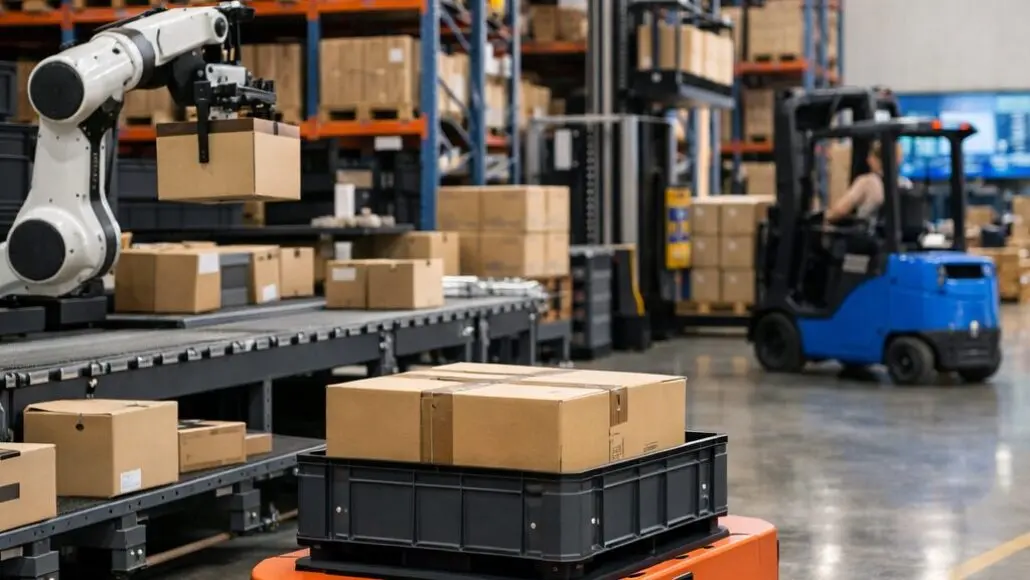
The modern industrial landscape is currently witnessing a profound transformation, one where the traditional image of the dusty, manual warehouse is being replaced by a sleek, hyper-connected hub of activity. At the center of this evolution is smart warehouse automation, a concept that encompasses a wide array of technological advancements designed to enhance every facet of logistics. For decades, the logistics sector relied heavily on human intuition and manual labor to manage the complexities of inventory and distribution. However, as global e-commerce continues to expand at a breakneck pace, the limitations of human capacity have become increasingly apparent. The need for speed, precision, and scalability has moved automation from a luxury for the elite to a necessity for any business aiming to survive in the contemporary market.
Understanding the depth of smart warehouse automation requires looking beyond the mechanical arms and conveyor belts that often dominate the visual representation of the field. While physical robotics are essential, the true power of these systems lies in the sophisticated software architectures that govern them. We are talking about the integration of Warehouse Management Systems (WMS) with Warehouse Control Systems (WCS) and Warehouse Execution Systems (WES). These platforms act as the central nervous system of the facility, processing millions of data points every second to make real-time decisions that optimize the flow of goods. This transition toward data-driven operations is what distinguishes “smart” logistics from simple mechanization. It is about creating a symbiotic relationship between physical hardware and digital intelligence to drive supply chain efficiency to its absolute limit.
The Technological Architecture Behind Smart Logistics
When we examine the components that make up a smart warehouse, we see a layered approach to technology that prioritizes both modularity and integration. The foundation often begins with the internet of things (IoT), where sensors and tags are applied to everything from individual pallets to the racking systems themselves. These sensors provide the raw data necessary for real-time tracking, allowing managers to know exactly where every item is at any given moment. This level of visibility is the bedrock of smart warehouse automation, as it eliminates the “black holes” in the supply chain where inventory often goes missing or remains underutilized. By capturing this data, companies can move away from periodic inventory counts and toward a perpetual inventory model that is far more accurate and less disruptive.
Building upon this data foundation, we find the application of artificial intelligence and machine learning. In the context of AI in warehousing, these technologies are used to predict demand patterns, optimize slotting strategies, and even manage labor more effectively. For example, an AI-driven system can analyze historical order data to predict which items will be in high demand during a specific season. It can then automatically instruct the automated warehouses to move those items closer to the shipping docks, a process known as predictive slotting. This seemingly small adjustment can save thousands of man-hours and significantly reduce the cycle time of an order. The intelligence of the system allows it to learn from its mistakes and successes, constantly refining its algorithms to achieve better results over time.
Robotics and the Physical Execution of Tasks
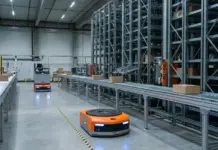
While the software provides the brains, the robotics provide the brawn. In an automated warehouse, several different types of robotic systems work in tandem to handle the heavy lifting. Automated Storage and Retrieval Systems (AS/RS) are perhaps the most iconic, capable of storing goods in high-density racking and retrieving them with pinpoint accuracy at speeds no human could match. These systems are particularly valuable in urban areas where land is expensive, as they allow warehouses to “build up” rather than “build out,” maximizing the storage capacity of every square foot. The efficiency gained through AS/RS is a direct contributor to overall logistics technology ROI, as it reduces the need for large facility footprints while increasing throughput.
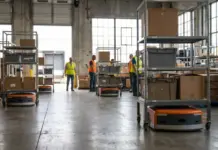
Furthermore, the rise of collaborative robots, or “cobots,” has changed the way we think about the human-robot relationship. Unlike traditional industrial robots that must be caged for safety, cobots are designed to work alongside human employees, taking over repetitive or ergonomically challenging tasks. This not only improves safety but also boosts morale by allowing workers to focus on more complex, value-added activities. Smart warehouse automation is not about replacing humans entirely; rather, it is about augmenting their capabilities and removing the physical strain that has long been a hallmark of warehouse work. This human-centric approach to automation ensures that the transition is sustainable and that the workforce remains engaged and productive.
Data Integration and the Future of Connected Networks
The final piece of the puzzle is the seamless integration of these localized warehouse systems into the broader global supply chain. Logistics efficiency cannot be viewed in isolation; it must be part of a connected network that includes manufacturers, carriers, and retailers. Through cloud-based platforms and API integrations, smart warehouses can share data in real-time with their partners. This means that if a shipment is delayed at a port, the warehouse can automatically adjust its picking schedule to prioritize other orders, minimizing the impact of the disruption. This level of agility is crucial in a world where supply chain shocks are becoming more frequent and severe.
As we look toward the future, the role of smart warehouse automation will only continue to grow. We are likely to see even greater use of digital twins, where a virtual replica of the warehouse is used to test and optimize new processes before they are implemented in the real world. Additionally, the integration of 5G technology will allow for even more responsive and low-latency communication between devices, paving the way for fully autonomous facilities. The pursuit of supply chain efficiency is a journey without a final destination, but with smart logistics leading the way, the path forward is clearer than ever. Organizations that embrace these changes will not only improve their bottom line but also provide a superior experience for their customers, setting a new standard for excellence in the logistics industry.
The implementation of these systems does come with its set of challenges, particularly regarding initial capital investment and the need for a specialized workforce to maintain the technology. However, the long-term benefits of reduced labor costs, near-zero error rates, and increased customer satisfaction far outweigh the initial hurdles. As logistics technology becomes more accessible and scalable, we will see even small and medium-sized enterprises adopting these “smart” practices. This democratization of automation will foster a more competitive and innovative marketplace, ultimately benefiting the global economy. By focusing on the convergence of human talent and technological prowess, smart warehouse automation is truly the driving force behind the next generation of logistics efficiency.