


























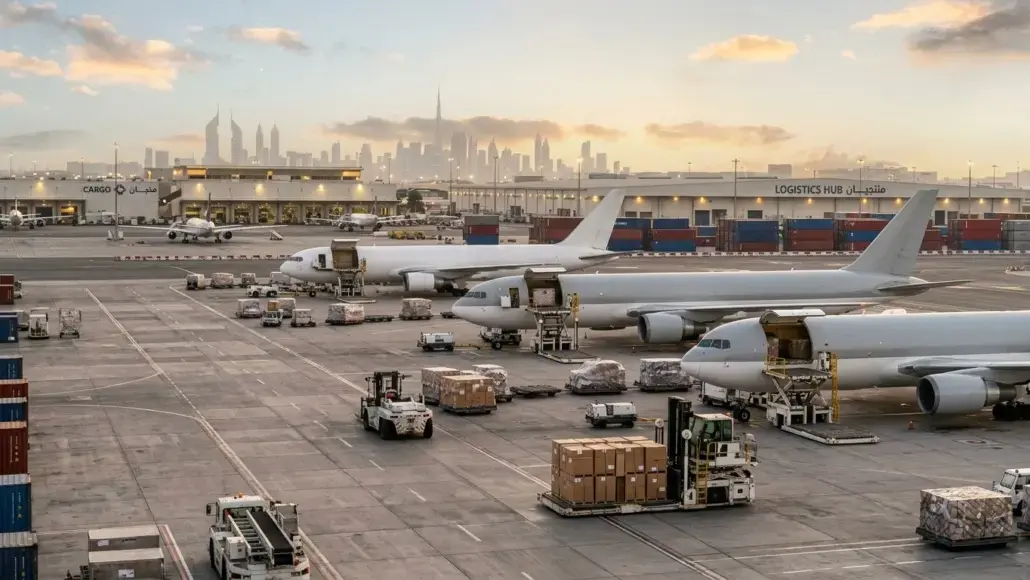
Dubai is regional logistics hub via integrated cargo system with Emirates SkyCargo, leading to an important boost in trade flows as well as the smooth movement of necessities throughout local along with regional markets, despite mounting pressures when it comes to global supply chains.
Dubai Customs, in a strategic partnership with Emirates SkyCargo through integrated cargo system, has developed a unified operational framework across the Dubai International Airport Cargo Village as well as the Maktoum International Airport Air Cargo Centre. The system accelerated customs clearance and enhanced handling capacity along with strengthening the supply of essential food and pharmaceutical goods across the UAE as well as the wider Gulf region.
It is worth noting that the operational data gives a sense of the magnitude of the growth. The total volume when it comes to imported goods cleared via both facilities rose over the period to 48.3 million kilograms in May 2026 from 26.6 million kilograms in January 2026, which was an increase of over 82%. Around the same time, the maximum daily capacity for handling rose from 1.24 million kilograms to 2.11 million kilograms, indicating higher operational adaptability and increased processing speeds regardless of increasing demand.
Cargo support for regional supply chains rises
Dubai Customs said the enhanced logistics system went beyond local needs to enhance the supply chain resilience throughout the GCC. It capitalized on the status of Dubai as a regional trading hub, ensuring that vital shipments still made it to their destinations, no matter the shifting geopolitics that have affected global trade lanes.
Support operations carried out in collaboration with Emirates SkyCargo recorded 529 truck movements carrying 2,636 tonnes of essential goods such as food products and pharmaceuticals as well as general merchandise through May 2026. These measures contributed to a dependable logistics corridor, which kept the movement of critical supplies throughout the Gulf markets unaffected.
The approach is in line with the emphasis from Dubai on resilience and adaptability within its trade infrastructure and allows the emirate to withstand fluctuations in demand while preserving efficiency along with quality of service, officials said.
Upgrading infrastructure as well as smart systems improves efficiency
Dubai Customs said much of the enhanced performance could be attributed to advanced digital systems and targeted operational enhancements. Priority shipments, including perishables along with medical supplies, received clearance faster thanks to crucial initiatives like the Green Corridor as well as the Shahin platform.
Customs and inspection teams also worked around the clock to ensure smooth processing during heightened periods of regional disruption. Expanded inspection lanes, optimized terminal space usage, and additional processing points also provided additional capacity, reducing congestion and improving turnaround times.
Strategic alliances bolster logistics leadership
The outcomes are a testimony to Dubai’s long-term strategy of merging government entities with strategic private-sector partners to boost trade resilience along with competitiveness globally, senior officials stressed.
Emirates SkyCargo said the collaboration highlights Dubai’s advanced infrastructure along with a highly responsive operational scenario, which helps with the seamless movement of goods throughout the varying global conditions. The airline also re-acknowledged its commitment so as to invest in smart logistics solutions, which will further make the supply chain resilience, along with supporting global trade growth, more robust.
Dubai Customs and Emirates SkyCargo are working together to turn the emirate into a major global logistics hub that connects markets between the Middle East, Asia, and even beyond.