






























For many organizations, the procurement process is governed by a mountain of legal documents, each filled with complex clauses, varying terms, and hidden obligations. Traditionally, managing this vast library of agreements was a manual, labor-intensive task that fell between the cracks of the legal and procurement departments. However, the rise of AI Powered Contract Intelligence is fundamentally changing how businesses interact with their legal obligations. By transforming static PDF documents into searchable, actionable data, this technology is enabling procurement teams to accelerate reviews, strengthen compliance, and drastically reduce the risks associated with enterprise contract management.
The core problem with legacy contract management is the “black box” nature of most agreements. Once a contract is signed, it is often filed away in a digital cabinet, only to be revisited when a crisis occurs or a renewal is due. This lack of visibility leads to missed deadlines, unintended auto-renewals, and a failure to capitalize on negotiated discounts. AI contract management changes this by using natural language processing (NLP) to “read” and understand the content of every contract in the organization’s portfolio. The system doesn’t just store the text it extracts key metadata such as expiration dates, liability limits, and termination clauses making them instantly accessible for analysis.
Accelerating the Review and Negotiation Cycle
One of the most immediate impacts of AI Powered Contract Intelligence is the speed at which it allows procurement teams to operate. In a traditional setting, the review of a new supplier agreement can take weeks, as legal teams manually compare the document against the company’s “gold standard” clauses. Artificial intelligence can perform this comparison in seconds. By training the model on the organization’s preferred legal language, the software can automatically flag any deviations, highlight missing clauses, and even suggest pre-approved alternative language.
This acceleration is a game-changer for procurement AI. It allows businesses to onboard new suppliers faster, react more quickly to market opportunities, and reduce the administrative bottleneck that often frustrates business units. Furthermore, contract intelligence provides a level of consistency that is difficult to achieve manually. Regardless of which procurement manager or lawyer is handling the file, the AI ensures that the company’s risk appetite is consistently applied across all agreements. This systematic approach to legal technology turns the contract review process from a hurdle into a strategic advantage.
Strengthening Compliance and Monitoring Performance
A contract is only as good as the performance it inspires. Yet, many organizations struggle to ensure that their suppliers are actually living up to the terms agreed upon. AI Powered Contract Intelligence bridges this gap by linking the terms of a contract directly to operational data. For instance, if a contract specifies a 98% on-time delivery rate with a financial penalty for failure, the procurement software can automatically track delivery data and flag if the threshold is breached. This ensures that the company is actually receiving the value it negotiated for.
This level of contract analytics is also vital for procurement compliance. In an era of increasing regulation such as GDPR in Europe or environmental reporting requirements globally companies must be able to prove that their supply chain is in alignment with both legal standards and internal ethics. Intelligent contracts can be automatically audited to ensure they contain the necessary data protection and sustainability clauses. If a change in the law occurs, the AI can scan the entire contract repository to identify which agreements need to be updated, saving thousands of hours of manual work and protecting the enterprise from legal exposure.
Digital Contracts and the Advancement of the Circular Economy
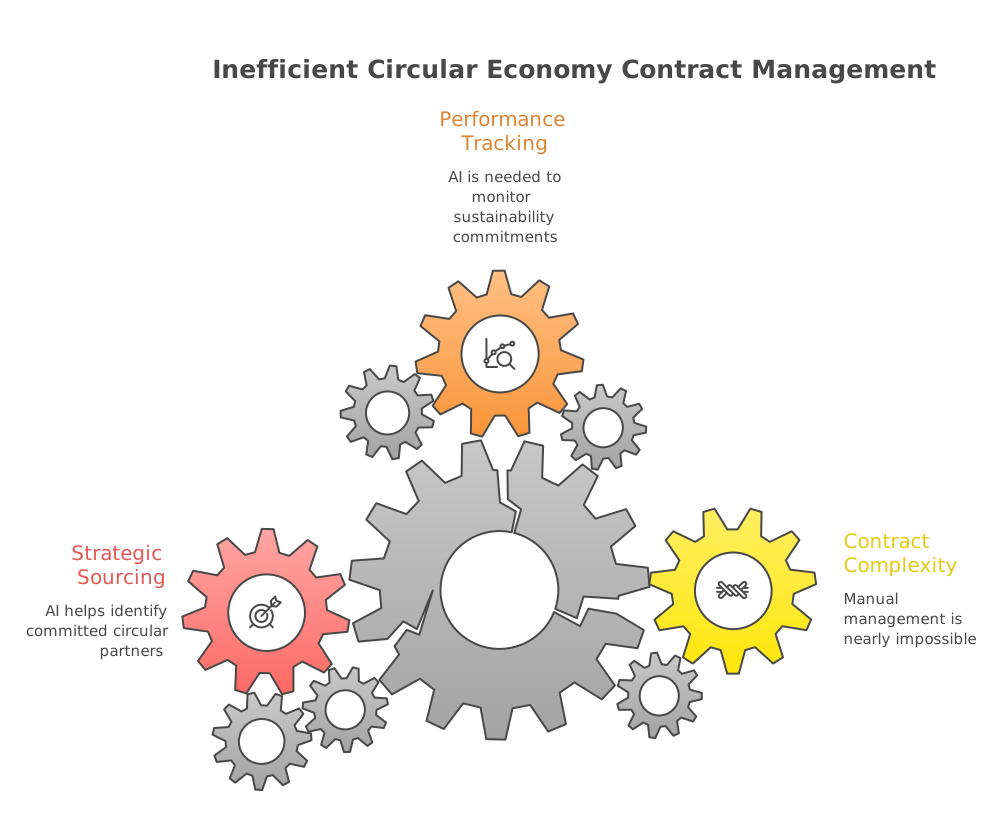
As organizations move toward more sustainable business models, AI Powered Contract Intelligence is playing a critical role in enabling the circular economy. This involve drafting contracts that specify what happens to a product at the end of its life including take-back obligations, refurbishment clauses, and recycling requirements. Managing these complex “closed-loop” agreements manually is nearly impossible. AI can track these obligations over years, ensuring that suppliers honor their commitments to sustainability and that the organization maximizes the recovery value of its assets.
By analyzing the performance of these sustainable contracts, the AI can help procurement teams identify which partners are truly committed to circular principles. This data can then be used to refine the organization’s strategic sourcing criteria, favoring suppliers who offer the best end-of-life support. In this way, contract analytics becomes a powerful tool for driving environmental impact. The transition to a circular economy requires a level of contractual complexity that only AI-powered systems can manage effectively, making digital contracts a cornerstone of modern corporate responsibility and a key driver of long-term ecological balance.
Synergy between Legal Operations and Procurement
One of the most significant developments in modern enterprise management is the integration of AI Powered Contract Intelligence into the broader legal operations framework. Historically, legal and procurement functioned as two distinct silos, with legal focusing on risk and procurement focusing on cost. AI bridges this divide by providing a unified platform where both departments can collaborate in real-time. Legal teams can use the AI to monitor for potential litigation risks across the entire contract portfolio, while procurement teams can use the same data to drive better sourcing outcomes.
This synergy is particularly valuable during complex mergers and acquisitions or during large-scale regulatory audits. Instead of having to manually review thousands of contracts to find specific clauses or liabilities, the AI can provide a comprehensive summary in a fraction of the time. This “litigation support” capability ensures that the organization is always prepared for legal challenges and can defend its interests with data-driven evidence. By turning legal technology into a shared asset, companies can build a more cohesive and resilient corporate structure that is better equipped to handle the legal complexities of the modern world.
Lifecycle Management and the End of Missed Renewals
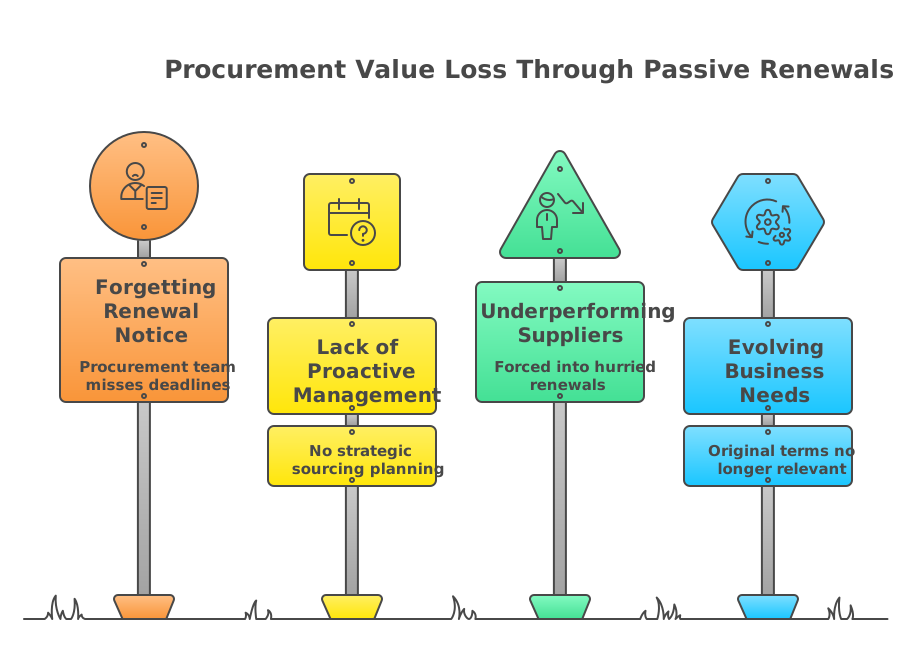
One of the most common ways organizations lose value in procurement is through “passive” renewals contracts that automatically extend because the procurement team simply forgot to give notice. AI Powered Contract Intelligence eliminates this risk by providing a comprehensive view of the entire contract lifecycle. The system can be programmed to send alerts months in advance of a renewal deadline, providing the procurement team with the time they need to evaluate the supplier’s performance and decide whether to renegotiate or search for a new partner.
This proactive lifecycle management allows for much more strategic sourcing. Instead of being forced into a hurried renewal with an underperforming supplier, the organization can plan its sourcing activities around its legal obligations. The AI can even analyze the performance of the contract over its entire term, highlighting areas where the original terms were not met or where the organization’s needs have evolved. This data-driven approach ensures that every contract renewal is an opportunity to improve terms and drive greater value for the business.
Fostering Cross-Functional Collaboration
Contract management has historically been a siloed activity, with legal, procurement, and finance often working from different versions of the truth. AI Powered Contract Intelligence acts as a “single source of truth” that bridges these gaps. By providing a centralized, digital repository of all agreements, the technology ensures that everyone is on the same page regarding the organization’s obligations and rights. A finance manager can quickly check payment terms, while a project manager can verify a supplier’s warranty obligations.
This visibility fosters a much higher level of cross-functional collaboration. For example, during a complex procurement project, the legal team can use the AI to provide the procurement team with a “risk brief” that highlights the most critical clauses to be negotiated. Conversely, the procurement team can feed operational performance data back into the system to help the legal team draft more robust future agreements. By breaking down the silos between departments, AI procurement transforms the contract from a static legal document into a dynamic tool for enterprise-wide collaboration and success.
The Future of the Intelligent Contract Ecosystem
As we look forward, the boundaries between legal, procurement, and finance will continue to blur. We are moving toward a world of “smart contracts” that can execute themselves. Imagine a contract that automatically triggers a payment when a shipment is verified at a port, or one that adjust its pricing in real-time based on commodity market fluctuations. While we are not there yet, AI Powered Contract Intelligence is the necessary foundation for this future.
The organizations that will lead the market are those that stop viewing contracts as static legal chores and start seeing them as dynamic strategic assets. By investing in the right procurement software and embracing the power of AI contract management, they can build a more agile, more compliant, and more resilient enterprise. The era of the “dumb” contract is over the age of contract intelligence has arrived, and it is transforming procurement into a more precise and impactful discipline than ever before.