

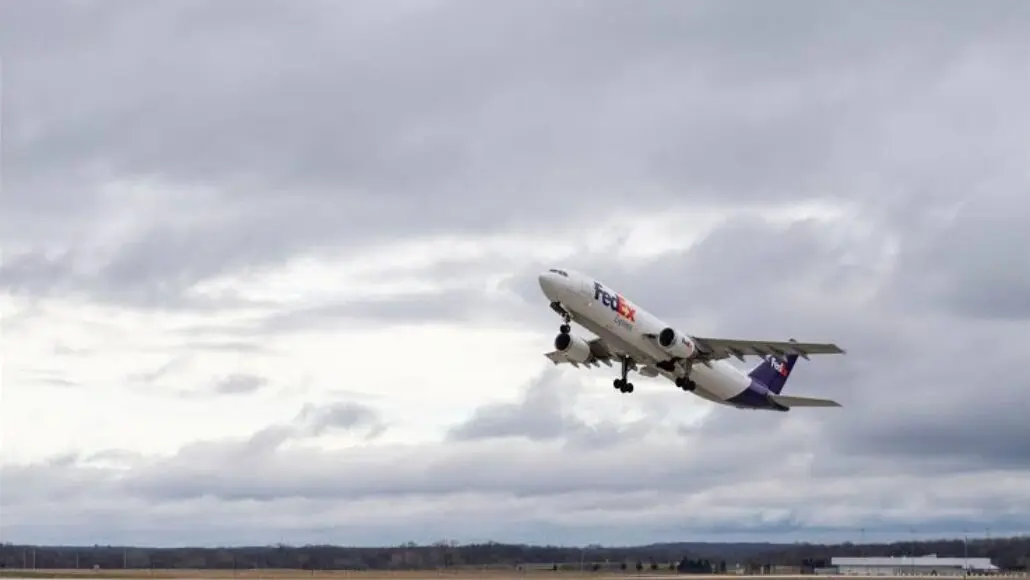
One of the world’s largest express transportation companies, Federal Express Corporation, has introduced 567,000 kilograms or 1.25 million pounds of weekly capacity to its trans-Pacific network between Asia Pacific and the US.
The new 5 times per week Boeing 777F service is anticipated to assist companies operating in sophisticated industrial manufacturing, semiconductor manufacturing, AI infrastructure, and premium e-commerce to access further capacity so as to support increasing customer demand throughout one of the peak trading times of the year.
Notably, the new service will operate via 3 routing variations between the Asia Pacific hub located in Guangzhou and sub-regional hubs based out of Shanghai, China, as well as Osaka, Japan, with a gateway in Clark, the Philippines, through Anchorage, Alaska, to the FedEx World Hub that is located in Memphis, Tennessee.
Businesses across Southeast Asia, including Singapore, Malaysia, and Thailand, as well as Vietnam and Hong Kong, have access to extra capacity to the US by means of connections through Clark and Shanghai. The expanded trans-Pacific network gives customers freedom, bandwidth, and reliable connectivity to connect with U.S. customers and react swiftly to evolving consumer needs.
The upgraded network also features a new link for Asia Pacific clients to Dallas-Fort Worth via Anchorage, operating 5 times a week, giving them a further access point to one of the top technology and data center markets in the US. The connection enhances accessibility between Asia Pacific manufacturing centers and companies throughout the Dallas-Fort Worth area, serving industries that depend on the transportation of high-value, time-sensitive cargo, including semiconductors, servers, and various other essential parts that are necessary for the growth of AI infrastructure.
The extra capacity is coming online as firms grapple with rising volumes of trade across the Pacific and supply chains that are ever more linked together. The Asia–North America corridor was the most rapidly expanding major air cargo trade route in the world, with YoY growth of 9% in July 2026, as reported to the International Air Transport Association – IATA Air Cargo Market Analysis.
Asia Pacific is also a key player when it comes to global technology supply chains, contributing to around 58% of global semiconductor sector income, as reported by the 2026 FedEx and Frost & Sullivan report.
As retailers and manufacturers, as well as technology companies, gear up for year-end demand surges, dependable air cargo capacity gives a competitive edge.
According to President of Asia Pacific, FedEx, Salil Chari, “Global supply chains are becoming increasingly interconnected, particularly across advanced manufacturing, AI-related industries, and premium e-commerce. The addition of this capacity comes at a critical time as customers prepare for increased shipping volumes ahead of the year-end peak season. Businesses need reliable access to capacity, speed, and global connectivity to serve customers and keep supply chains moving. These additional flights strengthen links between Asia Pacific and key U.S. markets, including Dallas–Fort Worth, while supporting growth across semiconductors, technology, and AI-driven industries.”
Interestingly, the service is the latest in a string of network enhancements rolled out throughout the Asia Pacific over the past year, including increased flight access from Bangkok, Penang and Sydney to the Guangzhou hub.
Together, these investments make it easier for customers to gain access to global markets, build robust supply chains, and capture opportunities for growth.