



















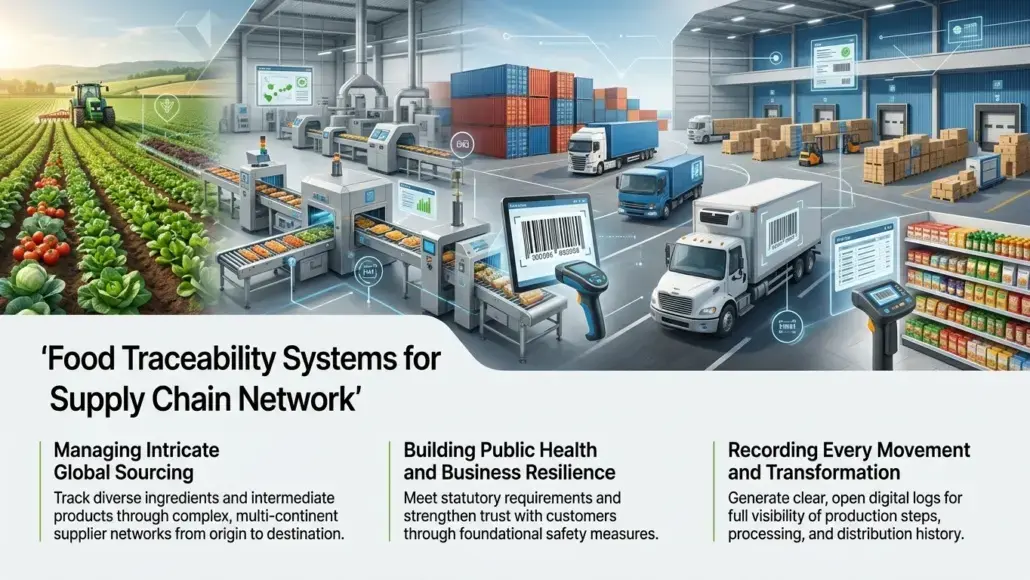
In today’s global economy, the road from farm to table is more intricate than ever. A single meal may consist of ingredients sourced from various continents, going through many suppliers and processors as well as distribution centres. Given this level of complexity, food traceability systems are not just a statutory requirement, but they are a foundation for public health and business resilience. Every movement and transformation is recorded in a clear digital log, providing the openness necessary to guarantee safety, ensure quality, and foster trust with increasingly informed consumers.
Food traceability evolution has been fuelled by demand and technological advancement. Historically, traceability has been primarily reactive, based on manual documentation on paper. In cases of contamination events, it occasionally took weeks to trace the origin, leading to widespread recalls that discarded safe products and negatively impacted brand image. Today digital traceability has changed this method. With real-time data and integrated software, organizations may determine within seconds the precise batch, farm and processing details of products. That kind of accuracy is the foundation for a resilient and transparent food supply chain.
The Pillars of Today’s Food Traceability
There are some interconnected components which are necessary for effective food traceability systems offering an extensive overview of the supply chain. The first one is unique identity. Whether they’re a crate of produce or a batch of processed flour, barcodes, QR codes or even RFID tags give each product a unique digital personality. All subsequent data collection is based on these identifiers. Every time a product undergoes scanning as it moves through the supply chain, its digital record is revised, offering a complete history of its journey.
The second pillar is the collection of data at critical tracking events – CTEs. Such as processing, harvesting, shipping and receiving. Key data elements – KDEs are documented at each step, such as date, time, and location as well as environmental conditions. Standardizing these data elements facilitates frictionless information sharing throughout organisations and systems. This kind of interoperability is an essential component of end-to-end supply chain visibility, making sure the digital chain is uninterrupted right from source to consumer.
Using Technology to Increase Transparency
Advanced traceability software – the central repository for supply chain data – has been the driving force behind digital traceability. These platforms can be utilised by managers to track product movement in real time and integrate with enterprise resource planning – ERP and warehouse management systems – WMS. This incorporation brings traceability into everyday operations, rather than it becoming a separate adherence activity. Cloud-based solutions additionally enable stakeholders throughout the supply chain to obtain and share information safely and securely, irrespective of where they are located.
A further major advance is blockchain traceability. Blockchain, which employs a decentralized and encrypted ledger, implies that once information is entered, it cannot be modified or removed. All participants from farmers to retailers can verify the reliability of the data. This is especially important when it comes to high-value products susceptible to fraud and misleading labels, such as seafood and olive oil as well as organic meat. As adoption increases, it is anticipated that blockchain will grow into a more common component of food traceability systems.
Traceability in Food Safety & Compliance
It is well to be noted that food safety is one of the main drivers for the execution of reliable food traceability systems. Contamination events have significant public health consequences, and swift action is essential. With digital systems, specific recalls are achievable, and only the impacted goods can be withdrawn from the market. It safeguards consumers while cutting excess food waste and minimizing disruption to business. Regulatory compliance is evolving into a requirement for digital adoption, with regulations similar to the Food Safety Modernisation Act – FSMA – in the United States calling for detailed traceability documentation.
Traceability does not mean being solely concerned with food safety, either. Consumers progressively want confirmation that products meet environmental and ethical as well as sustainability standards. They want to know the coffee is sustainably produced, the eggs are free of cages, or the chocolate is made ethically. Food traceability systems provide the documentation to corroborate these claims. Logging production methods as well as sourcing information can indicate transparency for organizations, which contributes to brand credibility along with consumer confidence.
Boosting Supply Networks Through Data Insights
Food traceability systems offer valuable operational information, not just ensuring compliance. Using the time that products spend in every phase of the supply chain, organizations may detect inefficiencies and operational roadblocks. If a warehouse is always late, managers may enquire into the issue and implement some changes. These data-driven decisions allow a company to deliver better-quality products, minimise waste and lower operating expenses.
Traceability data also encourages forecasting of demand. Better visibility into inventory movement allows organizations to better coordinate production and procurement with market demand. This improves supply chain resilience and permits companies to be more adaptable to disruptions resulting from shifting market dynamics, climate events or even geopolitical uncertainty. The ability to see everything that is going on in real-time has become an essential strategic benefit for organizations looking for greater adaptability and stable operations.
Dealing with the Obstacles of Implementation
The advantages are enormous, but there are limitations in implementing a comprehensive food traceability system. Food supply chains frequently involve hundreds, even thousands, of participants, right from small farms to processors and logistics companies as well as retailers. This calls for partnership and investment to guarantee all stakeholders have adequate technology and training to acquire reliable data. Many larger companies help their lesser-known partners through the application of online resources as well as standardised processes.
Another obstacle is the incorporation of legacy software with modern traceability systems. Much of the current infrastructure was not constructed to enable wide data sharing, which has led to data gaps that restrict transparency. To overcome these barriers, funding for IT infrastructure and data standardization is required. At the same time, organizations need to deal with data privacy and cybersecurity challenges through the adoption of solid encryption and governance procedures that safeguard sensitive supply chain information.
Food Traceability – What Lies Ahead
Artificial intelligence – AI – and the Internet of Things – IoT – will determine the future of food traceability. IoT sensors will keep track of the product’s state during storage and shipping. AI will evaluate this data to identify potential safety or quality issues before they actually occur. Consumers are also likely to see more openness, allowing shoppers to scan their products and immediately view details regarding their origin, how they were made and their carbon footprint throughout shipping.
Finally, food traceability systems represent more than product tracking. They enhance food safety, strengthen supply chain resilience, promote regulatory compliance and bolster consumer confidence so as to create a safer, more open and more environmentally friendly food ecosystem. Digital technologies continue to develop, and organizations that accept full traceability will be more likely to build more resilient supply networks, in addition to meeting the increasing demands of business partners and regulators, as well as consumers.