






















On July 8, 2026, Gulftainer launched a new US$2bn strategy to be global trade infrastructure company, bringing ports, inland logistics, maritime shipping, and industrial ecosystems as well as AI-enabled supply chains together on one connected platform serving some of the fastest-growing trade corridors of the world.
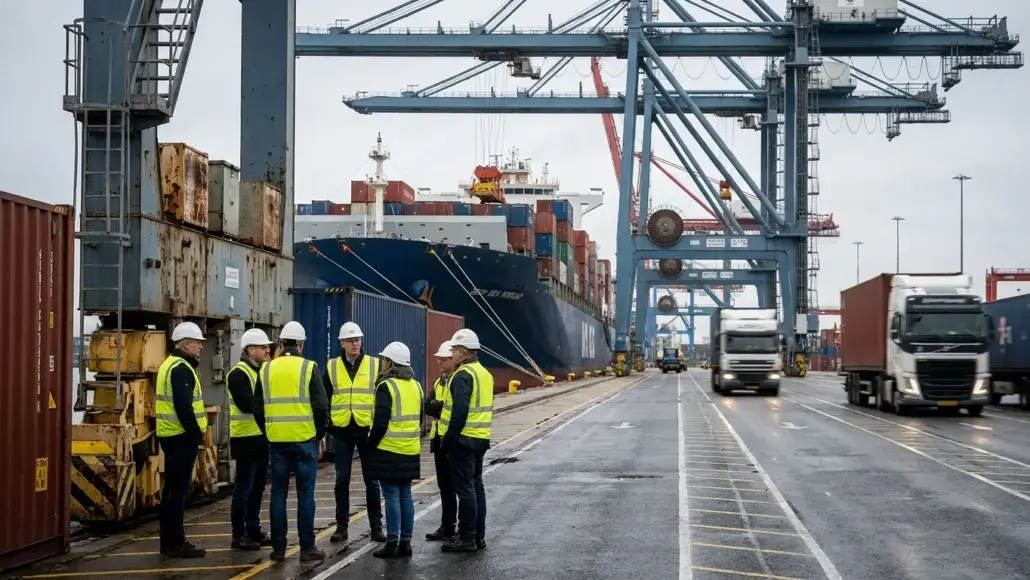
The strategy to be global trade infrastructure company, unveiled during a press conference after a field visit to Khorfakkan Port, additionally confirms the continuation of development works at the port, boosting the yearly capacity for handling from 3.5 million twenty-foot equivalent units – TEUs to 5 million TEUs, with a long-term master plan aiming to achieve over 10 million TEUs.
The company stated that the role of Khorfakkan Port as a fully multimodal terminal linking sea, road as well as rail transport will be strengthened even more by eventual integration with Etihad Rail.
Gulftainer said that together, the Al Dhaid Logistics Park as well as the Sajaa Logistics Park will deliver 2.3 million TEUs of yearly inland logistics capacity, thereby bolstering the position of the company at the convergence of infrastructure and trade connectivity along with digital intelligence while permitting businesses to establish more resilient supply chains and promoting the ambition of the UAE to establish itself as one of the world’s renowned trade and logistics hubs.
The Group Chief Executive Officer of Gulftainer, Farid Belbouab, said that the transformation was greater than a development of the operations of the company, calling it a fresh beginning after nearly 50 years of connecting ports.
He said their clients are no longer looking for individual logistics services but integrated, smart, and scalable supply chain solutions, as the world of trade is going through a fundamental change, and that they are looking at linking economies in the next 50 years.
Belbouab went on to add that Gulftainer supports the next stage of global trade through the conversion of government-to-government trade corridors into workable logistics options. The company is linking ports, inland logistics networks, shipping services, and digital platforms to transport cargo quicker, with improved visibility and productivity throughout major global trade routes, an essential component of the India-Middle East-Europe Economic Corridor – IMEC and the role of the UAE in the Belt and Road Initiative by China.
The transformation is being executed under the New Gulftainer strategy that restructures the operations of the company into 4 integrated business platforms, which are world-class terminals for containers and maritime gateways; inland logistics along with multimodal transport; logistics parks and industrial ecosystems; as well as regional maritime services linking strategic trade corridors, Belbouab added.
According to the director of Ports and Border Points Affairs at the Sharjah Ports, Customs, and Free Zones Authority, Mohammed Ibrahim Al Raisi, they are evaluating the performance of ports in a new way because of the rapidity of global trade and the increasing significance of robust supply chains.
Success is no longer determined by berth capacity or the total number of vessels being handled but instead by a port’s capacity to function as an integrated system that brings together advanced infrastructure, intelligent logistics solutions, and productive strategic collaborations, he added.
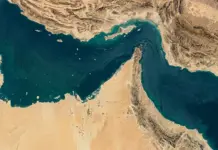
He opines that Sharjah indeed has a competitive edge because of an integrated maritime network that links the Arabian Gulf and the Gulf of Oman, which in turn grants investors and partners operational adaptability and a range of logistics options that strengthen the emirate and the readiness of the UAE to adapt to unforeseen changes in the international economy.
According to him, the strategic partnership with Gulftainer is an accomplishment of the Authority in improving the operational effectiveness and level of competitiveness of Khorfakkan Port using global best practices to encourage the development of an interconnected, future-ready logistics ecosystem that generates long-term value for investors while further uplifting the position of the UAE as a prominent global trade and logistics hub.