


























The “last mile” has long been the most challenging and expensive segment of the entire supply chain. It is the final link in the chain, where a package moves from a local distribution hub to the customer’s doorstep. This stage is notoriously inefficient, characterized by traffic congestion, difficult parking, and the high cost of human drivers making multiple stops. However, as e-commerce continues to reshape consumer behavior, the pressure to solve the last-mile puzzle has never been greater. Enter last mile automation a suite of cutting-edge technologies designed to streamline the final leg of the journey. From autonomous delivery droids to high-speed drones, these innovations are proving that the future of delivery is not just faster, but also more intelligent and sustainable.
The primary driver of this transformation is the need for greater efficiency in an increasingly crowded urban landscape. Traditional delivery methods are often slow and contribute significantly to noise and air pollution. Last mile automation addresses these issues by introducing electric, autonomous solutions that can navigate streets and sidewalks with precision. By removing the need for a human driver for every single delivery, companies can significantly reduce their operating costs while increasing the frequency of their delivery windows. This shift toward logistics innovation is not just about replacing people; it is about creating a more resilient and responsive delivery network that can adapt to the real-time needs of the urban environment.
The Rise of Autonomous Delivery Droids and Sidewalk Robots
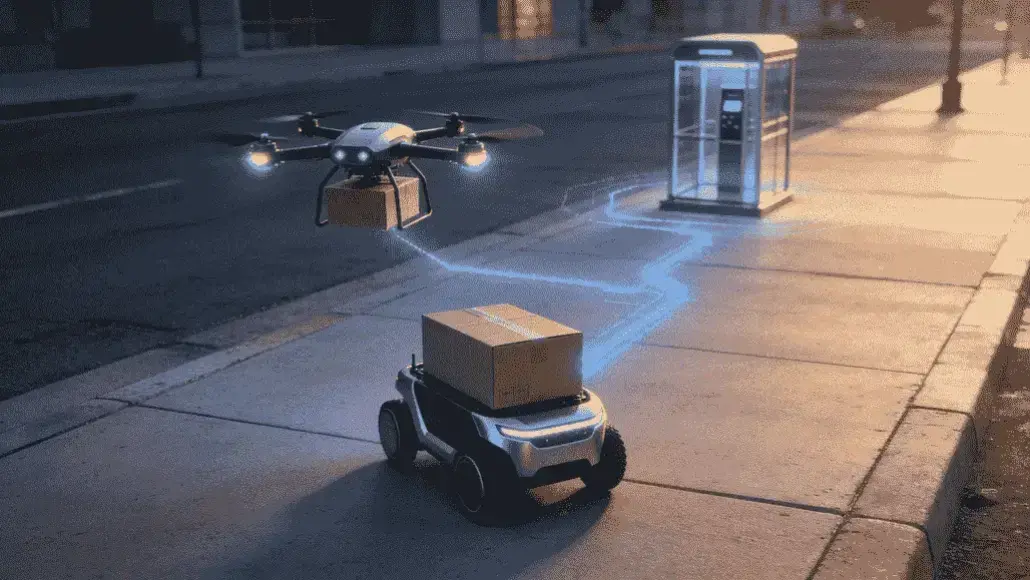
One of the most visible forms of last mile automation is the autonomous delivery robot, often referred to as a “sidewalk droid.” These small, six-wheeled vehicles are equipped with an array of sensors, including LiDAR, GPS, and multiple cameras, allowing them to navigate busy urban sidewalks safely. They are designed to travel at walking speeds and can easily avoid pedestrians, pets, and other obstacles. These robots are ideal for “hyper-local” deliveries, such as groceries or restaurant meals, within a 2-3 mile radius of a hub. By handling these short-distance trips, droids free up larger delivery vans for more complex routes, significantly improving the overall throughput of the delivery network.
The beauty of these robots lies in their simplicity and cost-effectiveness. They are electric, meaning they have a near-zero carbon footprint, and their autonomous nature allows them to operate during off-peak hours when traffic is light. This “always-on” capability is a key component of last mile automation, as it allows for a more continuous flow of goods throughout the day. Furthermore, the use of secure, app-based unlocking mechanisms ensures that the package is only accessible to the intended recipient, providing a high level of security and convenience. As these sidewalk robots become more common, we are seeing a shift in how urban logistics is managed, moving away from large, intrusive vehicles and toward a more discrete and efficient model.
Drones and the Future of High-Speed Aerial Delivery
While sidewalk robots handle the ground, delivery drones are taking to the sky to provide even faster last-mile solutions. Drone delivery is particularly effective in areas with difficult terrain or heavy traffic congestion, where a ground vehicle would be significantly delayed. Modern autonomous delivery drones can carry small to medium-sized packages directly from a distribution center to a customer’s yard or a designated drop-off point in a matter of minutes. This “instant gratification” model is a powerful tool for retailers looking to differentiate themselves in a competitive market. The integration of AI-driven route optimization ensures that these drones follow the safest and most efficient flight paths, minimizing their impact on the surrounding community.
However, the widespread adoption of drone delivery faces significant regulatory and technical hurdles. Issues such as airspace management, noise levels, and privacy must be addressed before drones can become a standard part of the delivery ecosystem. Despite these challenges, the potential benefits are too great to ignore. Drones represent a major leap forward in last mile automation, offering a level of speed and agility that no ground-based solution can match. We are already seeing successful pilot programs in rural and suburban areas, and as the technology matures and regulations evolve, it is only a matter of time before drones become a common sight in the urban skyline, delivering everything from life-saving medicines to the latest tech gadgets.
AI-Driven Route Optimization and the Smart Delivery Network
Behind the physical robots and drones is the “digital brain” that makes it all possible: AI-driven route optimization. This software is the true engine of last mile automation, processing massive amounts of data to ensure that every delivery is as efficient as possible. Unlike traditional routing software, which is often static, AI-powered systems are dynamic and predictive. They can account for real-time traffic updates, weather conditions, and even the availability of specific delivery slots at a customer’s location. This level of intelligence allows for “dynamic rerouting,” where the system can adjust a vehicle’s path mid-trip to avoid a sudden bottleneck, ensuring that the delivery window is always met.
Furthermore, this software enables a more connected and transparent delivery experience for the customer. Through integrated platforms, customers can track their delivery in real-time, receive accurate arrival estimates, and even communicate directly with the delivery system to change their drop-off preferences. This focus on the customer experience is a critical part of logistics innovation, as it builds trust and loyalty in a world where convenience is king. The combination of physical automation and digital intelligence is what defines a “smart” delivery network, one that is not only efficient but also highly responsive to the needs of the people it serves.
In conclusion, last mile automation is the key to unlocking a more efficient and sustainable future for urban logistics. By embracing autonomous solutions and AI-driven intelligence, companies can overcome the traditional challenges of the final leg of the journey, providing a faster and more reliable service to their customers. The transition to an automated last mile is an ongoing process that requires significant investment in technology and a willingness to navigate complex regulatory environments. However, the rewards in terms of lower costs, higher customer satisfaction, and a smaller environmental footprint make it one of the most exciting opportunities in the logistics industry today. The era of the human-driven delivery van is evolving, and the future of the last mile is autonomous, intelligent, and closer than we think.