




![Busy port scene with stacked shipping containers, large cranes, and cargo ships in a bay, beside a coastal highway and rail line on the right.] }} (Note: The input requires a valid JSON with an array of strings in altTexts. Here is a corrected version.)Let's provide proper JSON.](https://www.supplychaininforms.com/wp-content/uploads/2026/09/trade-and-logistics-infrastructure-218x150.webp "Turkey Looks to Upgrade Trade and Logistics Infrastructure")
























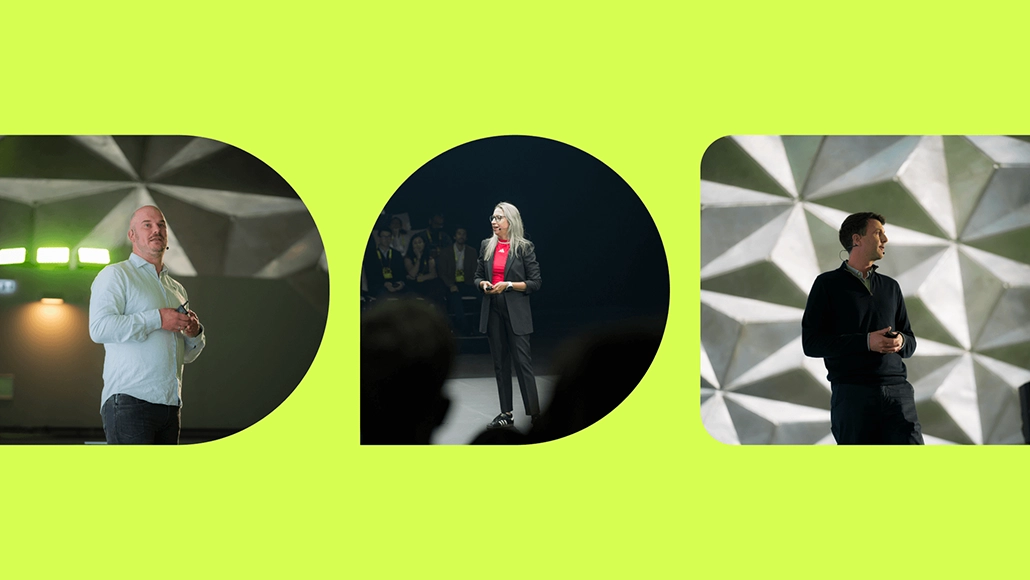
Retail has always been tough to plan. Short product lifecycles, fluctuating demand, and fragmented supplier bases, as well as constant margin pressure, leave little space for a slow, manual, and disconnected planning process, which still runs on Excel sheets in many organizations. At o9’s flagship EMEA event in Amsterdam on June 4th, 2026, three retailers stood up and spoke about what it truly requires to get beyond that not just to deploy a modern planning system, but to embed it sufficiently deeply to keep delivering value as the business evolves.
JD Sports talked from the front end of that trip, nearing go-live on a new assortment-planning ability. On the other hand, Canyon Bicycles and Adidas have created internal Centers of Excellence that enable them to constantly enhance their planning environments while not having to rely on outside vendors to do it for them. The three sessions covered the entire arc of sustainable planning change in retail and the difference between companies that get long-term value and those that don’t.
JD Sports: Taking the Place of Spreadsheets in Retail Planning Without Losing Control
Why does the transformation of assortment planning begin with data and scope?
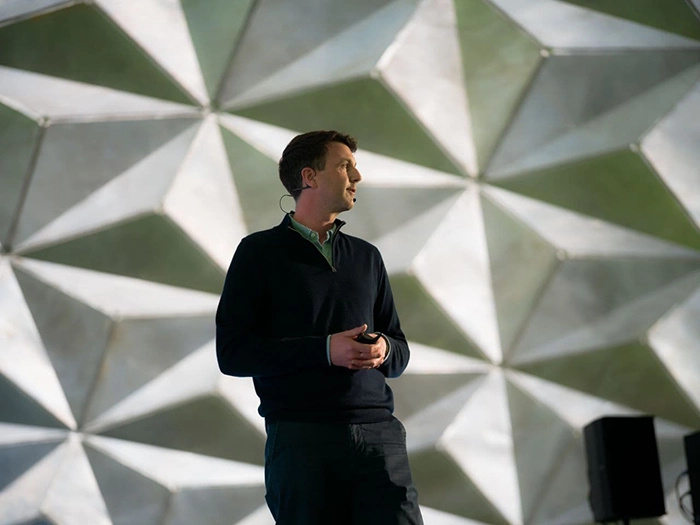
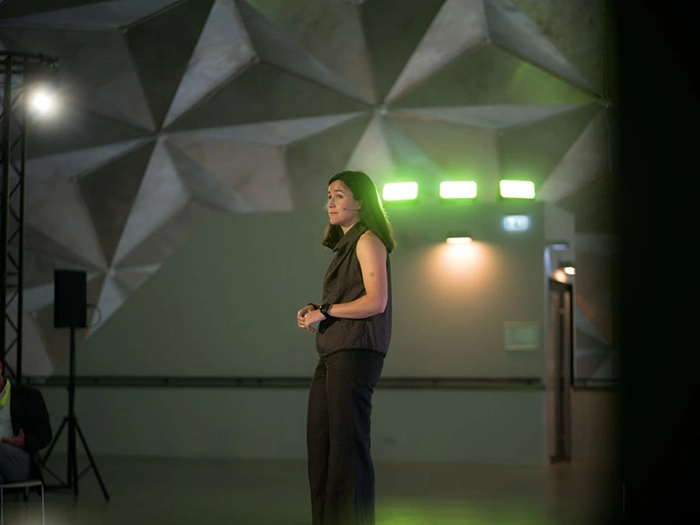
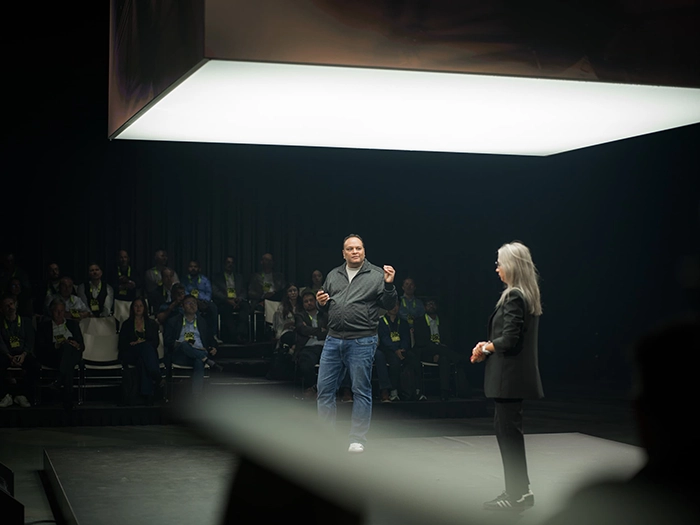
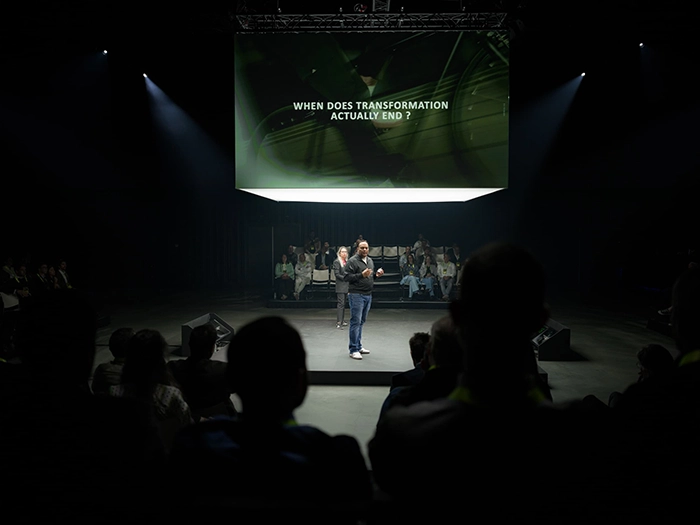
Mark Yates, Programme Director, Group Transformation, JD Sports, and Marta Romero, Project Manager, Supply Chain, JD Sports, demonstrated from the middle of a live implementation.
JD is one of the more difficult environments to do a planning change. The business has 1,100 stores throughout the UK and Europe, a multi-branded product mix spanning performance, fashion, and athleisure as well as streetwear, and a customer base that moves fast – trend driven, peer driven and unforgiving if the right product is not in the right spot. 10-15% of the range is own brand, the rest is managed through hundreds of supplier partnerships, each with its own critical route and minimum order quantities.
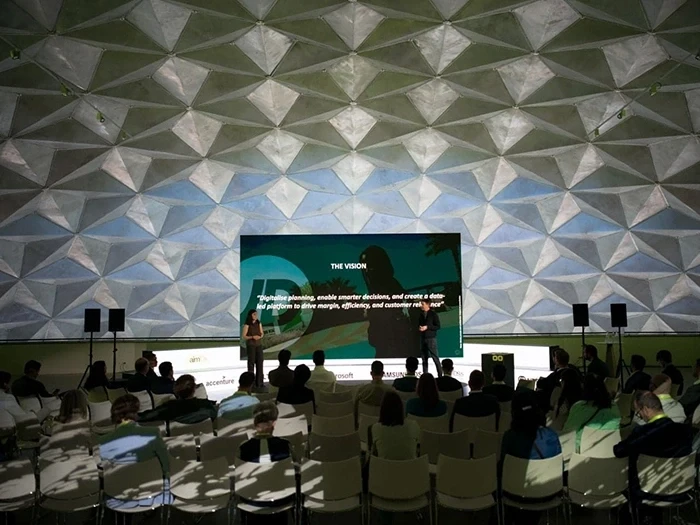
Planning in that environment was done in Excel. In 2025, the board approved a strategic assortment planning transformation with a mandate to “digitalize planning, facilitate objective, smarter choices, and develop a data-led platform that promotes margin efficiency along with customer relevance.”
The extent of the implementation allowed hyper-localized store ranging via custom store groups essential for a retailer whose pitch is based on matching product to local community instead of forcing a homogenous national range. This, on top of size curve modeling, was identified by Marta as one of the top value additions for the planning team and the overall business.
Building for Changing Use Cases
Marta, who has been managing the project every day, was frank about what the journey has entailed. Building took longer, needing more sprints as the team learned more about the platform and the application cases became more complex. ‘That’s common in complex planning transformations,’ she argued. ‘The right reaction is to allow for that instead of pretend it won’t take place. You need to allow yourself some time, as a company and as a group, to work through them.
Data Quality is a Continuous Workstream, not a Checkbox
Data quality was one of the most difficult operational issues. Clustering analysis is a basic input to any localized assortment plan and used to be done outside of any system, in spreadsheets, without a single source of truth. This required extensive analysis to translate this into a structured planning framework. “The recommendation was to put money in good-quality data analysts and also architects to find an accurate mapping between what the gaps are and what o9 needs. For retailers looking to follow suit, the consequence is clear – data readiness does not constitute a pre-project tick box. This is a workstream, in itself, ongoing.
Change Management – The Secret Ingredient in Transformational Planning
Another theme running through the session was change management. Buying and merchandising groups are naturally product focused creating the right range, getting the right inventory, and reacting to what is selling. But asking those teams to change up their planning while keeping the lights on is inherently an exercise in stress. “The invisible part was change management,” Marta said. “It was always visible during the project but easy to underweigh in planning and resourcing.” Her pragmatic approach was to keep the project front and center for the people it would impact the most operating demos for leadership, engaging SMEs in testing, and thinking of involvement as an ongoing profession, not a one-off kickoff.
Mark closed, naming the values that the post-go-live speakers would confirm from the other side – be clear on the business outcomes you are driving, trace specifications thoroughly, and invest in data mapping and change management. Other capabilities are already on the roadmap beyond assortment planning, which is a good sign that JD has begun to think of planning transformation as a perpetual program, not a bounded project, even before phase 1 goes live.
Canyon Bicycles – Owning the Planning Roadmap After Go-Live
Why Does a Center of Excellence Accelerate Deployment?
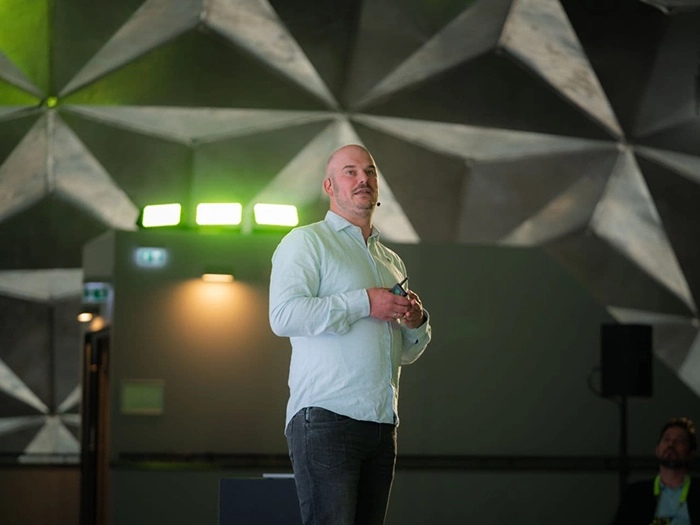
The question JD Sports is asking itself what happens when the execution phase is over and the external team has moved on is one that Paul Tips, Product Owner at Canyon Bicycles, has been living with since go-live.
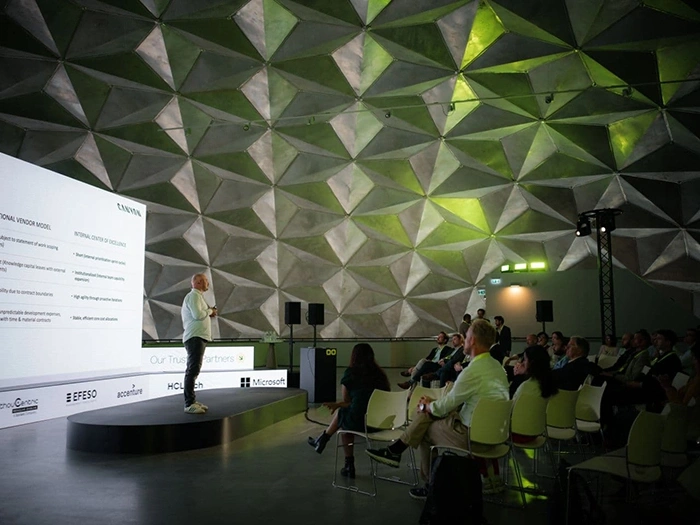
Canyon is a direct-to-consumer cycling brand centered in Koblenz, delivering to over 50 countries. Its planning atmosphere is global. Customer demands are high, and the ability to react to demand signals swiftly is a real competitive advantage. Canyon opted to create an internal Center of Excellence to own and develop the o9 platform not only because it desired continuous operation but also because it wanted to be able to drive strategy improvements at the pace that the business required without having to wait for a vendor to assign priority and deliver them. “We have control because we possess the core application roadmap,” said Paul.
The practical implications when it comes to retail supply chain teams are profound. Without an inner COE, every planning improvement a new allocation rule, a tweak to the replenishing logic, or a refinement to the weighting of demand calls for an external request, then a wait for scope and estimation, then another wait for delivery. That lag is fine when the company is solid. The problem occurs when the market changes, when an entirely novel group appears, or when management wants to try another planning method. Paul’s claim is that deployment velocity, which is the ability to go from idea to production, changes quickly and is one of the most neglected values a COE brings. “We are able to decide, each time, what it is that we concentrate our energy and attention on. “We aren’t restricted by what we decided on in the SOW.
Planning Ability as a Continuous Program, not a Task
He was equally unambiguous that this kind of competence doesn’t come about overnight. It has phases, which include hiring the core team, managing the first COE-managed release, increasing the delivery capacity, and achieving what he calls a level of internal mastery where the company can run improvements nearly entirely autonomously. “It takes time for people to get used to a change not being a project.” And it seldom follows a straight line. In many retail organizations, a mental representation around technological advances is still project-formed. A defined extent, a delivery date, and then a handover. The shift from planning capability being a periodically replaced capability to a constantly evolving capability is just as much a cultural change as it is a technological one.
For Paul, achievement is ultimately measured in independence. “The ultimate measure for success is how much freedom you achieve on the platform.”
Adidas – Maintaining Planning Capacity System Integrator Leaving Post
How to Build Multi-Competency Planning Standards of Excellence from Day One?
Adidas gave us an organized strategy to build, quantify, and evaluate a planning COE and the most stringent evidence that the money spent is worth it.
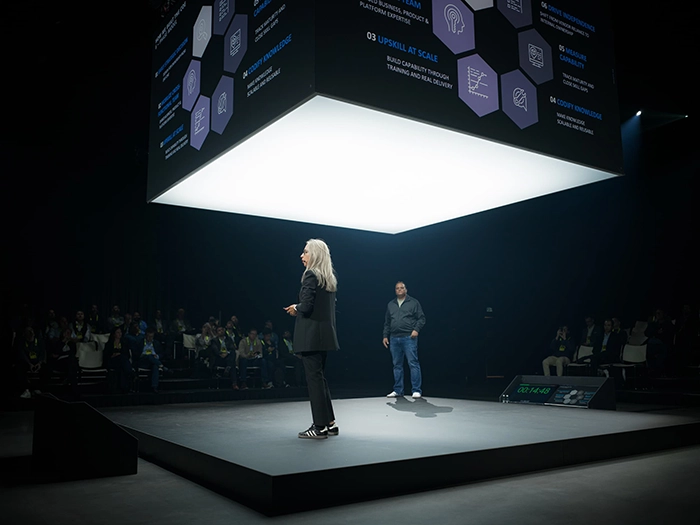
The Director, Tech Project Management, Adidas, Rajni Kant Jayaswal, and Ekaterina Gabrisch, Senior Product Owner, DTC Planning and Digital Retail, Adidas, began the discussion with a query that resonates especially in a business as big and intricate as Adidas – what happens to your planning capabilities when the system integrator walks away?
Adidas has global multi-market planning surroundings. Digital retail is part of the DTC planning operation as well as physical channels. The markets have different standards and business approaches. It was never realistic to think that once this kind of setting was implemented, it would settle into a neat, steady state – to think that we could simply hand the platform over and maintain it. “We have a very complicated ecosystem,” said Ekaterina. We have a diversified market approach, and we have competing business requirements, so it was obvious that we would not reach a stable position after go-live. That recognition led directly to the choice to start developing a COE capability from the first day of the program, as opposed to as a post-go-live consideration.
Adidas constructed the structure with three competencies in one COE –
Product owners with a profound understanding of how global markets function and what the planned requirements are business SMEs from major markets took part in the blueprint development phase so that specifications were tested against real capabilities promptly, and technical experts that comprehended both the o9 architecture and the wider Adidas ecosystem inside and out.
That combination of planning domain knowledge, market-level business context and technical depth is what ultimately enabled the COE to operate without external dependencies.
Learn by doing to enhance your skills
The largest investment was in upskilling. Adidas ran specialized learning sessions, made o9 Academy materials available, ran on-site boot camps and – crucially enrolled COE team members in real delivery work from day one, which included system integration testing, essential user documentation and UAT support. The knowledge move did take place, but through instruction by doing, together with the external experts.
Assessing Planning Capability Maturity for Self-Sufficiency
The most remarkable feature of Adidas was the choice to systematically gauge capability maturity levels along the journey. The team created a monitor of internal competency, rating each person and functional group from zero to six in skill domains and regularly doing self-assessments to identify gaps and track progress.
By go-live, DevOps and front-end engineering had been at a high level of maturity with an 80% self-sufficiency index. 100% quality and performance engineering Ability to verify every change prior to it hitting the manufacturing planning environment and No external reliance to test any planning improvement. 100% for business SME and manufacturer capability. That last number is the most significant for a retail supply chain team – the people who comprehend the planning standards are entirely capable of possessing them without having to translate through an external middleman every time the company wants something modified.
Rajni’s test of the room was equally applicable for organizations that are still in implementation as those already live – What you can measure is what you can manage. “You can’t manage what you don’t measure.” Building COE capacity without tracking it is planning without a prediction possible, but excessively vulnerable to surprise.
The results: faster time-to-market Business trust
The results were measurable on the metrics that are important to retail supply chain planning transformation and planning leaders – less time to market when it comes to planning changes, a COE that predicts enhancements rather than just reacts to requests, a better alignment between what the business requires and what is built, and the type of business confidence that comes from reliable and consistent delivery. “Trust is the coin of your transformation,” Rajni said.
The Full Retail Planning Transformation Journey
The three sessions in Amsterdam followed a topic rarely seen in a single conference track – the entire arc of a retail supply chain planning transformation, examined from three distinct points on a curve.
Now JD Sports is making the fundamental decisions around data, scope, and change management, which will impact how much value the platform provides once live and how readily it can be modified afterwards. Canyon has passed the obstacle and is developing the internal capacity to own its planning blueprint with no external dependency. Adidas has moved further down the process of change and has established a COE that is essentially self-sufficient and views the platform as an asset for the company that continually evolves as opposed to a fixed system to be upheld.
The same lesson that ties all three together is the instruction that each of the speakers came to from a different angle – In retail planning, the time between a go-live and the value uncovered by a planning change is not closed by execution alone.
It is closed by everything that follows – be it the people, the processes, or the measurements as well as the mindset that keeps the platform evolving and providing value as the business changes.