


























Brookfield Asset Management said that it has agreed to take over World Freight Company WFC from PAI Partners and EQT for roughly $1.2 billion in a major strategic acquisition.
The deal was announced on May 14, 2026, and marks the start of the official entry by Brookfield into the worldwide air freight services industry, a key component of the robust global supply chain. Founded in 2004, WFC is known to be the largest general sales and service agent – GSSA in the world for the air freight industry.
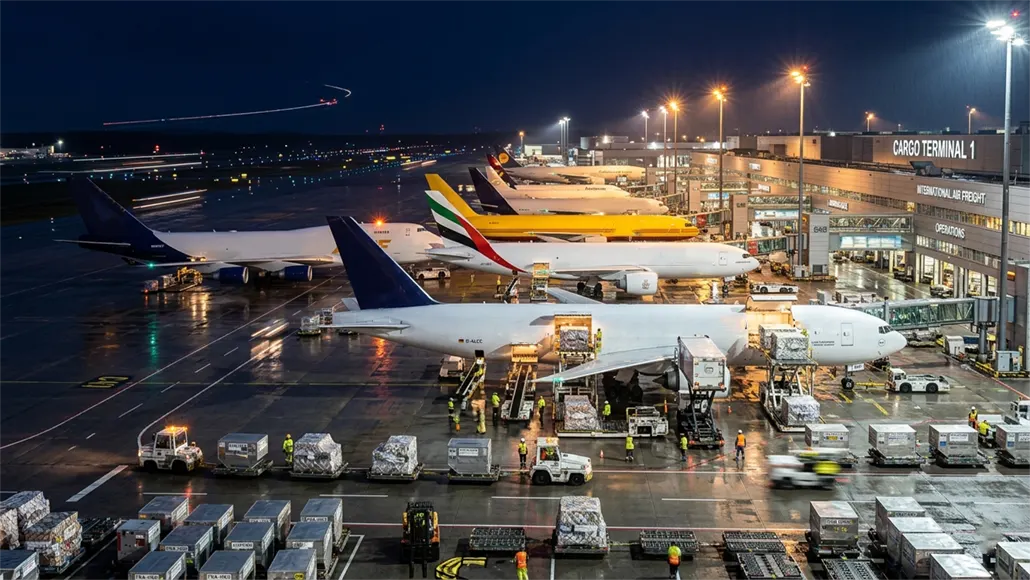
WFC represents more than 300 airlines on 3,500 trade lanes and provides services to over 16,000 freight forwarders in more than 80 nations.
Not only does this $1.2bn World Freight acquisition by Brookfield represent growth, but it reflects a strategic shift into an operating business that adds to Brookfield’s current portfolio of real assets. According to the Managing Partner, Private Equity at Brookfield, Alex Yang, “WFC is a high-quality platform operating in a critical segment of the resilient global air freight ecosystem.”
Notably, Brookfield plans to use its investments in technology as well as other strategic initiatives in order to accelerate improvements in WFC’s activities and development by way of organic expansion and M&A integration. It is expected to close by the end of 2026, depending on customary closing terms and adding WFC’s extensive network and operational capabilities to the broader infrastructure and private equity platforms of Brookfield.
The move follows Brookfield Asset Management’s Q1 2026 earnings of $1.34 billion and net income of $617 million, in addition to a $575 million share buyback and a planned $750 million senior notes issuance. Such large commitments show the appetite of Brookfield for deploying large amounts of capital into operating businesses that fit its long-term real-assets strategy. WFC’s fee-based platform, which handles over 3 million tonnes of cargo per year, could open up opportunities for BAM so as to diversify its revenue streams and generate new fee opportunities, cross-selling or fundraising throughout its investment products.
Brookfield’s 2026 Investment Vision – Where Does Global Logistics Come In?
It is well to be noted that the acquisition of World Freight Company is a direct reflection of the 2026 Investment Outlook published by Brookfield on December 16, 2025, that highlights disciplined transformation and investing in real assets and essential services. As per CEO Bruce Flatt, this is a period that honours excellence in operations and focuses on fundamentals, and those are two themes that the WFC deal embodies very well. The outlook highlights three megatrends, which are digitalisation, deglobalization as well as decarbonization as structural changes that are driving a once-in-a-generation investment supercycle within infrastructure. WFC is a global GSSA that is essential in optimizing productivity in intricate supply chains and directly benefits from these patterns.
Specifically, the mega-trend of digitalization is indeed fuelling explosive demand pertaining to digital infrastructure and computational capacity, which in turn requires strong logistics in order to facilitate physical movement related to components and also finished goods.
It is worth noting that former partners PAI and EQT said that WFC’s emphasis on technology and digital capabilities is aligned with Brookfield’s plans to make additional investments in those areas. In addition, deglobalization and the reshaping of global supply chains require more robust and diverse logistics networks, for which WFC’s global footprint in 80 countries is strategically highly significant. This gives Brookfield leverage to take advantage of the evolving environment of global trade and supply chain resiliency.
Brookfield has a history of investing in the railroads as well as ports, with exposure to transport and logistics infrastructure via investments such as UK-based PD Ports, in which it exited a 49% stake in 2025, however, retained an investment. This background represents a strong basis for the integration of WFC, employing Brookfield’s extensive operational expertise in core services. This expertise will be brought into the air freight segment with the WFC acquisition, supporting its current infrastructure and real estate platforms.
As per Alex Yang, Brookfield’s private equity business has deep global experience owning essential services businesses honed throughout two decades of operationally transforming vital service providers. This operating playbook will be their playbook to drive long-term value at WFC.
What Capital Recycling Tells Us About Brookfield’s Strategy?
It is worth noting that Brookfield’s strategic moves are not limited to the World Freight Company acquisition, as demonstrated by Brookfield Infrastructure Partners L.P. – BIP reporting strong second-quarter 2025 performance on July 31, 2025.
The report emphasised an active capital recycling strategy, providing significant proceeds from asset sales and making three landmark acquisitions. This is core to Brookfield’s model and allows it to sell mature assets at attractive prices and recycle capital into higher growth opportunities. BIP completed the intended disposal of 90% of an asset, resulting in total revenue to its share of roughly $300 million, with full completion anticipated in Q3 2025.
Another large capital recycling initiative was the sale of an additional 33% of an investment portfolio of completely contracted containers at its global intermodal logistics operation, which yielded additional proceeds of around $115 million at BIP’s share and is projected to close in Q3 2025 as well. BIP’s share of the aggregate proceeds from this portfolio is currently in excess of $230 million, and roughly 66% of the portfolio has been sold.
BIP also agreed to a partial sale of its UK ports operations, which is expected to bring in about $385 million. These sales demonstrate a disciplined strategy when it comes to monetizing assets and maximising the portfolio, with capital redeployed regularly for maximum return.
The earnings from these sales are critical to financing new growth initiatives, including the start of over $1.5 billion of new capital projects from BIP’s backlogs over the last 12 months, especially for its data center platform. This emphasis on data centers corresponds with the digitalization megatrend outlined in Brookfield’s 2026 Investment Outlook. For the period of three months completed on June 30, 2025, BIP disclosed Funds From Operations – FFO – of $638 million, an increase of 5% over $608 million in the prior year, fuelled by solid organic expansion and tuck-in acquisition contributions. This active management of capital, via both divestitures as well as strategic investments, shows Brookfield’s commitment to an evolving and high-performing asset base.
How do BAM and BN’s financials compare with these moves in play?
Brookfield works through two main public companies, Brookfield Asset Management Ltd. – BAM as well as Brookfield Corporation – BN. Both are players in the alternative asset management industry, but their financial statements and market valuations suggest different roles. As of May 22, 2026, BAM has a market cap of $76.53 billion and trades at $47.93, while BN has a market cap of $101.50 billion and trades at $45.37. BN spun out BAM in 2022. BAM is mainly a fee business where it manages client capital, while BN still owns significant interest in the fundamental operating businesses and capital.
Based on the trailing twelve-month – TTM financials, BAM has impressive margins – 85.8% gross profit margin, 59.3% operating margin, as well as 49.6% net margin. It is trading at a P/E of 30.64 and has strong returns, like a ROE of 30.1% and a ROIC of 52.9%. BAM’s asset management capabilities are reflected in its FY2025 revenue growth of 21.0% and EPS growth of 16.5%. The company also has a yield on dividends of 3.8% and a payout ratio of 88.2%. This suggests a high-growth, high-margin business model that is focused on generating fees off its huge asset base.
BN as a holding company is more diversified and asset-rich, on the other hand. Its TTM gross margin is 35.3%, while the operating margin is 28.3% and the net margin is 1.7%. BN’s P/E ratio is much higher at 85.05, indicative of its complex structure and underlying asset values. Its FY2025 revenue fell 11.5%, but net income jumped 103.9% and EPS rocketed 141.9%, underscoring the major boost in profitability from its diversified portfolio. BN has a lower dividend yield of 0.6% and a payout ratio of 42.1%. While World Freight has been acquired by Brookfield’s private equity arm, it will ultimately feed into the larger Brookfield system, impacting both BAM’s fee generation capabilities and BN’s underlying asset value and operational exposure.
What are the main risks and benefits for investors?
The $1.2bn World Freight acquisition by Brookfield presents some appealing opportunities, as well as significant risks, for investors in Brookfield – both BAM and BN. On the opportunity side, Brookfield would be exposed to a wide logistics footprint that might facilitate future fund products or co-investment opportunities linked to supply chains, airports and transportation infrastructure. In his words, WFC is the world’s largest GSSA, representing over 300 airlines and 16,000 freight forwarders in 80 countries, and it provides a powerful platform for growth and industry consolidation. This move into global air freight logistics is in line with Brookfield’s long-term strategy of investing in core real assets that benefit from structural megatrends such as digitalization and deglobalization.
In addition, Brookfield’s operational playbook of investing in technology and improving commercial execution could unlock significant value from WFC. Brookfield has a good platform to build from, with historical growth driven by organic initiatives and M&A integration under prior ownership. The acquisition also complements Brookfield’s active capital management, including BAM’s recent $575 million share buyback and planned $750 million senior notes issuance, providing flexibility in funding and scaling its platforms. The move could boost Brookfield’s ability to generate fee-based earnings and attract capital for new funds targeting logistics and supply chain resilience.
But there are also inherent risks in the investment that investors must consider. The big one is integration risk. If WFC’s global network, contracts and systems don’t mesh well with Brookfield’s existing platforms, it could be a drag on profitability. The acquisition also offers further exposure to trade-dependent cargo volumes and airline relationships that could lead to earnings volatility different from Brookfield’s present fee-based asset management model. Brookfield has infrastructure experience, but running a global GSSA business comes with its own set of challenges around fuel costs, air freight rates, geopolitical tensions and constant technology investment. The expectation that the deal will close by the end of 2026 creates a window during which market developments could affect the integration and WFC’s performance in Brookfield’s portfolio.
Brookfield’s acquisition of World Freight Company is a bold strategic move in a critical sector, underscoring its commitment to real assets and operational value creation. Investors will want to closely follow the integration process and how this new logistics platform aligns with Brookfield’s long-term fee generation along with overall portfolio durability.