




















In the complex and often fragmented world of global commerce, the ability to manage uncertainty is perhaps the most valuable asset a company can possess. For years, logistics was seen as a cost center, a necessary but cumbersome part of doing business that relied on manual planning and rigid schedules. However, the emergence of AI driven logistics operations has flipped this narrative on its head. Today, artificial intelligence is the engine behind a more agile, resilient, and efficient supply chain. By processing complex datasets that would overwhelm human planners, AI allows organizations to uncover hidden patterns, forecast future trends, and make decisions with a level of precision that was previously unimaginable. This shift toward intelligent automation is not just a technological trend; it is a fundamental reimagining of how the world connects.
The core strength of AI in logistics lies in its capacity for predictive analytics. In a traditional setting, supply chain managers often find themselves reacting to events after they have occurred a late shipment, a sudden spike in demand, or a weather-related delay. Predictive analytics supply chain models change this dynamic by using machine learning algorithms to analyze historical data and external variables. These systems can predict with high accuracy when a port might become congested or when a specific region might experience a surge in orders. By having this foresight, companies can adjust their smart logistics operations in advance, rerouting shipments or increasing inventory levels to mitigate potential issues. This proactive stance significantly reduces lead times and ensures that the flow of goods remains steady even in the face of volatility.
Precision Routing and the Optimization of the Last Mile
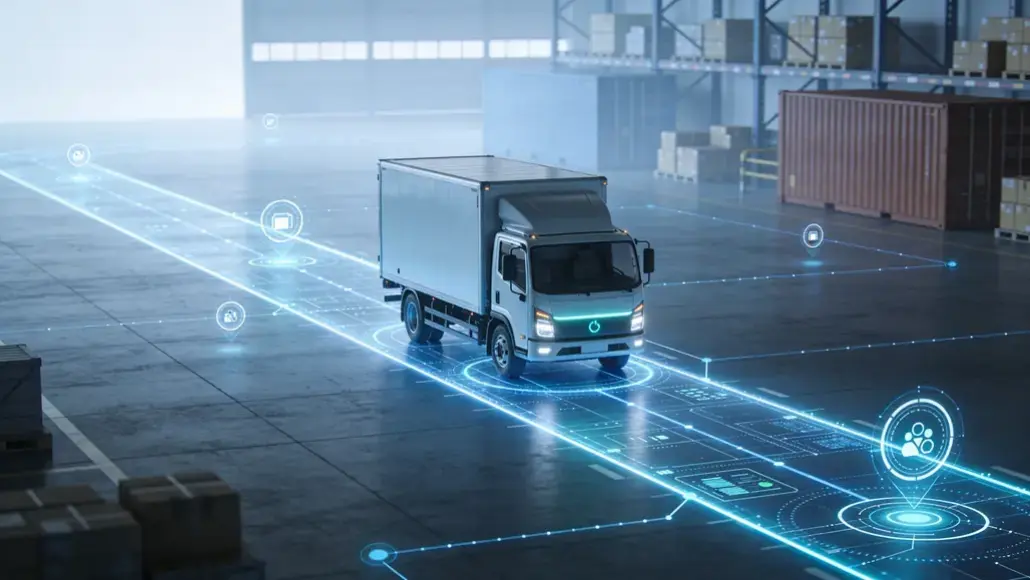
One of the most visible applications of AI driven logistics operations is in the field of route optimization. The “last mile” of delivery is notoriously the most expensive and inefficient part of the supply chain, often accounting for a disproportionate percentage of total shipping costs. Artificial intelligence tackles this challenge by considering a multitude of factors in real-time, including traffic patterns, delivery windows, vehicle capacity, and even fuel efficiency. Unlike traditional routing software that follows a set logic, AI-powered systems are dynamic. They can update a driver’s route mid-trip based on new information, ensuring that every mile driven is as productive as possible. This level of logistics optimization not only saves time and money but also reduces the carbon footprint of the delivery fleet, aligning business goals with environmental sustainability.
Furthermore, the integration of real time visibility into these operations provides a level of transparency that has become a requirement for modern consumers. In an era where customers expect to know the exact location of their package at any given time, AI acts as the bridge between raw tracking data and actionable information. Smart logistics operations use AI to filter out the noise and provide stakeholders with meaningful updates. If a delay is inevitable, the system can automatically communicate this to the customer while simultaneously identifying the root cause and suggesting a solution. This transparency builds trust and allows for better coordination across the entire distribution network, from the warehouse floor to the customer’s doorstep.
Enhancing Supply Chain Resilience Through Risk Management
Beyond daily operational gains, AI driven logistics operations play a critical role in strategic risk management. The global supply chain is susceptible to a wide range of disruptions, from geopolitical tensions to natural disasters. AI systems can perform “what-if” simulations on a massive scale, allowing companies to test the resilience of their networks under various stress scenarios. For example, a company might use AI to model the impact of a major factory closure in a specific region. The system can then identify alternative suppliers and calculate the cost and time implications of switching routes. This ability to model complex contingencies enables businesses to build “buffer” into their systems where it is needed most, ensuring that they can pivot quickly when a real crisis strikes.
Moreover, AI is revolutionizing the way inventory is managed across complex networks. Intelligent systems can optimize stock levels at multiple locations simultaneously, ensuring that the right products are in the right place at the right time without overstocking. This balancing act is crucial for maintaining healthy cash flow. By analyzing consumer behavior and market trends, AI can suggest where to hold inventory to minimize shipping distances and maximize fulfillment speed. This localized approach to distribution, supported by smart logistics operations, is a key differentiator for companies looking to compete in a world where “same-day delivery” is increasingly the standard.
The Human Element and the Evolution of Logistics Talent
As AI becomes more deeply embedded in logistics, the role of the human professional is also evolving. There is a common misconception that AI will replace the need for human expertise in the supply chain. In reality, the most successful implementations are those that combine the computational power of AI with human judgment and creativity. While AI can handle the data-crunching and routine decision-making, humans are needed to manage relationships, negotiate complex contracts, and handle the ethical considerations that come with automated systems. The future of the industry lies in a “human-in-the-loop” model, where AI driven logistics operations empower professionals to focus on high-level strategy rather than administrative tasks.
In conclusion, the impact of artificial intelligence on the supply chain is both broad and deep. From the micro-optimization of a single delivery route to the macro-forecasting of global trade flows, AI is the common thread that connects modern logistics. The transition to AI driven logistics operations is an ongoing process that requires investment in both technology and talent. However, the rewards greater efficiency, lower costs, and enhanced customer satisfaction make it one of the most compelling opportunities in the business world today. As we move forward, the companies that successfully harness the power of AI will be the ones that define the future of global commerce, creating a supply chain that is not just a sequence of movements, but a highly intelligent and responsive ecosystem.
The journey toward full integration of AI in logistics is not without its hurdles. Issues such as data silos, legacy systems, and the need for standardized communication protocols must be addressed. Yet, the momentum is undeniable. Every year, the algorithms become more sophisticated, the sensors become more ubiquitous, and the business case for AI becomes more airtight. By focusing on predictive analytics supply chain solutions and fostering a culture of innovation, the logistics industry is setting the stage for a new era of global connectivity. The result will be a more transparent, efficient, and sustainable world for businesses and consumers alike, proving that when it comes to the supply chain, the smartest route is the one powered by AI.