



![Busy port scene with stacked shipping containers, large cranes, and cargo ships in a bay, beside a coastal highway and rail line on the right.] }} (Note: The input requires a valid JSON with an array of strings in altTexts. Here is a corrected version.)Let's provide proper JSON.](https://www.supplychaininforms.com/wp-content/uploads/2026/09/trade-and-logistics-infrastructure-218x150.webp "Turkey Looks to Upgrade Trade and Logistics Infrastructure")























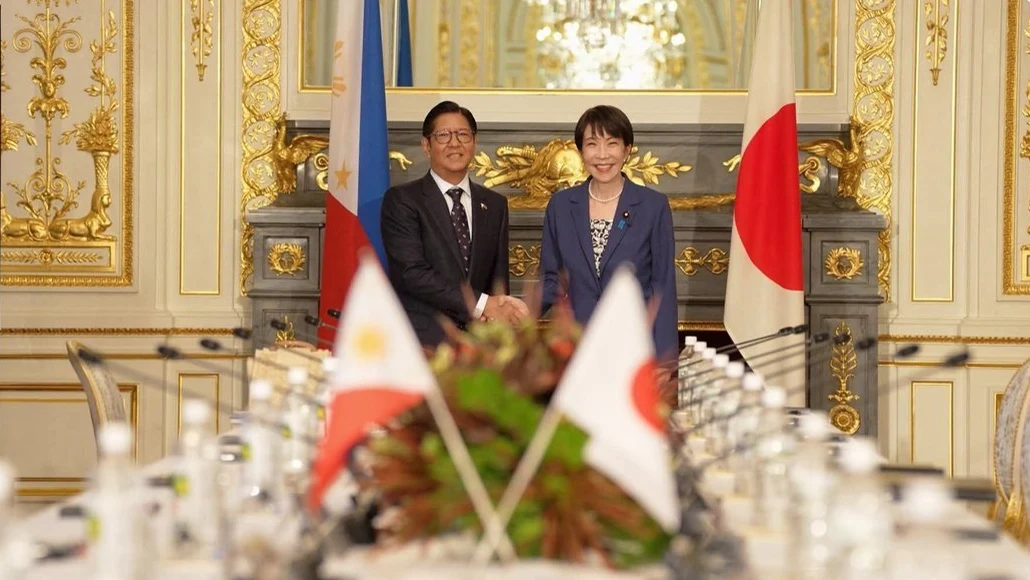
The Philippines and Japan have pledged to turn the Luzon Economic Corridor – LEC – into a top-notch economic hub, underscoring its importance in reinforcing the region-wide economic framework and the global supply chain resilience.
In a joint declaration after a summit meeting on May 28, 2026, in Tokyo, Japan, President Ferdinand R. Marcos Jr and Japanese Prime Minister Sanae Takaichi committed to strengthening collaboration on major impact infrastructure and economic initiatives within the LEC framework.
It will focus on several key areas such as rail and port modernisation, clean energy, digital connectivity, semiconductor supply chains, and agribusiness as well as civilian port upgrades.
As per the joint statement, they also reiterated their deep commitment to converting the Luzon Economic Corridor into a world-leading economic hub that enhances global supply chains, speeds up economic development, and ensures mutual economic prosperity.
The Luzon Economic Corridor is a trilateral initiative among the Philippines, Japan as well as the United States – US and is designed to enhance connectivity and economic growth in the region of Luzon, particularly along the Subic-Clark-Manila-Batangas belt.
The Philippines and Japan recognised the significance of trilateral cooperation with the US as well as working together with like-minded counterparts like Australia and India to maintain a liberal and transparent world order based on the principle of law.
The two leaders highlighted the importance of enhancing connectivity to infrastructure and resilience by means of Japan’s Official Development Assistance – ODA not only for the economic growth of the Philippines but additionally for stability in the region.
Japan reiterated its backing for high-quality, resilient and environmentally friendly infrastructure development in helping to propel social and economic transformation of the Philippines.
The two countries also concurred to strengthen cooperation on economic security, which would include efforts to build stronger and diverse supply chains when it comes to critical minerals, automotive manufacturing, and renewable energy as well as technological advances like artificial intelligence – AI.
They also agreed to improve cooperation regarding digital infrastructure such as undersea cables as well as 5G Open RAN technologies, in addition to promoting dependable and secure AI ecosystems via the Japan-ASEAN Co-creation Initiative for AI.
When it comes to trade and investment, both sides highlighted the need for full execution of prevailing agreements, including the ASEAN-Japan Comprehensive Economic Partnership, the Philippines-Japan Economic Partnership Agreement, and the Regional Comprehensive Economic Partnership.
Japan also endorsed support for the planned accession of the Philippines to the Comprehensive Agreement for Trans-Pacific Partnership.
Both leaders acknowledged the role of global supply chain resilience to strengthen cooperation under the Asia Zero Emission Community within the energy sector, focusing on offshore wind and civilian nuclear energy and liquefied natural gas, conditioned on progress on the Philippines’ side.