



![Busy port scene with stacked shipping containers, large cranes, and cargo ships in a bay, beside a coastal highway and rail line on the right.] }} (Note: The input requires a valid JSON with an array of strings in altTexts. Here is a corrected version.)Let's provide proper JSON.](https://www.supplychaininforms.com/wp-content/uploads/2026/09/trade-and-logistics-infrastructure-218x150.webp "Turkey Looks to Upgrade Trade and Logistics Infrastructure")

























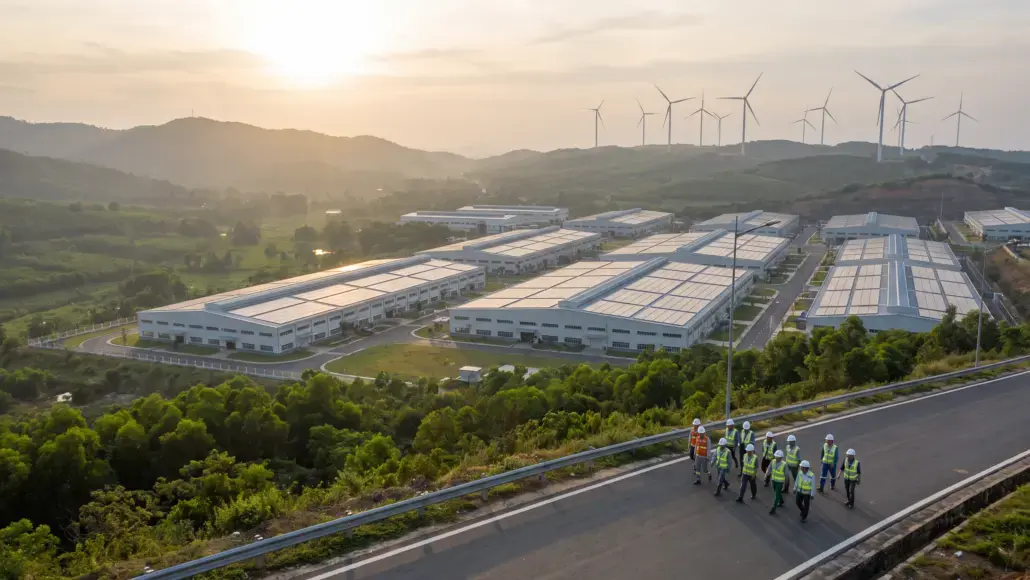
A new policy by Vietnam enabling direct renewable energy purchases will increase its appeal to Foxconn and various other international manufacturers, fostering sustainable development and supply chain resilience. The changes are viewed as a key driver for investment and a move towards making Vietnam a regional pioneer in sustainable manufacturing.
The government is overhauling its energy sector with comprehensive reforms, making Vietnam an increasingly key destination when it comes to multinational manufacturers. The most recent move of opening up direct access to renewable electricity is expected to draw-in global supply chains, especially as firms seek to diversify production away from China.
Vietnam allows direct purchase of green energy
A significant policy shift has enabled companies that operate in Vietnam to buy renewable energy straight from generators, bypassing earlier regulations that mandated all power purchases to go via state-owned Vietnam Electricity – EVN. The development has already caught the eye of electronics majors such as Foxconn along with its extensive list of suppliers, a number of whom have expressed concerns about access to dependable and sustainable power as a prerequisite to growing their operations within the country.
Worldwide manufacturers are stepping up the China+1 strategy
The decision comes at a notably opportune time as global electronics manufacturers, such as Apple’s major partner Foxconn, speed up their China+1 diversification plans. Foxconn and a group of component suppliers have been stepping up investments in Vietnam to help alleviate geopolitical threats and supply chain interruptions. But the relatively rigid and fossil-fuel-dependent electricity market of Vietnam had become a constraint, particularly for companies under pressure so as to achieve ambitious sustainability goals.
Under the amended policy by the Vietnamese government, the manufacturers can acquire renewable energy certifications and proceed to enter into power purchase agreements – PPAs – directly with green energy producers. This makes Vietnam more similar to global manufacturing hubs such as Malaysia and Thailand, which have already opened their electricity marketplaces to industrial customers.
Sustainability and Supply Chain Resilience Take Centre Stage
The change is more than just cost of energy or dependability. Investors, customers and regulators are increasingly requesting that multinational corporations must be held accountable for their carbon emissions. For companies like Foxconn and its customers, such as Apple, having access to renewable electricity is not optional but mandatory in order to remain a supplier and protect the brand.
It is well to be noted that the new policy by Vietnam is anticipated to unlock capital for wind, solar and various other renewables projects as independent power producers find a way to sell directly to large industrial customers. This could spur billions of dollars in foreign direct investment – FDI and assist Vietnam in moving up the value chain when it comes to electronics manufacturing, analysts say.
Impacts for the Region and Competitive Environment
The reforms from Vietnam come as South-east Asia competes to draw-in global supply chains along with higher-value manufacturing as global supply chains shift. Countries such as Indonesia and Thailand have already made headway in green energy, but Vietnam’s most recent moves could give it a competitive advantage, especially for assembly of electronics and technology. The act, industry watchers say, also sends a message to investors that Vietnam is committed to decarbonization and economic modernization.
It is well to be noted that Samsung and Intel, as well as LG, are already operating large-scale production facilities in Vietnam, and the ability to obtain renewable power directly is expected to fuel further development. The country’s leaders want to achieve net-zero by 2050, in accordance with the commitment made at COP26, and they deem green power crucial in terms of industrial development as well as environmental protection.
Possible obstacles and the way forward
But experts warn Vietnam also needs to focus on stability in the grid, clear regulation, and long-term pricing in order to fully enjoy the advantages of market liberalization. As renewable capacity grows, new investment when it comes to transmission infrastructure and grid management will be required to guarantee a steady supply for major industrial consumers.
More details on execution and oversight are anticipated to be announced in the months to come. Industry groups have advocated for transparent mechanisms with equal access to both local as well as overseas investors to minimise bottlenecks and make sure that the green power market in Vietnam lives up to its promise.
The energy reform in Vietnam – The engine of sustainable growth
Vietnam is liberalizing its power market to enable green energy to be purchased directly, making the country a prime destination for tech-led sustainable manufacturing. The move focuses on some of the biggest hurdles faced by global businesses and might open the path for fresh investment that might change the industrial ecosystem of the country along with the environmental prospects. The years ahead will challenge the ability of Vietnam to juggle the competing demands of fast growth, environmental objectives, and the changing demands of multinational supply chains.