




























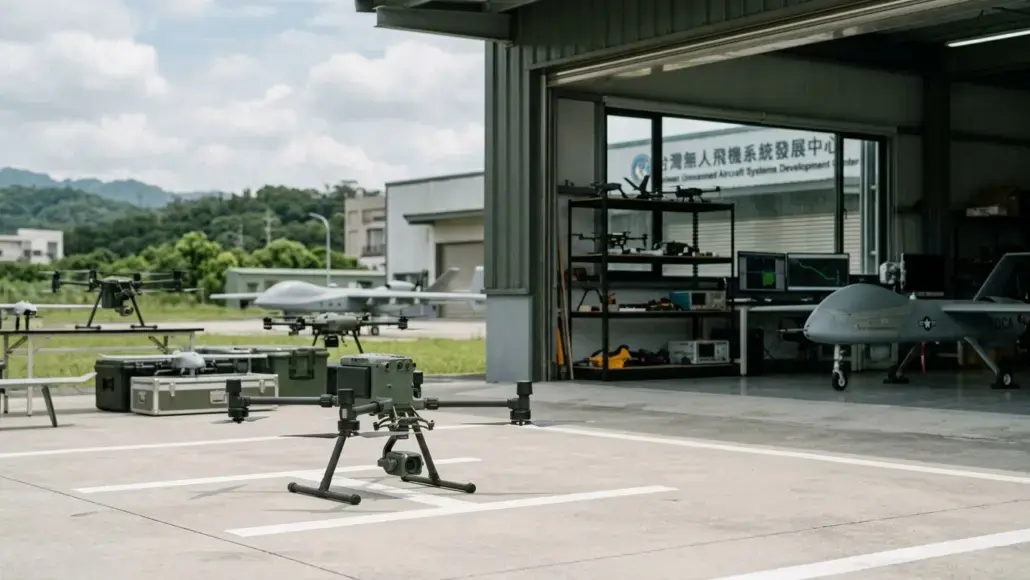
The Chinese Nationalist Party – KMT on June 30, 2026, presented a draft six-year domestic drone procurement budget of $7.52bn or NT$240bn, to be distributed each year by means of the general budget, following the legislature last week, and went on to reject the proposed NT$210 billion special budget by the Executive Yuan for the same objective.
The KMT said that the proposal includes more stringent anti-corruption regulations, demanding a written report to the Legislative Yuan regarding any procurement in excess of NT$100 million, and that 80% of drones must be domestically manufactured over a span of four years.
At a news conference, Lin Pei-hsiang, the KMT caucus secretary-general, said the KMT is not against buying drones but is opposed to utilizing public money with no clear disclosure as to what is being bought.
As per Lin, the proposal would set aside NT$40 billion per year for 6 years by means of the general budget for review and monitoring by the Legislature, not special budgets to prevent scrutiny.
Funding would, as per him, be used for military drone procurement, maintenance, production, training, and testing facilities as well as industrial development, adding that there would be a yearly disclosure of procurement progress and localization rates as well as execution outcomes.
Says Lin, the development of national defense shouldn’t be limited to buying drones; rather, it should build a complete unmanned combat system, which includes certified drones that conform to information security protocols, in addition to wartime communication, command, and control as well as backup systems.
Without safe communication, anti-jamming features, and an independent command system, drones would not have viable combat abilities, he said.
Lin further added that the KMT proposal of domestic drone procurement budget of $7.52bn would call for the Ministry of National Defense and research institutions as well as start-ups to jointly confirm flight control and anti-jamming as well as operational capabilities.
Apparently, the draft also includes anti-corruption protections, like a prohibition against the utilization of high-risk suppliers for major drone components, including navigation chips and flight control systems as well as communication modules.
It would additionally mandate companies looking for government funding or contracts to submit documents related to cybersecurity as well as supply-chain inspections, with fines for companies that disclose false data or use unauthorized parts, he added.
The proposal would set up a full legal structure so as to make sure the government was not only buying equipment, but at the same time it was establishing domestic capabilities in order to produce the equipment, says KMT caucus deputy secretary-general Hsu Yu-chen.
The draft also addresses development objectives, evaluation facilities, separation of labor, locale-based targets, supply chain security, cybersecurity guidelines, global collaboration, manufacturing support, talent growth, and management of performance, as well as legislative supervision.
It also sets targets for domestic drone manufacturing rates of 50% in two years and 80% in four years, she concluded.