



























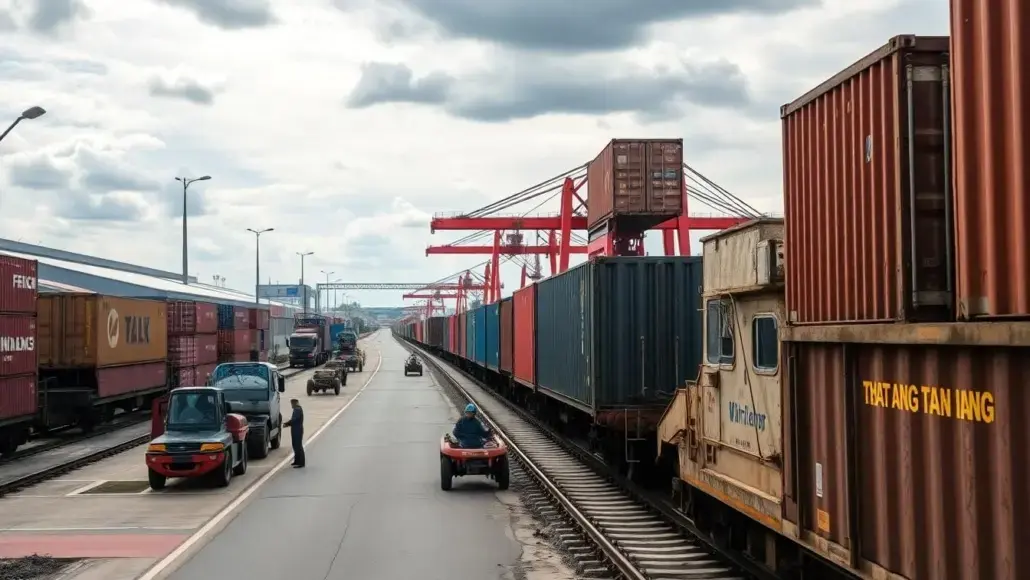
APM Terminals and the Hateco Group of Vietnam have signed a MoU in order to study the construction and operation of rail freight terminals in Vietnam in the north. The initial scope includes a future site in Hai Phong and the study of three other sites, aiming to connect industrial production zones as well as logistics centers with rail transport and seaports.
It is well to be noted that the agreement was announced on October 20, 2026, at the Vietnam-Denmark business forum that took place in Denmark and is not itself an approved or financed construction program.
The Vietnamese government predicts that the potential wider rail terminal network could be worth almost US$3.5bn in investment. The figure is provisional and includes aspirations beyond a fully defined Hai Phong facility.
The memorandum does not allocate any kind of committed budget between the four potential locations. The Hai Phong concept officially calls for cargo-handling space and a container yard, with three more sites to be examined. The funding structures, land requirements, and the sequence of construction will depend on the outcome of the feasibility work and subsequent agreements among the participants.
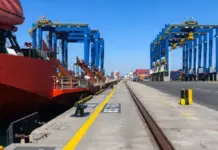
Hateco and APM Terminals already collaborate in the Lach Huyen area at Hateco Hai Phong International Container Terminal, which started operations in 2025. The existing seaport partnership offers expertise in cargo handling and information sharing around the gateway.
The facility was an investment of over $400 million, not counting the possible rail sites. Inland terminals could link factory cargo with the port by rail, provided perfect rail alignments and handling capacity, as well as service frequency, are established. The operational design would also have to interconnect the wagon and container records with the reception and release processes at the port.
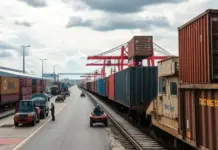
At each of the proposed rail freight terminals in Vietnam, containers or conventional cargo would have to be transferred onto road vehicles, allocated to storage or onwards distribution, and discharged against legitimate transport and customs documentation. The crane capacity, reach, and stacker availability, as well as wagon access, must be matched to the expected traffic and train length. The mix of equipment will depend on the proportion of containerized and conventional cargo, the footprint of each location, and the hours of operation envisaged.
The design specs are still to be established through the feasibility process.
Whether the concept works at the scale of the network will also depend on the design of rail connections. A terminal’s practical capacity depends on the length of trains, the number of available paths, access to industrial zones, and the connection of services to the national and cross-border rail infrastructure. If the depot has large storage areas but only an infrequent service by train, manufacturers can still be left relying on road haulage for most transportation. In contrast, a standard service with predetermined terminal turnaround times could motivate shippers to combine consignments that are currently sent separately by lorry.
The partners also see digital systems for receiving, storing, transferring, and releasing goods. Terminal operators, rail carriers, forwarders, and the connected port would exchange shipment identities, wagon positions, and collection status between those systems. Common identifiers could reduce manual reconciliation, and event records would provide visibility on when cargo is ready for loading or collection. The physical terminal designs are evolving, and data definitions and obligations for correcting exceptions will be part of the integration work.
Manufacturers in northern Vietnam require dependable access to export markets and inbound supplies of components and raw materials. Rail might provide a substitute to road-only transport for freight that fits with train schedules. The commercial outcome will depend on distance travelled, shipment density, terminal transit charges, dependability, and service frequency; additional handling may offset savings on less frequent movements. The partners have not published any verified estimates of savings per container, journey-time comparisons, or emissions for the proposed network. However, these measures require specific route and shipment assumptions before they can be used to support investment decisions.
The proposed network would have potential freight origins and destinations in Hai Phong, an already established manufacturing and logistics gateway. However, each candidate location will still need to have a workable land plan, rights related to rail access, and terminal permissions, as well as the right to customs processes. The partners must agree on who pays for the infrastructure and equipment, who manages the terminals, and how risks are shared if freight demand does not match the predictions. The feasible timetable will also be contingent on the train paths and the interchange capacity that exists beyond the terminal boundaries.
The memo broadens a prevailing seaport partnership to a proposed inland rail freight facilities network. The next significant step is to evaluate the four sites for engineering feasibility and rail capacity as well as demand from manufacturers and logistics customers. Then a binding investment decision would set particular sites, capital obligations, and delivery programs. Hateco Hai Phong International Container Terminal will distinguish future rail terminal capacity from current traffic.