





























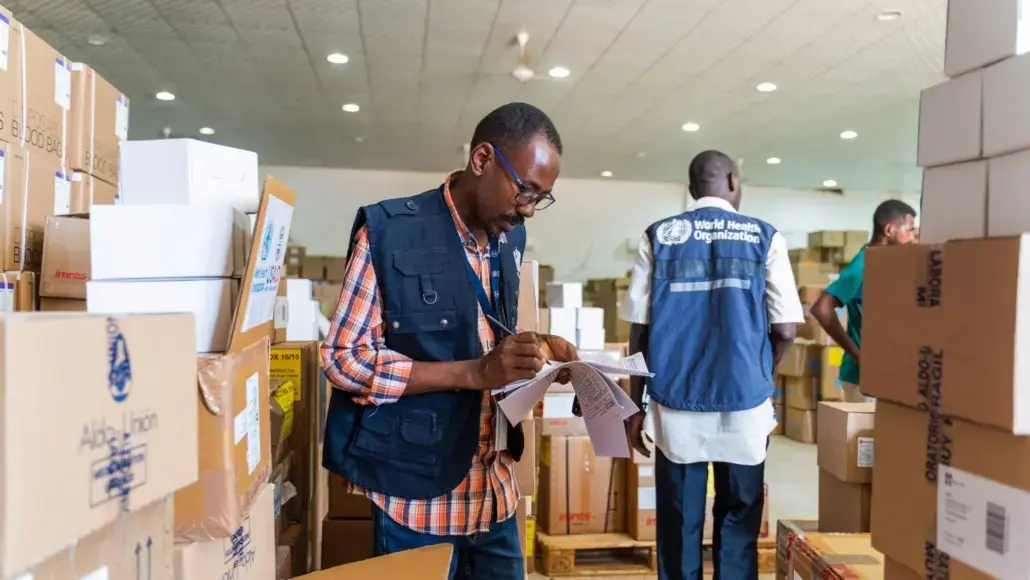
The World Health Organization – WHO, along with the ministries of health, pharmaceutical donors, and implementing partners, as well as technical support platforms, met for three back-to-back meetings in Geneva on 22-25 September 2026 in order to strengthen collaboration when it came to neglected tropical disease – NTD programs and medicines supply chains.
The meetings – the NTD Supply Chain Forum – NTD-SCF, the Supply Chain Technical Support Mechanism – SCTSM as well as the Global Coordination and Stewardship Committee – GCSC went ahead and brought together global, regional, and national stakeholders so as to review progress, discuss ongoing supply chain challenges, and explore how NTD programs can adapt to the evolving environment toward and beyond 2030.
Discussions over the week concentrated on enhancing prediction and supply planning, boosting transparency of data and responsibility, decreasing delays in the transportation of medicines, bettering compatibility with national systems and recognising supply chain risks sufficiently early for countries and partners to take action.
NTD Supply Chain Forum – Between 22 and 23 September
The annual meeting of the NTD-SCF gathered together ministries of health, WHO, pharmaceutical donors, NGOs, and logistics providers, as well as technical partners, to assess progress and discuss operational requirements and strategic supply chain objectives.
Participants reviewed the actions taken from the prior annual meeting and also discussed the difficulties they had faced across the medicine supply chain involving forecasting, order and shipment schedules, customs approval, inventory visibility as well as medicine utilization. The experiences of countries and partners demonstrated the need for reliable data and greater coordination across the various stages, from program planning and requests for medicines to shipment, delivery, and use.
Opportunities so as to improve the alignment of NTD medicine management with national health and logistics data systems were also discussed. Participants stressed the importance of building on existing country systems and processes, rather than developing parallel approaches.
WHO-led discussions evaluated progress made toward the 2030 NTD road map and the evolving environment NTD programs are facing. Participants talked about the supply chain actions which are necessary to advance and also sustain progress and how country leadership, funding, collaborations along with technical assistance might as well have to change beyond 2030.
Supply Chain Technical Support System – 24 September
The SCTSM annual meeting addressed practical country knowledge gained in enhancing prediction, supply planning, inventory control, and national supply chain systems.
There are now verified NTD supply chain standard operating procedures – SOPs that exist in the eight SCTSM priority countries in contrast to three countries when the initiative started. Country experiences also showed enhancements in some supply chain processes. Uganda reported a decrease in customs-clearance time from about 90 days to 20 days, and the Democratic Republic of the Congo recorded a 63% decrease when it came to clearance time and no standard demurrage during the period under discussion.
Participants also went on to observe growing leadership among countries. Kenya, Ethiopia, and the Democratic Republic of the Congo have taken the lead in rotating country coordination conferences, with other countries following suit. Apparently, these meetings further help countries to share practical experience.
Multi-year forecasting was another big topic. Four countries had forecasts out to 2030, offering an opportunity to review conventional assumptions about treatment requirements, inventory levels, program changes, and funding. Discussions emphasized that forecasts must be regularly validated against evolving program conditions and dependable supply chain data to be useful for decision-making.
Discussions also covered reverse logistics, customs processes, and opportunities to improve integration of NTD medicine management with central medical stores and national logistics systems.
International Coordination and Stewardship Committee – 25 September
The week ended with the GCSC meeting, which was centered on global stewardship, responsibility, systemic supply chain hazards, and preparation for 2027 and beyond.
Participants exchanged ideas on how to strengthen monitoring and follow through on supply chain performance and challenges. A proposed evidence and performance framework would consolidate information from existing sources such as NTDeliver, Joint Application Package metrics, country feedback, and working-group outputs to provide better visibility of exceptions, owners, timelines, and decisions required.
Another key theme was forecasting and end-to-end responsibility of donated medicines. Participants discussed the importance of increased visibility of the medicine requirements over a longer time period and increased accountability from forecasting and ordering through shipment, distribution, and use.
Systemic risks considered were medicine expiry, unaccounted inventory, customs delays, and regulatory barriers.
The Committee also considered the increasing integration of NTD activities with other health campaigns. Country experiences highlighted both opportunities and operational complexities in coordinating medicines, financing, transport, and data across programs.
Looking ahead to 2030 and beyond, participants discussed how countries and partners can anticipate possible changes in medicine donations and external program financing. Discussions pointed to the importance of early transition planning and thinking about estimating, funding, purchasing, regulatory and quality standards, legal arrangements, and advocacy together, and not as separate issues.
What Lies Ahead
The 2026 meetings showcased significant progress while emphasizing the ongoing need for coordination throughout the NTD medicine supply chain.
Country experiences showed tangible improvements in aspects like customs clearance, national SOPs, and country-led coordination. At each of the three meetings, discussions also focused on the ongoing issues of forecasting, inventory visibility, medicine use, shipment timing, and accountability.
WHO, countries, and partners will continue to work to reinforce national systems, enhance visibility and consistency across the supply chain, and prepare themselves for alterations to the global health and financing environment as one approaches 2030.
Further collaboration apart from NTD programs and medicines supply chains between the NTD-SCF, SCTSM, and GCSC will promote quicker risk identification, more transparent accountability, and sustainable accessibility to quality-assured NTD medicines for the groups who require them.