



















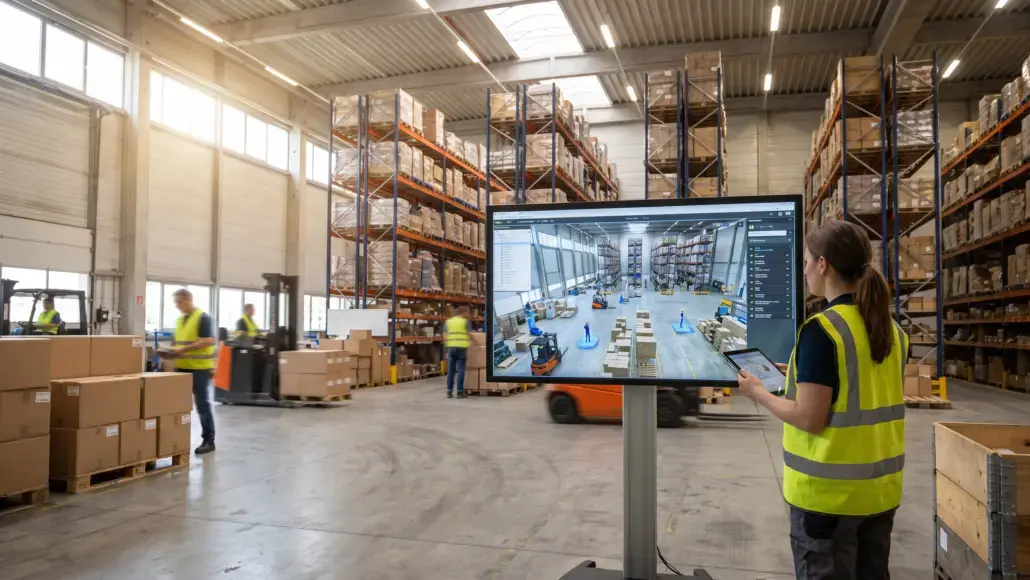
In the fast-paced world of logistics, the ability to predict the future is a priceless asset. As warehouses become larger and more complex, the cost of a single inefficient decision can run into the millions of dollars. Traditionally, facility managers relied on intuition and static spreadsheets to plan their operations, but these methods are increasingly inadequate for the demands of modern commerce. Enter the concept of the digital twin a dynamic, virtual replica of a physical warehouse that reflects its state in real-time. By leveraging Digital Twins for Warehouse Optimization, businesses can now test every possible layout and operational scenario in a risk-free virtual environment before ever moving a single pallet on the floor. This technological leap is transforming the industry from one of trial and error to one of data-driven precision.
A digital twin is much more than a simple 3D model. It is a living entity that is constantly fed with data from sensors, warehouse management systems, and labor records. This allows the virtual model to simulate the actual performance of the physical facility with incredible accuracy. When we speak of Digital Twins for Warehouse Optimization, we are referring to the iterative process of using this virtual model to identify inefficiencies and experiment with solutions. Whether it is redesigning the picking flow to reduce travel time or simulating the impact of a new automated storage and retrieval system, the digital twin provides a clear picture of what will happen under different conditions. This capability allows logistics leaders to make informed, strategic choices that maximize both throughput and profitability.
Simulating Complex Workflows and Bottleneck Analysis
One of the most powerful applications of a digital twin is its ability to simulate the complex interplay of various warehouse processes. A facility is a symphony of moving parts, and a change in one area such as receiving can have unexpected consequences in another, like shipping. By using Digital Twins for Warehouse Optimization, managers can run “what-if” simulations to see how different variables affect the entire system. For example, if a major promotion is expected to double the order volume for a specific product, the digital twin can simulate that surge and identify where the bottlenecks will occur. Will the packing stations become overwhelmed? Is there enough space at the loading docks? Having these answers in advance allows the team to prepare accordingly.
Bottleneck analysis is a critical component of operational excellence. Often, the true cause of a delay is not obvious to the naked eye. It might be a subtle misalignment in the conveyor speed or a poorly placed cross-docking station. The digital twin can analyze vast amounts of operational data to pinpoint these hidden issues. By visualizing the flow of goods through the virtual facility, managers can literally see where the traffic jams are forming. This visual feedback is far more intuitive than traditional reports and allows for a more collaborative approach to problem-solving. When everyone can see the same data-driven reality, it becomes much easier to build consensus on the necessary improvements.
Enhancing Warehouse Layout for Maximum Efficiency
The physical layout of a warehouse is the foundation upon which all operations are built. A poorly designed layout can lead to excessive travel distances, congested aisles, and underutilized space. Historically, changing a layout was a major undertaking that involved significant risk. With Digital Twins for Warehouse Optimization, the risks are virtually eliminated. Engineers can experiment with hundreds of different configurations in the virtual model, measuring the impact of each on key performance indicators like pick-to-ship time and storage density. This allows for a level of experimentation that would be impossible in the physical world.
Advanced layout optimization also takes into account the dynamic nature of inventory. As product seasons change, the optimal location for specific items also changes. The digital twin can suggest seasonal adjustments to the layout, ensuring that the warehouse is always configured for the current market demand. For instance, during a peak holiday season, high-volume gift items can be moved to the most accessible locations, while slower-moving stock is shifted to the back. This dynamic slotting strategy is essential for maintaining high efficiency year-round. By continuously refining the layout based on real-time data and simulation, companies can ensure that their most expensive physical asset the warehouse building is working as hard as possible.
Integrating Labor Dynamics and Robotic Interaction
A warehouse is not just a collection of machines and shelves it is a human-centric environment where labor represents a significant portion of the operating cost. Digital twins can incorporate human behavior and performance metrics into their simulations, providing a more holistic view of the operation. By modeling the movements and productivity of staff, Digital Twins for Warehouse Optimization can help identify the best ways to balance the workload across the team. This might involve adjusting the size of picking zones or changing the sequence of tasks to reduce physical strain on the workers. When labor is integrated into the simulation, the results are far more realistic and actionable.
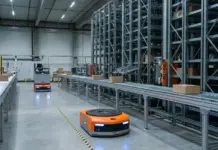
The rise of warehouse robotics adds another layer of complexity that digital twins are perfectly suited to handle. Integrating autonomous mobile robots (AMRs) into an existing facility requires careful planning to avoid collisions and ensure efficient coordination between humans and machines. The digital twin can simulate the paths of the robots alongside the movements of the human staff, identifying potential points of conflict before they occur. This allows for the fine-tuning of robotic programming and traffic rules in the virtual space, ensuring a smooth and safe rollout in the physical warehouse. The synergy between simulation and robotics is a key driver of modern automation, allowing companies to scale their operations with confidence.
Predictive Insights for Long-Term Planning
While the immediate benefits of digital twins are often seen in daily operations, their impact on long-term strategic planning is equally profound. A digital twin serves as a “crystal ball” that allows executives to look years into the future. By projecting current growth rates and market trends onto the virtual model, companies can determine when they will need to expand their facilities or invest in new technologies. This long-term foresight is essential for making multi-million dollar capital expenditure decisions. Instead of guessing when a new facility will be needed, the digital twin provides a data-backed timeline for growth.
Furthermore, digital twins can be used to evaluate the potential return on investment (ROI) for new warehouse technologies. Before purchasing an expensive automated sorting system, a company can build a virtual version of that system into its digital twin. The simulation will then show exactly how much throughput will increase and how much labor will be saved. This provides a clear, quantitative basis for the investment case, reducing the uncertainty that often surrounds major technological transformations. In an era where every capital dollar must be justified, the predictive insights provided by Digital Twins for Warehouse Optimization are a powerful tool for financial and operational leaders alike.
Scaling Digital Twin Technology Across the Enterprise
As companies realize the benefits of digital twins in a single facility, the next step is often to scale the technology across their entire network. A “network twin” allows logistics managers to see how all their warehouses interact within the broader supply chain. This holistic view enables better inventory balancing across different geographic regions, ensuring that stock is always located as close to the customer as possible. If one warehouse is over capacity while another is underutilized, the network twin can suggest the most cost-effective ways to rebalance the inventory.
The scalability of digital twin technology is also supported by the increasing availability of standardized data formats and cloud-based platforms. This makes it easier to integrate data from different sources and locations into a single, unified virtual model. As more facilities are brought online within the digital twin ecosystem, the intelligence of the entire system grows. Lessons learned in one warehouse can be instantly applied to others, creating a culture of continuous improvement across the whole organization. The digital transformation of the warehouse is not a one-time project but an ongoing journey toward total operational visibility and control.
Future Horizons: AI and Augmented Reality Integration
The future of digital twins is inextricably linked with the development of artificial intelligence and augmented reality. AI will increasingly be used to automate the simulation process, with algorithms “self-healing” the virtual model as new data arrives. Imagine a digital twin that not only identifies a problem but also automatically runs millions of simulations to find the optimal solution, presenting only the best option to the manager. This autonomous optimization will further reduce the time and expertise required to manage complex warehouse operations.
Augmented Reality (AR) will change how we interact with these virtual models. A manager on the warehouse floor could wear AR glasses that overlay the digital twin’s data onto their physical view. They could see real-time heat maps of picking activity, the health status of nearby machinery, and even the predicted paths of oncoming robots. This “X-ray vision” would provide a level of situational awareness that was previously the stuff of science fiction. By bringing the digital twin out of the office and onto the floor, companies will empower their staff with the information they need to be more effective and safe in their daily tasks.
In summary, Digital Twins for Warehouse Optimization represent a paradigm shift in the management of physical infrastructure. By creating a bridge between the physical and digital worlds, these virtual models provide a depth of insight and a level of control that were once unimaginable. From layout redesign to long-term strategic planning, the digital twin is an essential tool for any logistics operation looking to thrive in the modern era. As the technology continues to evolve, those who embrace the virtual replica will find themselves better equipped to handle the realities of a complex and ever-changing global market.