




























The ability to maintain essential functions during a crisis is the primary goal of any stable management strategy. For global enterprises, the complexity of their supply base and logistics networks makes this task particularly challenging. Operational continuity planning involves the development of a comprehensive framework that identifies critical processes and defines the steps needed to protect them from a wide range of potential disruptions. This proactive approach ensures that the organization remains functional even when faced with significant challenges such as natural disasters, cyberattacks, or geopolitical instability.
The initial step in the planning process is a thorough business impact analysis to identify which operations are the most vital and which are the most vulnerable. This analysis goes beyond simple financial metrics to consider the impact of a disruption on customer satisfaction, regulatory compliance, and the organization’s reputation. By prioritizing resources toward the most critical areas, companies can build a more resilient and stable network. This process also involves identifying the interdependencies between different departments and external partners, ensuring that the continuity plan is integrated across the entire value chain.
A successful framework for continuity must be supported by clear governance and a defined chain of command. In a crisis, the ability to make fast and informed decisions is essential for minimizing the impact of the disruption. The plan should clearly outline the roles and responsibilities of the crisis management team and establish communication protocols for keeping all stakeholders informed. This organizational readiness ensures that the response to a crisis is coordinated and effective, reducing the likelihood of communication errors and conflicting actions. By building a culture of preparedness, businesses can ensure that they are ready for whatever the future may bring.
Identifying and Mitigating Risks to Critical Supply Nodes
Gaining deep visibility into every level of the network is essential for identifying the risks that could threaten critical operations. While most companies have a clear understanding of their primary suppliers, they often remain unaware of the sub-tier providers that are vital to their production cycles. Identifying these hidden dependencies is a key component of business continuity planning, as a failure at a remote node can have a cascading effect that eventually halts final assembly. By mapping out these relationships, organizations can gain a better perspective on the geographical concentration of their risks and identify potential bottlenecks before they manifest as delays.
Risk mitigation involves taking proactive steps to reduce the likelihood and impact of a disruption at these critical nodes. This might include diversifying the supplier base, increasing safety stock of key materials, or investing in backup production facilities. For instance, a company might qualify alternative suppliers in different geographic regions to provide a buffer against regional instability. Similarly, the use of strategic inventory buffering ensures that operations can continue even if deliveries are delayed. These resilience measures provide a vital cushion that allows the organization to weather the storm and adapt to new challenges.
In addition to physical risks, organizations must also consider the digital vulnerabilities that could disrupt their operations. Cyberattacks on the supply chain are becoming increasingly frequent and severe, requiring a proactive approach to cybersecurity. This involves implementing stable digital defenses and ensuring that every participant in the network meets high standards for data security. The continuity plan should include protocols for responding to a data breach and for restoring critical systems in the event of a failure. By protecting both the physical and digital infrastructure, companies can build a more stable and secure network.
Developing and Testing Effective Contingency Plans
The creation of detailed contingency plans is a core element of business continuity planning. These plans outline the specific actions to be taken in response to various disruptive events, such as a factory fire, a port strike, or a sudden change in trade policy. Each plan should include clear triggers for activation and defined procedures for rerouting shipments, shifting production, or sourcing alternative materials. By having these protocols in place in advance, organizations can significantly speed up their response and minimize the impact of the crisis.
Testing the effectiveness of these contingency plans is essential for ensuring that they will work when they are needed most. Regular stress testing and scenario based exercises allow the crisis management team to identify gaps in the plan and to practice their response in a controlled environment. These simulations help to build confidence and to ensure that every participant understands their role and responsibilities. By continuously refining the plans based on the results of these tests, companies can ensure that their preparedness remains sharp and relevant.
Effective contingency planning also requires the collaboration of every participant in the network. Organizations must work closely with their suppliers, logistics providers, and customers to ensure that their plans are aligned and coordinated. This might involve sharing data, co-investing in technology, or conducting joint crisis management exercises. By building a transparent and collaborative environment, businesses can improve the overall resilience of the network and ensure a more effective response to emerging threats. This shared commitment to stability is the key to maintaining operational continuity in an increasingly unpredictable world.
Integrating Continuity into Long Term Strategic Planning
For the planning process to be truly effective, it must be integrated into the organization’s broader strategic decision making. This involves moving beyond a purely reactive stance and using risk insights to inform long term decisions. For example, business continuity planning should be a primary factor when evaluating new manufacturing locations or entering new markets. By choosing locations with stable infrastructure and diverse transportation options, companies can build resilience into their operations from the very beginning. This cross functional collaboration between logistics, procurement, and risk management is essential for creating a more stable and adaptable organization.
Integrating continuity into strategic planning also involves the use of sophisticated modeling tools to simulate the impact of various disruptions on the entire network. Managers can stress test their operations under a wide range of scenarios and evaluate the effectiveness of different resilience strategies. This data driven approach allows for more informed decision making and ensures that resources are allocated where they will have the most significant impact on maintaining continuity. By staying informed about emerging risks and market trends, companies can proactively adjust their strategies and relocate their assets as needed.
In addition to financial modeling, organizations are exploring new ways to improve efficiency without sacrificing stability. This includes the use of digital technologies to optimize routes, reduce waste, and improve collaboration with partners. By creating a more transparent and agile network, companies can respond more quickly to changes and reduce the overall cost of managing a complex global footprint. The goal is to create a system that is both lean and resilient, capable of delivering high value to customers while also being able to withstand the shocks of a volatile global market.
Ensuring Resilience Through Continuous Improvement and Innovation
Maintaining operational stability in a dynamic and global network requires a commitment to continuous improvement and innovation. Organizations must continuously refine their continuity plans and adopt new technologies to stay ahead of emerging risks. This includes exploring the use of digital twins for supply chain risk simulation and scenario planning to gain a more granular understanding of potential disruptions. By embracing a culture of continuous learning and adaptation, businesses can build a supply network that is not only resilient but also ethical and sustainable.
Innovation also plays a vital role in developing new ways to mitigate risk and improve responsiveness. For instance, the use of artificial intelligence and machine learning allows for more accurate and responsive forecasts of demand and supply. Similarly, the implementation of advanced sensors and internet of things devices provides real time visibility into the movement and condition of cargo. These digital tools enable a more proactive and automated approach to risk management, reducing the burden on human analysts and ensuring that critical information is acted upon as quickly as possible.
The commitment to continuous improvement must be shared across the entire organization and supported by every level of management. This involves training employees to understand and utilize the insights provided by risk intelligence tools and fostering a culture of risk awareness and data driven decision making. By investing in its people and its processes, the organization can ensure that it remains agile and prepared for the challenges of an unpredictable world. Ultimately, the goal of operational continuity planning is to provide the insights and tools needed to thrive in the face of uncertainty and to build a more successful and stable future.
Final Perspective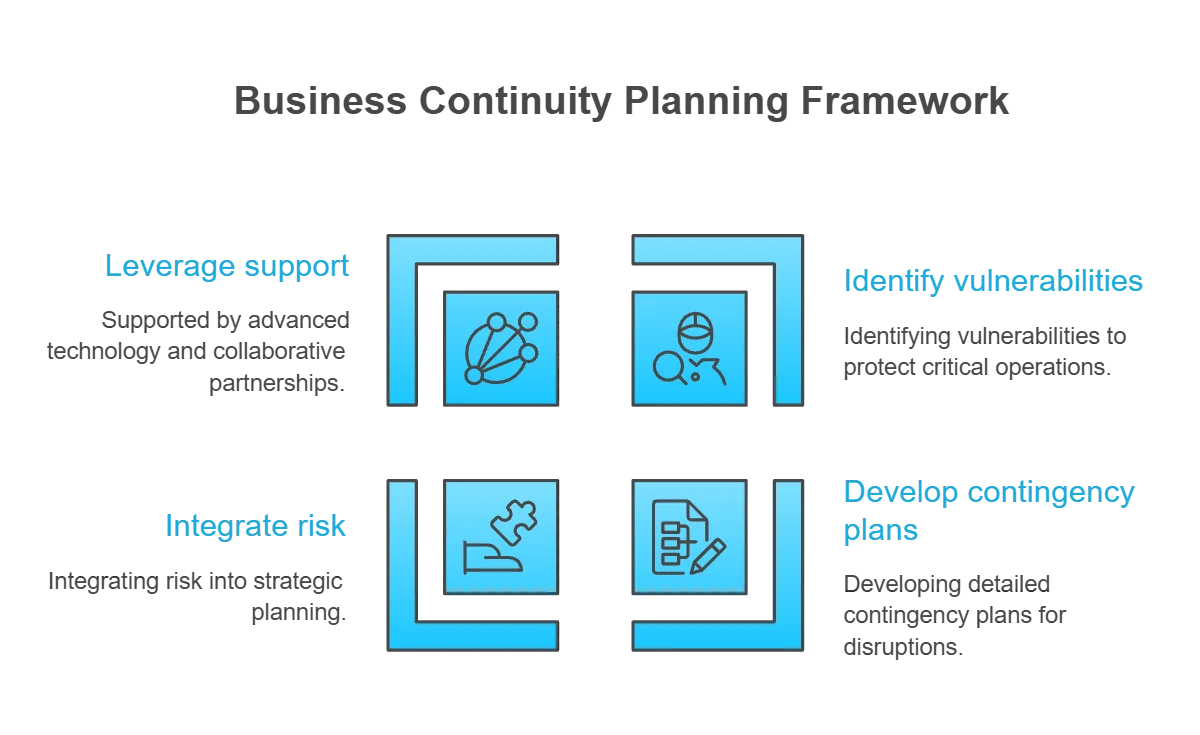
The implementation of comprehensive business continuity planning is essential for any modern enterprise looking to protect its critical operations and ensure long term success. By identifying vulnerabilities, developing detailed contingency plans, and integrating risk into strategic planning, organizations can reduce their exposure to disruptions and maintain the continuous flow of goods and services. This strategic shift, supported by advanced technology and collaborative partnerships, provides the flexibility needed to succeed in an increasingly complex and unpredictable global market. As the world of trade continues to evolve, the ability to manage a resilient and agile supply network will remain a critical competitive advantage.