






























The modern industrial network is a vast and intricate web of relationships that extends far beyond the direct contacts of a procurement department. For many global enterprises, the primary challenge in maintaining stability is the lack of visibility into the lower tiers of their supply base. While most companies have a clear understanding of their tier one suppliers, they often remain unaware of the sub-tier providers that are critical to their production cycles. This lack of transparency creates significant risks, as a failure at a remote node can have a cascading effect that eventually halts final assembly.
Addressing this challenge requires a systematic approach to identifying every participant in the production process. Organizations are increasingly recognizing that the stability of their operations is only as strong as the weakest link in their extended network. This realization is driving a move toward more comprehensive oversight, where the focus shifts from managing individual contracts to understanding the entire flow of materials and information. By mapping out these relationships, businesses can gain a better perspective on the geographical concentration of their risks and identify potential bottlenecks before they manifest as delays.
The complexity of upstream networks is compounded by the rapid pace of change in global markets. Suppliers frequently change their own sources, and new players enter the market while others exit. Maintaining an accurate picture of the network requires a commitment to ongoing monitoring and a willingness to invest in the data infrastructure needed to track these shifts. It is no longer enough to conduct a one time audit: companies must establish a continuous process of verification and engagement to ensure that their visibility remains current. This proactive stance is essential for identifying emerging threats and adapting to new regulatory requirements that demand greater transparency across the entire value chain.
Strategies for Data Collection and Supplier Engagement
Effective supplier mapping begins with the collection of accurate and granular data from every level of the network. This process often starts with a survey of tier one partners, asking them to identify their own critical suppliers and production locations. However, relying solely on self reported data can be problematic, as tier one providers may not always have a complete picture of their own upstream relationships. To overcome this, organizations are utilizing advanced data analytics and third party platforms that can aggregate information from a wide variety of sources, including shipping records, financial reports, and news alerts.
Engagement with suppliers is a critical component of successful data collection efforts. Many providers may be hesitant to share detailed information about their own sources, fearing that it could compromise their competitive advantage or lead to direct negotiations between their customers and their suppliers. To address these concerns, companies must build trust by clearly communicating the goals of the mapping project and emphasizing the mutual benefits of increased transparency. By framing the project as a collaborative effort to improve network stability, procurement leaders can encourage more open sharing of information and create a sense of shared responsibility for risk management.
Technology plays a vital role in managing the vast amounts of data generated during the mapping process. Cloud based platforms allow for the centralized storage and analysis of supplier information, making it accessible to relevant stakeholders across the organization. These platforms can also be integrated with internal systems, such as enterprise resource planning and procurement software, to provide a more holistic view of the supply base. The use of automated alerts and dashboards allows managers to stay informed about changes in the network and respond quickly to potential issues. However, the success of these digital tools ultimately depends on the quality of the underlying data, highlighting the need for rigorous verification and validation processes.
Analyzing Vulnerabilities Beyond the First Tier
Gaining visibility into the lower tiers of the network is only the first step: the real value of supplier mapping lies in the ability to analyze this data to identify specific vulnerabilities. One of the most common risks revealed by multi tier analysis is the concentration of multiple tier one suppliers around a single sub-tier provider. If this sub-tier provider experiences a disruption, it can affect several of the company’s direct partners simultaneously, leading to a much larger impact than would be expected from a single failure. By identifying these hidden dependencies, organizations can take steps to diversify their sources and reduce their exposure to specific nodes.
Vulnerability analysis also involves assessing the geographic distribution of the extended network. Many companies are surprised to find that a significant portion of their sub-tier suppliers are located in high risk regions or areas prone to natural disasters. This geographic concentration can be a major liability, especially in an era of increasing geopolitical uncertainty. By understanding where their critical components are being produced, businesses can make more informed decisions about their sourcing strategies and explore options for supply chain diversification to mitigate regional risks. This might involve moving some production closer to end markets or identifying alternative suppliers in more stable regions.
In addition to physical and geographic risks, organizations must also consider the financial health and operational capacity of their sub-tier suppliers. Small, specialized providers often lack the resources and buffers needed to withstand significant shocks. If a critical sub-tier supplier faces financial difficulties or labor issues, it can halt the entire production process. Mapping allows companies to monitor the health of these essential partners and provide support or identify alternatives if problems arise. This proactive approach to risk management ensures that potential issues are addressed early, reducing the likelihood of costly delays and protecting the organization’s reputation for reliability.
Integrating Mapping Data into Strategic Risk Frameworks
For supplier mapping to be truly effective, the insights it provides must be integrated into the organization’s broader risk management framework. This involves moving beyond a purely reactive stance and using the data to inform long term strategic decisions. For example, mapping data can be used during the product design phase to evaluate the risks associated with specific components or materials. By choosing parts that are sourced from a diverse and stable network, engineers can build resilience into the product from the very beginning. This cross functional collaboration between procurement, engineering, and risk management is essential for creating a more stable and adaptable organization.
Integrating mapping data also allows for more sophisticated scenario planning and stress testing. Managers can simulate the impact of various disruptions, such as a port strike or a factory fire, on their entire network to understand where the most significant impacts would occur. These simulations help to identify the “critical path” of the supply chain and prioritize risk mitigation efforts. By understanding which nodes are the most vital and the most vulnerable, companies can allocate their resources more effectively and develop targeted contingency plans. This data driven approach to risk management provides a level of certainty that is impossible to achieve with more traditional, intuition based methods.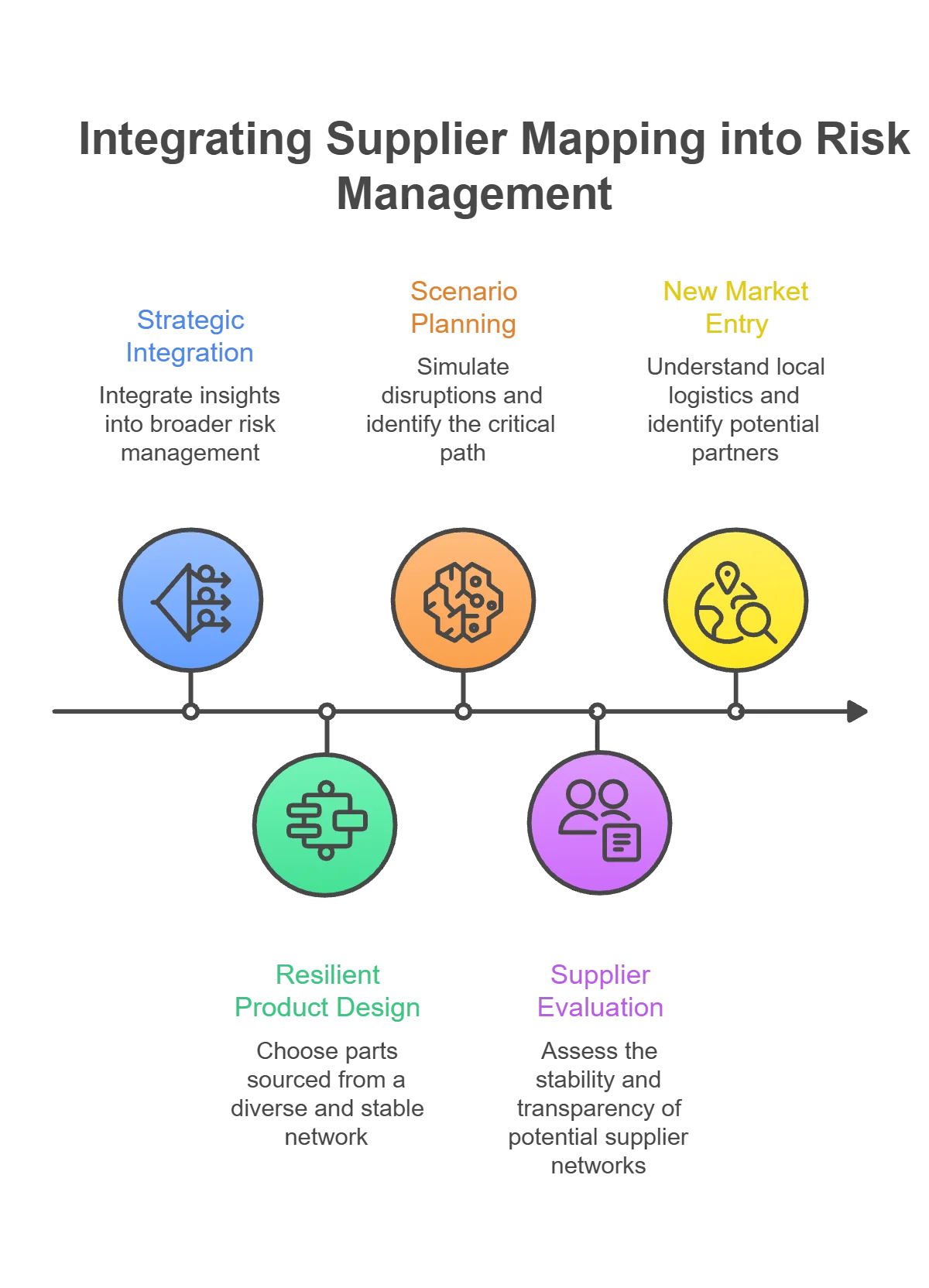 The use of mapping data also extends to the evaluation of new suppliers and market entries. When considering a new partner, procurement teams can use mapping tools to assess the stability and transparency of the potential supplier’s own network. This due diligence ensures that new relationships do not introduce hidden risks into the organization’s supply base. Similarly, when entering new markets, companies can use mapping data to understand local logistics and identify potential partners who share their commitment to transparency and risk management. This strategic use of information ensures that the organization can grow and expand without compromising its operational stability.
Ensuring Long Term Compliance and Network Transparency
As regulatory requirements for transparency and ethical sourcing continue to increase, supplier mapping has become an essential tool for ensuring compliance. Many jurisdictions now require companies to provide detailed information about the origins of their raw materials and the labor practices used throughout their supply base. Failing to meet these standards can lead to significant fines, legal challenges, and damage to the company’s brand. By maintaining an accurate and up to date map of their network, organizations can demonstrate their commitment to ethical sourcing and provide the necessary evidence to satisfy regulators and customers alike.
Transparency also plays a critical role in meeting sustainability goals and reducing the environmental impact of the production process. Mapping allows companies to track the carbon footprint of their products from the raw material stage to final delivery. This visibility enables managers to identify opportunities for reducing emissions and improving efficiency across the entire network. By working with suppliers to implement more sustainable practices, organizations can build a more ethical and environmentally friendly supply base that is better positioned to meet the expectations of socially conscious consumers. This focus on long term sustainability is not just about compliance: it is about building a stable and stable business for the future.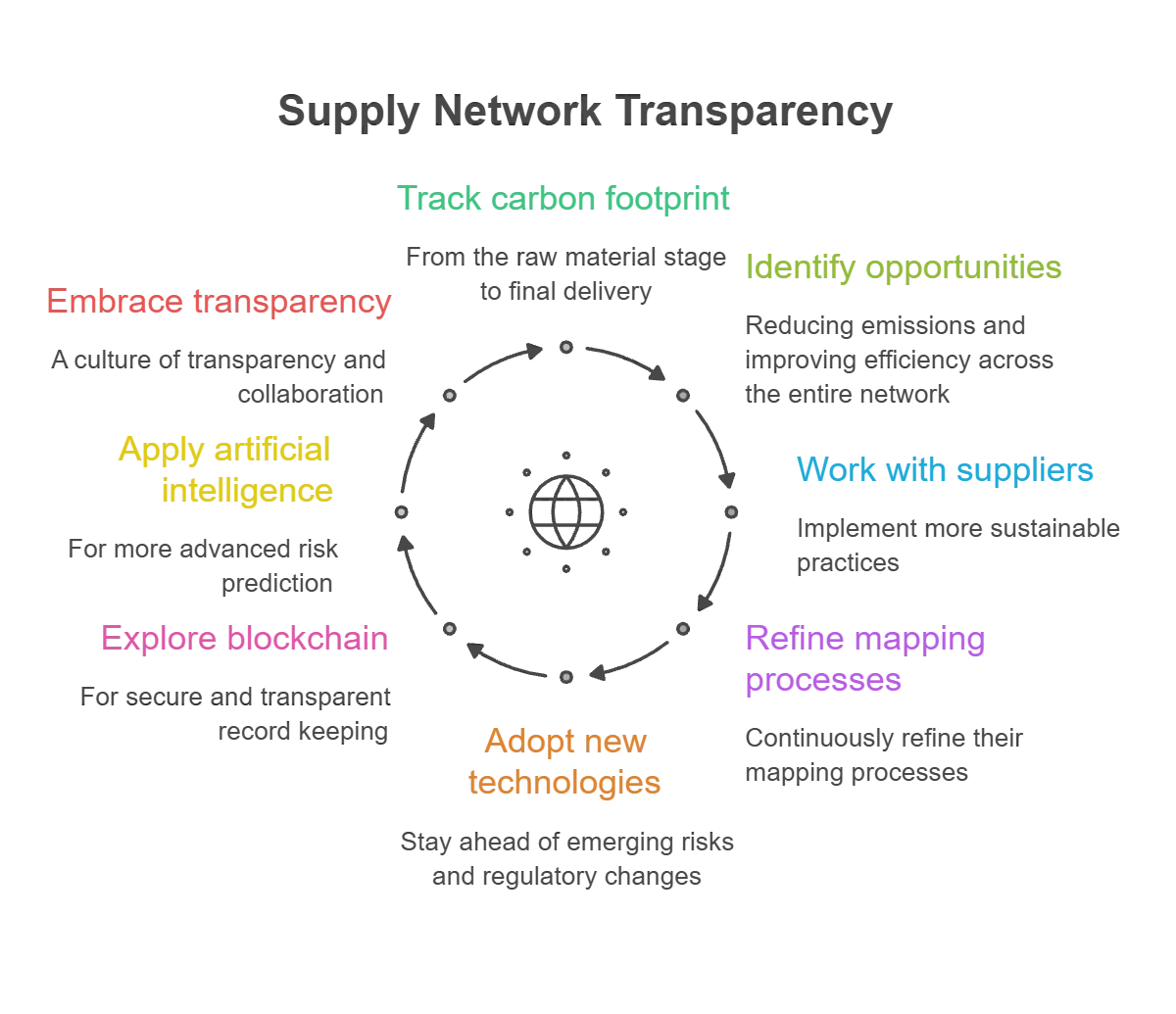 Maintaining transparency in a dynamic and global network requires a commitment to ongoing improvement and innovation. Organizations must continuously refine their mapping processes and adopt new technologies to stay ahead of emerging risks and regulatory changes. This includes exploring the use of blockchain for secure and transparent record keeping, as well as the application of artificial intelligence for more advanced risk prediction. By embracing a culture of transparency and collaboration, businesses can build a supply base that is not only resilient but also ethical and sustainable. This ongoing effort to understand and manage the complexity of the network is essential for long term success in an increasingly interconnected and unpredictable world.
Final Perspective
The implementation of comprehensive supplier mapping is no longer a luxury but a necessity for modern global enterprises. By gaining deep visibility into every level of their network, organizations can identify and address hidden risks before they manifest as significant disruptions. This proactive approach to risk management, supported by advanced technology and strong supplier relationships, ensures operational stability and protects the long term success of the business. As the global trade environment becomes increasingly complex, the ability to understand and manage the intricacies of the supply base will remain a critical competitive advantage.
Maintaining an accurate picture of the network requires a commitment to ongoing monitoring and the integration of AI-driven risk intelligence for supply chain disruption prevention to track these shifts.