



![Busy port scene with stacked shipping containers, large cranes, and cargo ships in a bay, beside a coastal highway and rail line on the right.] }} (Note: The input requires a valid JSON with an array of strings in altTexts. Here is a corrected version.)Let's provide proper JSON.](https://www.supplychaininforms.com/wp-content/uploads/2026/09/trade-and-logistics-infrastructure-218x150.webp "Turkey Looks to Upgrade Trade and Logistics Infrastructure")




















Smarter supply chains are redefining how modern warehouse operations function — combining automation, artificial intelligence, IoT and data-driven decision-making to deliver faster, more accurate and more cost-efficient logistics outcomes.
What Is Driving the Shift
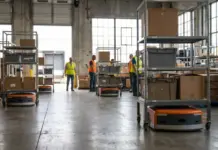
Traditional warehouses relied heavily on manual processes and reactive decision-making. Today, technologies like autonomous mobile robots (AMRs), advanced analytics platforms and IoT-connected systems are enabling warehouses to operate with a level of speed, precision and scalability that was previously impossible.
Key Technologies Transforming Warehouse Efficiency
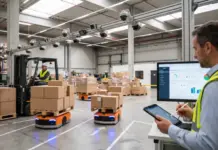
- Autonomous Mobile Robots (AMRs) — Handling repetitive picking, packing and transport tasks with greater speed and fewer errors than manual operations
- Artificial Intelligence — Enabling predictive demand forecasting, inventory optimisation and real-time route planning across warehouse floors
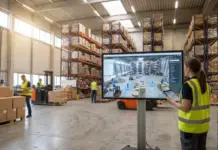
- IoT Connectivity — Providing continuous, real-time visibility into equipment performance, inventory location and environmental conditions
- Advanced Analytics — Converting vast operational datasets into actionable insights that improve planning, reduce waste and lower costs
The Human Factor Remains Critical
Technology alone does not build a smarter supply chain. Warehouse managers, supervisors, data analysts, planners and maintenance teams play an essential role in optimising automated systems, interpreting operational data and making the strategic decisions that keep the entire operation running effectively.
The Bottom Line
Organisations that combine cutting-edge warehouse technology with a skilled and adaptable workforce are building supply chains that are not just efficient — they are resilient, agile and scalable for whatever comes next.