



![Busy port scene with stacked shipping containers, large cranes, and cargo ships in a bay, beside a coastal highway and rail line on the right.] }} (Note: The input requires a valid JSON with an array of strings in altTexts. Here is a corrected version.)Let's provide proper JSON.](https://www.supplychaininforms.com/wp-content/uploads/2026/09/trade-and-logistics-infrastructure-218x150.webp "Turkey Looks to Upgrade Trade and Logistics Infrastructure")


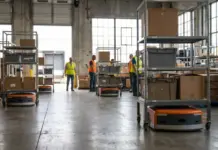

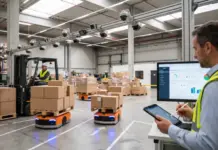
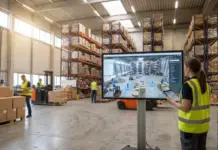











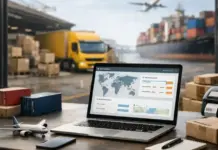






Digital warehousing is replacing traditional, manual-driven warehouse operations with intelligent, technology-powered systems. What was once a labour-intensive environment of clipboards and physical paperwork is now a sophisticated ecosystem powered by AI, automation, IoT and real-time data.
What It Means
Digital warehousing integrates Warehouse Management Systems (WMS), artificial intelligence, robotics, IoT sensors and predictive analytics into a single connected operation — replacing static processes with dynamic, data-driven ones.
Key Transformations Happening Now
- AI and Automation — Automated guided vehicles, computer vision and AI-powered demand forecasting are reducing errors, cutting costs and increasing throughput significantly
- Real-Time Visibility — IoT sensors and RFID tracking provide instant, accurate data on every product across the warehouse at any moment — improving fulfilment accuracy and reducing stock discrepancies
- Predictive Analytics — Businesses are moving from reactive to proactive supply chain management — forecasting inventory requirements and identifying equipment failures before they cause disruption
- Competitive Advantage — The gap between digitally transformed warehouses and traditional ones is widening fast — with leaders reporting faster order fulfilment, lower costs and stronger supply chain resilience
The Bottom Line
According to McKinsey, companies that fully digitise their supply chain operations can boost annual earnings growth by 3.2% and revenue growth by 2.3%. Businesses that invest in digital warehousing today are building the operational resilience and competitive advantage that will define market leadership in the years ahead.