


























The European Union and Canada have aimed to deepen partnership on trade and economic security as well as critical raw materials, as the leaders met at the 21st EU-Canada summit with consequences for industrial investment, transatlantic supply chains and cargo flows.
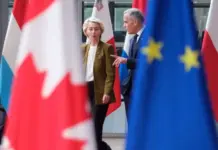
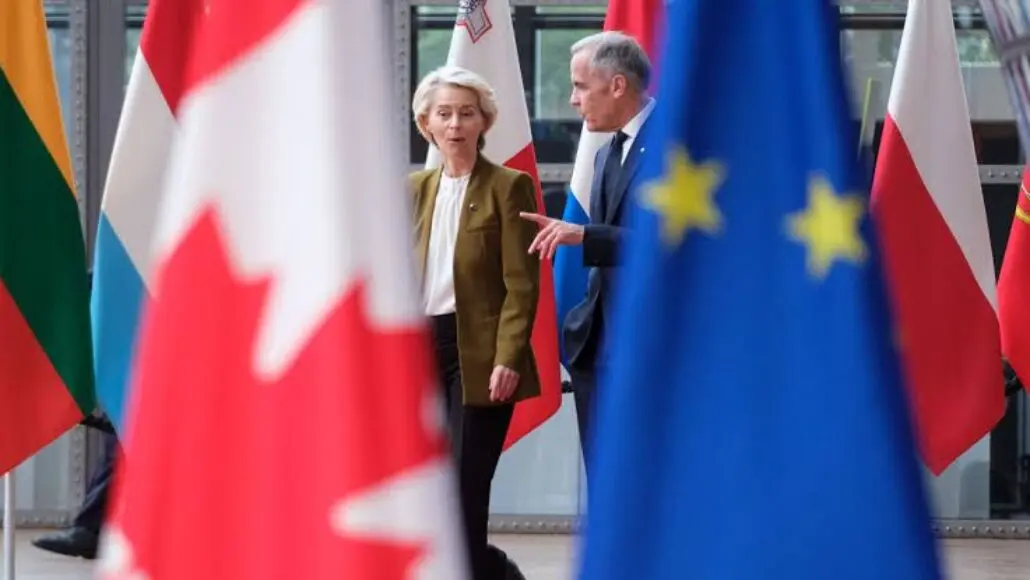
It is well to be noted that the summit brought together Ursula von der Leyen, the European Commission President, as well as European Council President Antonio Costa, along with Canadian Prime Minister Mark Carney, as well as Canadian representatives, to talk about a suggested structure referred to as an alliance for the future.
According to the European Commission, bilateral trading in goods and services reached about €130 billion in 2025, which is over 80% more than what existed in 2016. The EU and Canada combined represent almost a fifth of the world’s GDP.
Trade and supply chain security come to the fore.
The talks were focused on trade and economic security, digital cooperation, and defence along with research and innovation.
Apparently, the proposed alliance is aimed at deepening economic ties and enhancing joint efforts in fields thought to be critical to competitiveness in industry and supply chain durability.
More close economic cooperation might impact the future consumption of cargo between both the European and Canadian markets, impacting shipping lines, freight forwarders as well as port operators.
With an objective to elevate supply chains and cargo flows, the relationship involves the shipment of machinery, manufactured goods, industrial machinery, agricultural goods, and various other commodities via predetermined Atlantic shipping lanes.
But there are no specifics on new cargo volumes, shipping services, or even port investments that have come out of the summit as yet.
Project cargo in focus brought by critical raw materials
It is worth noting that critical raw materials were an additional important component of the agenda at the summit.
Canada has large reserves of minerals such as nickel, cobalt, and copper, as well as lithium, utilized in manufacturing batteries, renewable energy equipment, and industrial manufacturing.
European manufacturers rely on reliable supplies of a variety of these materials as demand shifts in the automotive, technology, and energy sectors.
Closer cooperation could lead to possibilities for investment when it comes to standard extraction, processing facilities, and related infrastructure.
Such projects usually involve specialized logistics such as heavy machinery, modular industrial installations, processing equipment, and other types of breakbulk cargo.
Any transport demand generated would be contingent on upcoming investment decisions, project authorizations, and the completion of commercial agreements.
The summit was held in Montreal on 29 and 30 October and was hosted by Mark Carney, the Canadian Prime Minister. Canada is looking to diversify its global trade ties, and European leaders are aiming at greater collaboration in energy and industrial output, as well as economic security.