



























Global trade operations face an unprecedented array of challenges that threaten the stability of traditional distribution models. Organizations must recognize that systemic risks are no longer localized events but interconnected phenomena that can ripple through entire networks. The initial step in addressing these challenges involves a rigorous assessment of current operational structures to pinpoint where bottlenecks are likely to occur. This process requires a shift away from short term cost optimization toward long term structural integrity. Procurement teams are often surprised to find that their most significant risks lie deep within their networks, where visibility is traditionally low and control is limited.
Fragility in logistics often stems from an overreliance on single points of failure, such as specific ports or concentrated manufacturing hubs. When these critical nodes experience interruptions, the resulting delays affect every subsequent stage of the production cycle. To counteract these risks, businesses are evaluating their reliance on specific regions and reconsidering the geographical distribution of their assets. This evaluation is not merely about physical locations but also involves the digital infrastructure that supports physical movement. Data silos and opaque communication channels often hide risks until they manifest as significant delays. By analyzing the flow of materials across multiple borders, companies can identify where administrative friction or geopolitical tensions might slow down their operations.
Developing resilient supply chains requires a mindset that prioritizes flexibility over rigid efficiency. Traditionally, the focus has been on squeezing every possible cent out of the system, often at the expense of its ability to withstand shocks. While this approach maximized margins during periods of stability, it left many companies vulnerable when global conditions shifted. Today, the emphasis is on creating systems that can pivot quickly in response to changing regulations, labor disputes, or natural disasters. This shift necessitates a broader perspective on risk that includes environmental, social, and governance factors alongside traditional economic metrics. Establishing a culture of risk awareness across all departments ensures that potential threats are identified and addressed before they escalate into crises.
Diversifying Sourcing and Production Locations
The concentration of production in a single geographic area has proven to be a significant liability for modern enterprises. To mitigate this, many firms are adopting a “China plus one” strategy or similar regional diversification models. By spreading manufacturing and sourcing across multiple countries, organizations can reduce their exposure to regional instability and trade restrictions. This approach involves a complex rebalancing of costs, as moving production to new regions often requires significant investment in local infrastructure and talent development. Leaders must balance the immediate costs of relocation with the long term benefits of a more distributed and secure footprint.
Diversification is not just about having backup suppliers: it is about building a network where each node provides a unique value and adds to the overall stability of the system. For instance, nearshoring and friend-shoring are becoming popular strategies to bring production closer to end markets or to countries with aligned political interests. This geographical shift helps reduce lead times and shipping costs while also providing a buffer against maritime disruptions. However, moving production is a multi year process that requires careful coordination across various departments, from procurement to legal and compliance teams. The logistical complexities of setting up new manufacturing hubs in developing markets can be significant, requiring patience and a long term strategic vision.
Effective diversification also extends to the raw materials level. Dependency on a single source for critical components can halt production even if the final assembly is decentralized. Organizations are now looking deeper into their supply bases, often utilizing multi-tier supplier mapping for proactive risk management to understand the origins of their most vital parts. This deep visibility allows procurement leaders to identify hidden dependencies that might not be apparent at the first tier of the relationship. By proactively engaging with sub-tier providers, companies can secure their pipelines and avoid the frantic search for alternatives when a crisis hits. Understanding the financial health and operational capacity of these lower tier suppliers is just as important as monitoring direct partners.
Implementing Technology for Real Time Supply Visibility
Visibility is the cornerstone of any modern strategy focused on resilient supply chains. Without accurate, real time data, decision makers are forced to rely on historical trends that may no longer be relevant in a rapidly changing environment. Advanced tracking systems and integrated platforms allow companies to monitor the movement of goods from the point of origin to the final destination. This transparency enables managers to identify delays early and reroute shipments before they become major disruptions. The ability to track a single shipping container across the ocean provides the granular detail needed to make informed decisions under pressure.
Integrating diverse data sources into a single source of truth is a significant technical challenge but one that pays dividends in operational agility. Cloud based platforms allow for the sharing of information between different stakeholders, including suppliers, logistics providers, and internal teams. This collaborative environment ensures that everyone is working from the same set of facts, reducing the likelihood of communication errors. In addition, the use of sensors and internet of things devices provides granular data on the condition and location of cargo, which is essential for transporting sensitive or high value items. These devices can monitor temperature, humidity, and shock, providing immediate alerts if a shipment is compromised.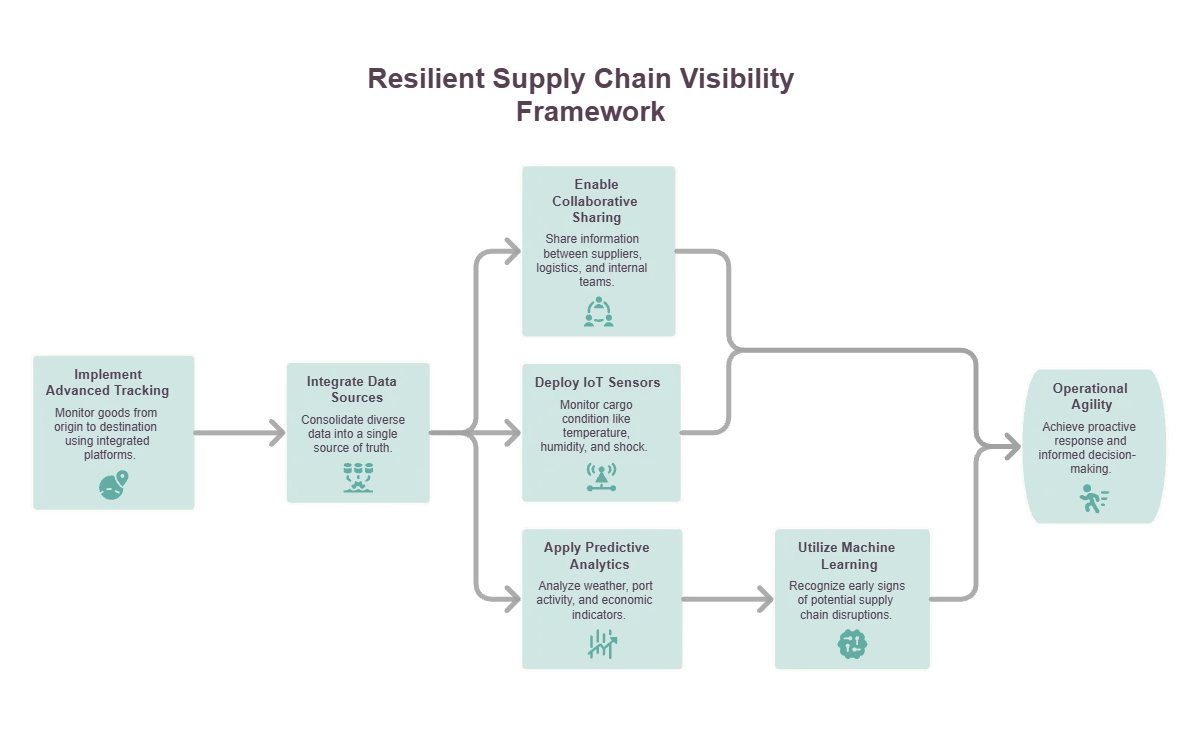 The application of predictive analytics further enhances visibility by allowing companies to anticipate potential issues before they occur. By analyzing weather patterns, port activity, and economic indicators, these systems can provide early warnings about possible bottlenecks. This proactive stance allows logistics teams to adjust their plans in advance, rather than reacting to events after they have already caused problems. Achieving this level of insight requires a commitment to data quality and a willingness to invest in the necessary digital tools to process and interpret vast amounts of information. Machine learning models can be trained to recognize the early signs of a disruption, giving companies a vital head start in their response efforts.
Enhancing Collaborative Supplier Relationships
Strong partnerships with suppliers are essential for maintaining resilient supply chains in an era of uncertainty. Rather than viewing suppliers as mere vendors, forward thinking organizations treat them as strategic partners who are integral to their success. This collaborative approach involves open communication and a shared commitment to risk management. When both parties are aligned on goals and expectations, they can work together more effectively to solve problems and adapt to new challenges. Regular business reviews and joint innovation projects help to solidify these bonds and create a sense of shared purpose.
Building trust with suppliers often involves moving away from adversarial, price based negotiations toward long term contracts that provide stability for both sides. By offering guaranteed volumes and fair terms, companies can secure priority access to capacity during periods of high demand. In return, suppliers are often more willing to share information and collaborate on innovation projects. This mutual support is particularly valuable during crises, when suppliers may have to choose which customers to prioritize. Those with the strongest relationships are typically the ones who receive the best service and support. Creating a supplier code of conduct that emphasizes mutual respect and transparency further strengthens these essential partnerships.
Collaboration also means working together to improve sustainability and compliance across the network. As regulatory requirements for transparency increase, companies must ensure that their suppliers are meeting high standards for labor practices and environmental impact. This oversight requires regular audits and ongoing dialogue to identify and address potential issues. By supporting suppliers in their efforts to improve, organizations can build a more stable and ethical network that is better positioned to withstand scrutiny and adapt to changing market expectations. Joint training programs and shared resources can help smaller suppliers meet the rigorous standards expected by global enterprises, further enhancing the overall stability of the system.
Strategic Inventory Buffering for Operational Stability
The shift from just in time to just in case inventory management is a direct response to the volatility of global markets. While lean models were highly effective at reducing carrying costs, they left little room for error when disruptions occurred. Organizations are now reconsidering their inventory strategies, opting to hold larger buffers of critical components and finished goods. This strategic stockpiling provides a cushion that allows operations to continue even when deliveries are delayed or halted. The cost of holding extra stock is increasingly viewed as an insurance premium against the much higher costs of a production shutdown.
Deciding where to hold inventory and in what quantities is a complex optimization problem that requires a deep understanding of demand patterns and lead time variability. Companies are increasingly using sophisticated modeling tools to determine the ideal balance between cost and resilience. These tools allow for scenario planning, where managers can simulate the impact of different disruptions on their inventory levels. By understanding the potential risks, they can make informed decisions about how much capital to tie up in safety stock. This analytical approach ensures that buffers are placed where they will have the most significant impact on maintaining operational continuity.
Inventory buffering also involves the use of regional distribution centers to bring products closer to customers. This decentralized approach reduces the reliance on long distance shipping and allows for faster response times. In some cases, companies are even exploring the use of 3D printing and on demand manufacturing to reduce the need for large physical inventories. These technologies are still in the early stages for many industries, but they offer promising avenues for reducing the risks associated with global logistics. Ultimately, the goal is to create a system that is stable enough to handle unexpected changes without sacrificing long term profitability. By continuously refining their inventory strategies, businesses can ensure they remain competitive while also being prepared for the unexpected.