

























The global trade environment is currently defined by a level of geopolitical instability that has not been seen in decades. For procurement and logistics leaders, this volatility represents a fundamental shift in how networks must be designed and managed. Trade wars, regional conflicts, and shifting alliances are no longer peripheral concerns but central factors that influence every strategic decision. The era of frictionless global commerce is being replaced by a more fragmented and complex system where political considerations often outweigh traditional economic factors.
This shift has profound implications for organizations that have historically relied on concentrated sourcing models in specific regions. When political tensions escalate, the flow of goods can be interrupted by tariffs, export controls, or even the closure of critical shipping lanes. These disruptions are often sudden and unpredictable, leaving companies with little time to react. To protect their operations, businesses are moving away from an overreliance on any single nation or region. This strategic shift toward supply chain diversification is essential for maintaining continuity in an increasingly divided world where economic interdependencies are being reevaluated.
Analyzing the impact of geopolitical shifts requires a deep understanding of both regional politics and global trade policy. Companies must monitor legislative changes and diplomatic developments to anticipate potential risks to their networks. This involves a broader perspective on risk that includes the potential for sudden regulatory shifts or changes in international agreements. By staying informed and proactive, organizations can identify emerging threats and adjust their strategies before they are impacted by a crisis. This ongoing process of assessment and adaptation is the foundation of a more stable and secure global footprint.
Evaluating Regional Alternatives for Production and Sourcing
Identifying and developing alternative regions for production is a complex process that requires a careful balance of costs, risks, and opportunities. As companies look to reduce their reliance on traditional manufacturing hubs, they are exploring a wide range of emerging markets in Southeast Asia, Latin America, and Eastern Europe. Each of these regions offers unique advantages, such as lower labor costs, proximity to end markets, or favorable trade agreements. However, they also present significant challenges, including infrastructure limitations, regulatory hurdles, and talent shortages.
The process of supply chain diversification involves more than just finding new suppliers: it requires a holistic evaluation of the local business environment in each potential region. Logistics leaders must consider the quality of transportation networks, the reliability of power and telecommunications, and the efficiency of customs and border processes. A region with low manufacturing costs may not be a viable alternative if the cost and complexity of shipping finished goods are prohibitively high. In addition, organizations must ensure that their new partners meet high standards for quality, safety, and compliance, which often requires significant investment in training and oversight.
Success in new regions also depends on the ability to build strong local relationships and integrate into the local ecosystem. This often involves partnering with local firms or investing in local infrastructure to ensure long term stability. By taking a collaborative approach, companies can overcome many of the challenges associated with moving production and create a more stable and sustainable presence in new markets. This geographic spread not only mitigates geopolitical risk but also provides a platform for growth in emerging economies, allowing organizations to tap into new sources of demand and innovation.
The Role of Nearshoring and Friend-Shoring in Modern Logistics
In response to the risks of long distance shipping and geopolitical instability, many organizations are adopting strategies such as nearshoring and friend-shoring. Nearshoring involves moving production closer to the final consumer, often within the same continent or geographic region. This approach reduces lead times, lowers shipping costs, and provides greater control over the logistics process. For companies serving North American or European markets, this has led to a significant increase in investment in countries like Mexico, Poland, and Turkey, which offer a combination of lower costs and geographic proximity.
Friend-shoring is a more recent development that involves prioritizing trade and production in countries that share similar political and economic values. This strategy is a direct response to the weaponization of economic dependencies and the desire to build more secure and ethical networks. By focusing on allies and stable partners, organizations can reduce their exposure to sudden shifts in trade policy or geopolitical conflict. While friend-shoring may not always be the most cost effective option in the short term, it provides a level of security and predictability that is increasingly valuable in an uncertain world.
The implementation of these strategies requires a fundamental rethink of the trade offs between cost and resilience. While global sourcing was once driven almost entirely by the search for the lowest possible price, the focus is now on the “total cost of ownership,” which includes the risks and potential costs of disruption. Nearshoring and friend-shoring offer a way to manage these risks while still maintaining a competitive cost structure. However, these transitions are not without their own complexities, requiring significant investment in new facilities and the development of new logistics routes. Organizations that can effectively integrate these models into their broader supply chain diversification efforts will be better positioned to handle the challenges of the future.
Balancing Cost Efficiency with Network Resilience
One of the most significant challenges in modern logistics is finding the right balance between the need for cost efficiency and the requirement for operational stability. For decades, the primary goal of procurement was to minimize costs through consolidation and lean management. While this approach was highly successful in a stable environment, it created vulnerabilities that were exposed by recent global disruptions. Organizations are now recognizing that a certain level of redundancy and flexibility is necessary to protect their operations, even if it comes at a higher price.
Achieving this balance requires a more sophisticated approach to risk assessment and financial modeling. Companies must be able to quantify the potential costs of a disruption and compare them to the costs of implementing mitigation strategies. This involves using data driven tools, such as ai-driven risk intelligence, to analyze vast amounts of information and identify potential threats. By understanding the probability and impact of different risks, managers can make more informed decisions about where to invest in resilience. This analytical approach ensures that resources are allocated where they will have the most significant impact on maintaining continuity.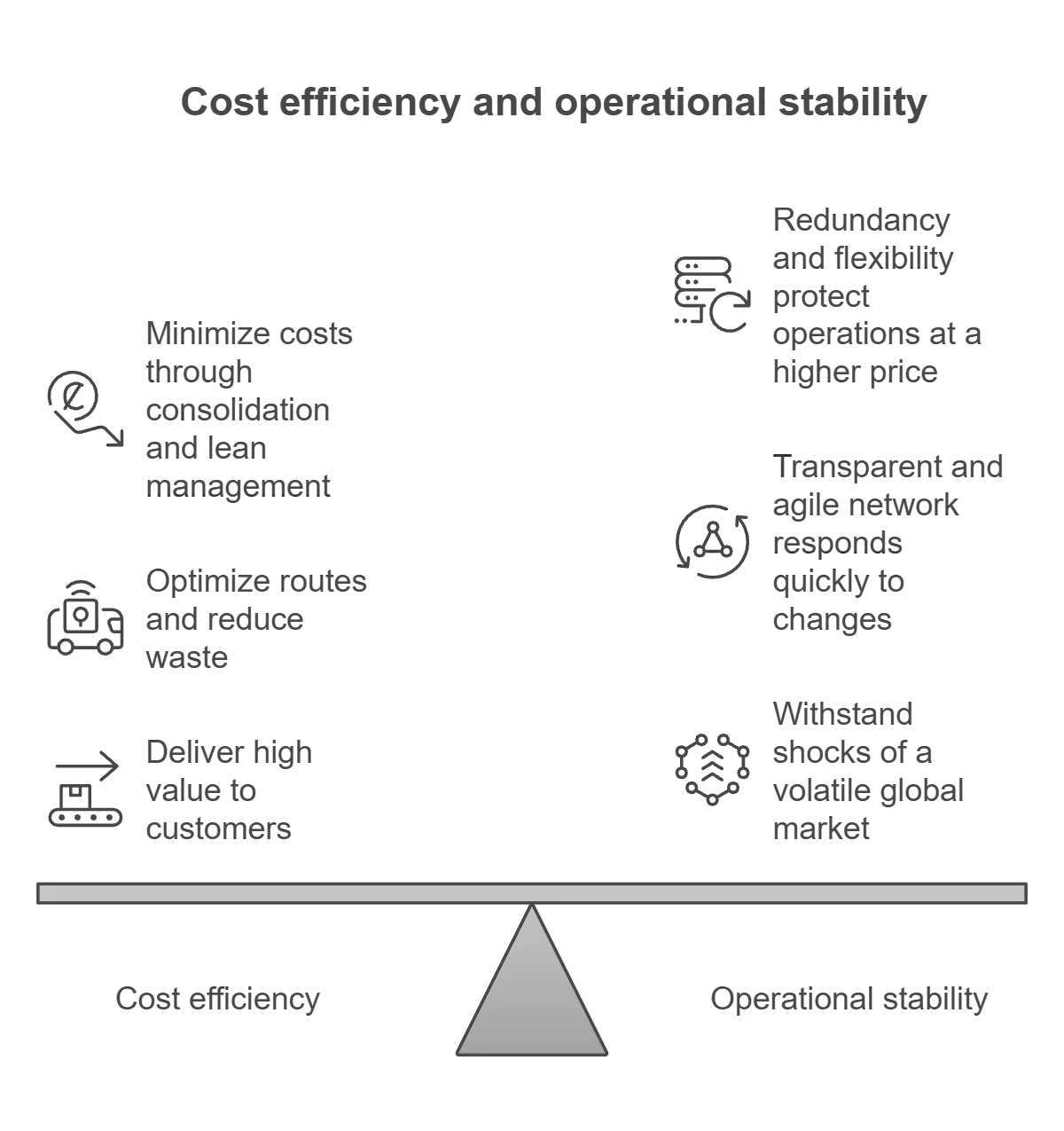 In addition to financial modeling, organizations are exploring new ways to improve efficiency without sacrificing stability. This includes the use of digital technologies to optimize logistics routes, reduce waste, and improve collaboration with partners. By creating a more transparent and agile network, companies can respond more quickly to changes and reduce the overall cost of managing a more distributed footprint. The goal is to create a system that is both lean and resilient, capable of delivering high value to customers while also being able to withstand the shocks of a volatile global market.
Building an Adaptable Global Footprint for Long Term Success
Creating a truly adaptable global footprint is an ongoing process that requires continuous monitoring and improvement. As the geopolitical environment continues to shift, organizations must be prepared to adjust their strategies and relocate their assets as needed. This flexibility is the key to long term success in an unpredictable world. A rigid network that cannot adapt to change is a major liability, regardless of how efficient it may be in the short term. Building adaptability into the core of the business requires a culture of innovation and a willingness to embrace change at every level of the organization.
A critical component of an adaptable footprint is the ability to rapidly scale production and logistics capacity in response to changing conditions. This may involve maintaining some level of “idling” capacity in different regions or having pre-qualified backup suppliers ready to step in at short notice. It also requires a high level of digital maturity, with integrated systems that can provide real time visibility and support fast decision making. By investing in these capabilities, companies can ensure that they are not just reacting to disruptions but are proactively shaping their future in a complex global environment.
Supply chain diversification is not a one time project but a fundamental shift in the way businesses operate. It requires a long term perspective and a commitment to building a more secure and ethical global trade system. By diversifying their sources, embracing nearshoring and friend-shoring, and utilizing advanced technology, organizations can protect their operations and thrive in the face of geopolitical uncertainty. The lessons learned from recent disruptions are clear: the future belongs to those who can build networks that are as resilient as they are efficient.
Final Perspective
The era of geopolitical uncertainty has forced a fundamental reevaluation of global trade strategies. Organizations that prioritize supply chain diversification and invest in the necessary technology and partnerships will be the ones that succeed in this new environment. By moving beyond a narrow focus on cost and embracing a more holistic view of risk, businesses can build a global footprint that is stable, secure, and ready for whatever the future may bring. This ongoing commitment to resilience is not just a defensive measure but a strategic advantage in an increasingly complex and interconnected world.
This ongoing process of assessment and adaptation is the foundation of building resilient supply chains amid global disruptions for a more stable global footprint.