































The concentration of sourcing for critical components with a single provider has historically been driven by the desire for cost optimization and volume discounts. While this approach served many organizations well during periods of global stability, it has increasingly become a significant liability in an era of frequent and severe disruptions. When a single point of failure occurs in the network, the impact is immediate and often catastrophic, leading to production halts and loss of market share. Consequently, procurement leaders are reevaluating their strategies and placing a renewed emphasis on building a more distributed and flexible supply base.
Developing a stable network requires a move away from the traditional focus on unit cost toward a more holistic view of value that includes the cost of risk. This shift involves recognizing that the stability of the entire organization is dependent on the reliability of its suppliers. By implementing a strategy of sourcing diversification, companies can reduce their exposure to specific regional risks, labor disputes, or financial failures. This process is not merely about adding more vendors to the list: it involves a strategic rebalancing of the supply base to ensure that each partner provides a unique value and contributes to the overall stability of the system.
The initial step in this transition is a thorough audit of the existing supply base to identify where concentration risks are most acute. This involves looking beyond tier one relationships to understand the origins of raw materials and sub-components. Many organizations are surprised to find that while they have multiple direct suppliers, those suppliers all rely on the same sub-tier provider for a critical part. Identifying these hidden dependencies is essential for creating a truly diversified network that can withstand shocks. Once these vulnerabilities are mapped, procurement teams can begin the process of identifying and qualifying alternative partners in different geographic regions.
Evaluating Geographic Risks and Regional Sourcing Options
The geographic distribution of the supply base is a primary factor in determining its resilience to regional disruptions. In recent years, natural disasters, geopolitical tensions, and trade policy shifts have highlighted the risks of overreliance on specific manufacturing hubs. To mitigate these risks, many firms are adopting a “plus one” strategy, where they maintain a primary source in a low cost region while developing a secondary source in a more stable or closer geographic area. This geographic spread provides a vital buffer that allows for continued operations even if one region is temporarily offline.
Evaluating potential sourcing regions requires a careful analysis of local infrastructure, regulatory environments, and labor availability. A region that offers lower manufacturing costs may not be a viable alternative if its transportation networks are unreliable or if its political environment is unstable. Nearshoring and friend-shoring are becoming popular strategies for bringing production closer to end markets or to countries with aligned political interests. These approaches help to reduce lead times and shipping costs while also providing a layer of security against global logistics disruptions. However, moving production to new regions is a long term commitment that requires significant investment in relationship building and local oversight.
Successful supplier diversification also depends on the ability to manage a more complex and distributed network. This involves implementing digital tools that provide real time visibility into the performance of each partner. Managers must be able to track the movement of goods across multiple borders and identify potential delays before they impact production. In addition, the organization must establish clear communication channels and shared standards for quality and compliance to ensure consistency across all partners. By building a transparent and agile network, businesses can capitalize on the benefits of geographic spread without sacrificing operational efficiency.
Balancing Volume Discounts with Operational Flexibility
One of the most significant challenges in implementing supplier diversification is balancing the need for operational flexibility with the desire for volume based cost savings. Consolidating spend with a small number of suppliers often results in better pricing and more favorable contract terms. However, this cost advantage comes at the expense of resilience. Organizations must find the “optimum” number of partners that provides a sufficient level of protection without unnecessarily inflating procurement costs. This requires a sophisticated approach to financial modeling that can quantify the potential costs of a disruption and compare them to the costs of maintaining a more diverse supply base.
Achieving this balance often involves a tiered approach to sourcing, where critical components are multi-sourced while less vital items remain with a single provider. This allows the organization to focus its resilience efforts where they will have the most significant impact on operational continuity. In addition, procurement teams can use their bargaining power to negotiate more flexible contracts that allow for shifts in volume between different partners in response to changing market conditions. This agility is essential for managing the inherent volatility of global trade and ensuring that the organization can adapt quickly to new challenges.
In addition to financial considerations, organizations must also consider the administrative burden of managing a larger number of suppliers. Each new partner requires ongoing oversight, including audits, performance reviews, and compliance checks. To manage this complexity, many firms are utilizing automated procurement platforms that can streamline these processes and provide a centralized view of the entire supply base. These tools allow managers to focus their attention on the most critical relationships and ensure that every partner is meeting the organization’s high standards. By integrating technology into the procurement process, companies can build a more diverse and flexible network that is as efficient as it is resilient.
Strengthening Collaborative Partnerships for Network Stability
Strong, collaborative relationships with suppliers are the foundation of a resilient and stable network. In a diversified sourcing model, the quality of communication and the level of trust between partners become even more important. Organizations must move away from adversarial, price based negotiations toward long term partnerships that provide stability and mutual benefit for both sides. By treating suppliers as strategic partners, businesses can encourage more open sharing of information and create a sense of shared responsibility for risk management.
Collaboration involves working together to identify and mitigate risks across the entire value chain. This might include joint innovation projects, shared investments in technology, or coordinated contingency planning. For instance, a company might work with its partners to establish backup production facilities or to secure priority access to capacity during periods of high demand. This mutual support is particularly valuable during a crisis, when suppliers may have to choose which customers to prioritize. Those with the strongest and most collaborative relationships are typically the ones who receive the best service and support.
Building trust also means ensuring that suppliers are meeting high standards for sustainability and ethical practices. As regulatory requirements for transparency increase, companies must be able to demonstrate that their partners are operating responsibly. This requires regular dialogue and ongoing support to help suppliers improve their environmental and social performance. By fostering a culture of transparency and continuous improvement, organizations can build a more ethical and stable supply base that is better positioned to meet the expectations of modern consumers and regulators. This focus on long term partnership is not just about resilience: it is about building a sustainable and successful business for the future.
Integrating Diversification into Long Term Strategic Planning
Supplier diversification is not a one time project but a fundamental shift in the way organizations approach strategic planning. It requires a long term perspective and a commitment to building a more flexible and secure global footprint. This involves integrating risk considerations into every aspect of the business, from product design and market entry to financial forecasting and operations. By building resilience into the core of the strategic plan, companies can ensure that they are prepared for the challenges of a volatile global market.
A critical component of this long term planning is the use of advanced analytics and modeling tools to continuously evaluate the stability of the network. Organizations must be able to simulate the impact of various disruptions and test the effectiveness of different diversification strategies. This data driven approach allows for more informed decision making and ensures that resources are allocated where they will have the most significant impact on maintaining continuity. By staying informed about emerging risks and market trends, companies can proactively adjust their sourcing strategies and relocate their assets as needed.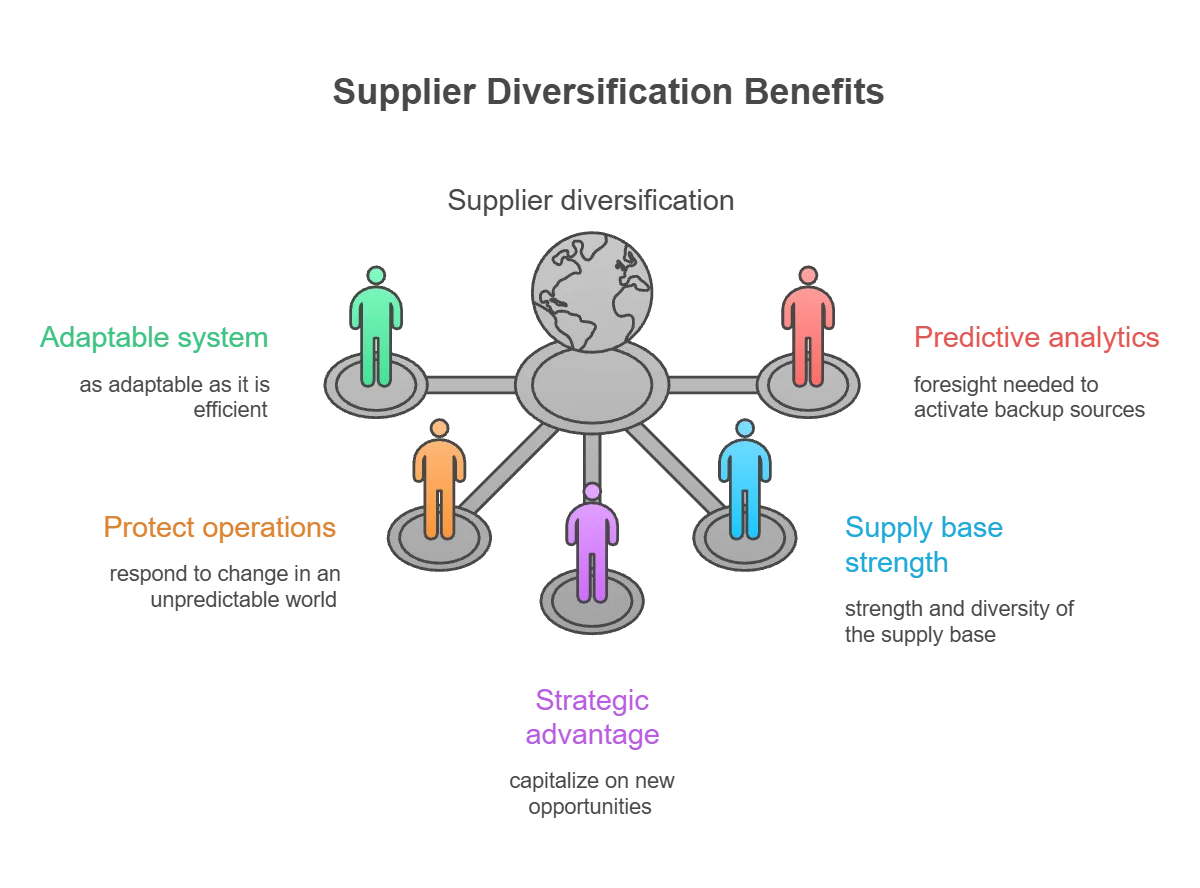 Ultimately, the goal of supplier diversification is to create a system that is as adaptable as it is efficient. A rigid network that cannot respond to change is a major liability in an unpredictable world. By embracing a more distributed and flexible model, businesses can protect their operations and thrive in the face of uncertainty. This ongoing commitment to resilience is not just a defensive measure but a strategic advantage that allows organizations to capitalize on new opportunities and build a more successful future. The lessons learned from recent global disruptions are clear: the path to stability lies in the strength and diversity of the supply base. Additionally, companies should consider how predictive analytics for early detection of supply chain disruptions can complement these efforts by providing the foresight needed to activate backup sources before a crisis hits.
Final Perspective
The implementation of comprehensive sourcing diversification is essential for any modern enterprise looking to build a resilient and stable network. By moving away from an overreliance on single sources and embracing a more geographic spread, organizations can reduce their exposure to risk and ensure operational continuity. This strategic shift, supported by collaborative partnerships and advanced technology, provides the flexibility needed to succeed in an increasingly complex and unpredictable global market. As the world of trade continues to evolve, the ability to manage a diverse and agile supply base will remain a critical competitive advantage for long term success.