




















The Source-to-Pay (S2P) process has long been the backbone of corporate operations, yet it has remained one of the most manually intensive and administratively burdensome workflows in the modern enterprise. From the initial identification of a need to the final payment to a supplier, the chain is often fraught with friction, siloed data, and human bottlenecks. However, the introduction of Autonomous Procurement Agents is revolutionizing this lifecycle. These sophisticated AI entities are not just tools for efficiency they are becoming the orchestrators of the entire procurement value chain, moving beyond simple automation into the realm of intelligent, self-managing workflows that streamline every touchpoint of the S2P journey.
By leveraging autonomous procurement, organizations are finding that the traditional barriers between “sourcing” and “payment” are dissolving. In a conventional setup, these two ends of the spectrum often operated independently, leading to data mismatches and missed opportunities for spend management. Autonomous Procurement Agents bridge this gap by maintaining a continuous thread of intelligence from the moment a requisition is raised to the moment the invoice is settled. This end-to-end integration is the hallmark of a truly digital procurement strategy, ensuring that every transaction is optimized for cost, compliance, and speed without requiring constant human intervention.
Reimagining the Sourcing Phase with AI Intelligence
The journey begins with AI sourcing, where autonomous agents redefine how requirements are captured and fulfilled. In the past, a procurement officer would manually search for suppliers, compare quotes, and negotiate terms a process that could take weeks. Today, Autonomous Procurement Agents can analyze internal demand patterns and external market conditions simultaneously. They can automatically generate RFPs, distribute them to a pre-vetted pool of suppliers, and use natural language processing to evaluate responses. This level of procurement automation ensures that the sourcing phase is not just faster, but significantly more analytical, considering factors such as supplier risk scores and historical performance that a human might overlook.
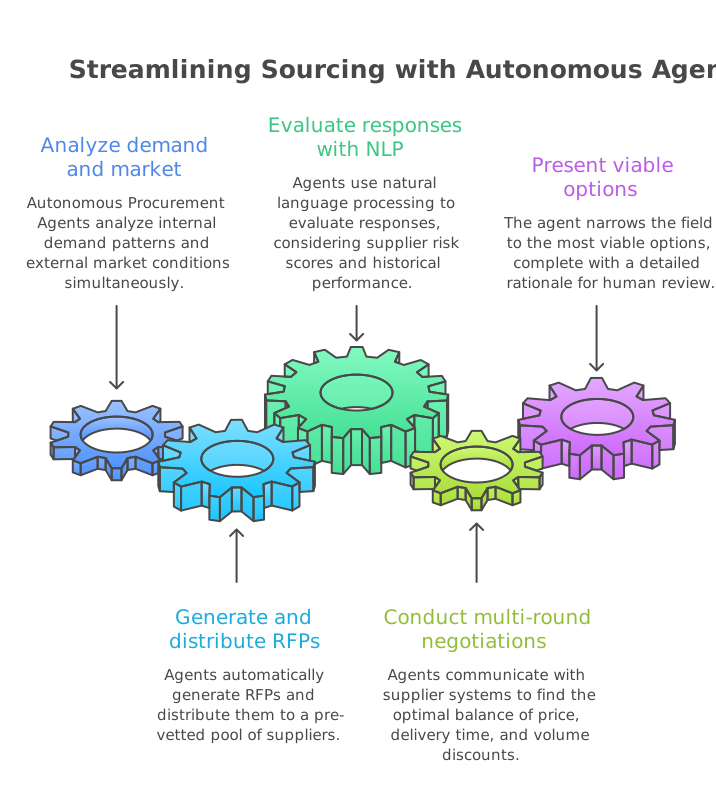
Furthermore, the “agentic” nature of these systems allows them to engage in multi-round negotiations. They can communicate with supplier systems to find the optimal balance of price, delivery time, and volume discounts. This is not just a calculator at work it is an intelligent agent understanding the trade-offs of a complex deal. By the time a human procurement manager reviews the sourcing event, the agent has already narrowed the field to the most viable options, complete with a detailed rationale for each. This transition to AI agents in the sourcing phase is the first critical step in streamlining the broader source to pay lifecycle.
Enhancing Supplier Management and Collaboration
Once a supplier is selected, the focus shifts to supplier management, an area where Autonomous Procurement Agents provide immense value. Maintaining a healthy relationship with hundreds or thousands of vendors is a monumental task for any procurement department. Autonomous agents act as the primary interface for routine interactions. They can manage onboarding documentation, monitor compliance with environmental and social governance (ESG) standards, and handle day-to-day queries. This proactive approach to supplier collaboration ensures that potential issues such as a pending certification expiry or a delivery delay are addressed before they impact the business.
In the world of digital procurement, data is the lifeblood of the relationship. Autonomous Procurement Agents continuously gather and analyze performance data, providing a real-time scorecard for every vendor. If a supplier’s quality begins to trend downward, the agent can automatically trigger a performance review or suggest shifting volume to a secondary partner. This level of purchasing automation moves the relationship from a static contract to a dynamic partnership. The agents ensure that the “pay” part of the S2P cycle is only executed when the “source” and “deliver” requirements have been met to the highest standards, effectively closing the loop on quality control.
Optimizing Spend Management and Financial Compliance
A critical component of the source to pay process is spend management. Many organizations suffer from “maverick spend” purchases made outside of negotiated contracts or without proper authorization. Autonomous Procurement Agents are the ultimate guardians of spend integrity. They can be integrated directly into the requisition software, ensuring that every purchase order aligns with corporate policy and pre-negotiated terms. If a request is made that deviates from these standards, the agent can either block the transaction or provide the user with a compliant alternative. This ensures that procurement software is not just a database of records but an active participant in financial discipline.
The automation extends to the “pay” side of the equation as well. Invoice processing is notoriously error-prone, with mismatches between purchase orders, goods receipts, and invoices. Autonomous Procurement Agents utilize advanced computer vision and machine learning to perform “three-way matching” with near-perfect accuracy. They can identify discrepancies in pricing or quantity in milliseconds, flagging only the true exceptions for human review. This level of procurement automation reduces the cycle time for payments, which in turn allows the organization to take advantage of early-payment discounts and improves the overall cash flow of the supply chain.
The Strategic Shift Toward a Fully Autonomous Enterprise
The ultimate goal of deploying Autonomous Procurement Agents is to elevate the procurement function from an administrative task to a strategic powerhouse. When the routine elements of the source to pay process are handled by AI, procurement professionals are freed to focus on high-value initiatives like innovation scouting, supply chain resilience, and category strategy. The procurement software of the future will not be something humans “use” it will be a workforce of agents that humans “direct.” This shift is fundamental to achieving global sourcing performance and staying competitive in an increasingly volatile market.
As we look forward, the integration of AI agents into the S2P lifecycle will become even more seamless. We will see agents that can predict supply shortages based on weather patterns and automatically adjust purchasing orders across the global network. We will see agents that can negotiate carbon credits as part of a procurement deal to meet sustainability targets. The era of autonomous procurement is not just about efficiency it is about building a smarter, more responsive, and more ethical way of doing business. By streamlining source to pay through intelligent agents, enterprises are setting the stage for a new era of operational excellence.
In summary, Autonomous Procurement Agents are the catalyst for a total transformation of the purchasing landscape. They bring a level of speed, accuracy, and strategic depth that was previously unattainable. From the first spark of a sourcing requirement to the final settlement of a payment, these agents are ensuring that every step is optimized for the benefit of the organization. The future of procurement is autonomous, and the journey toward that future begins with the intelligent streamlining of the source to pay process.