

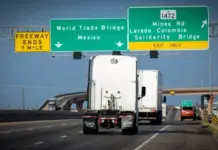
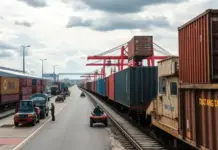
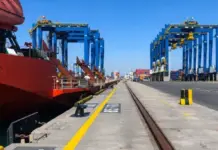



















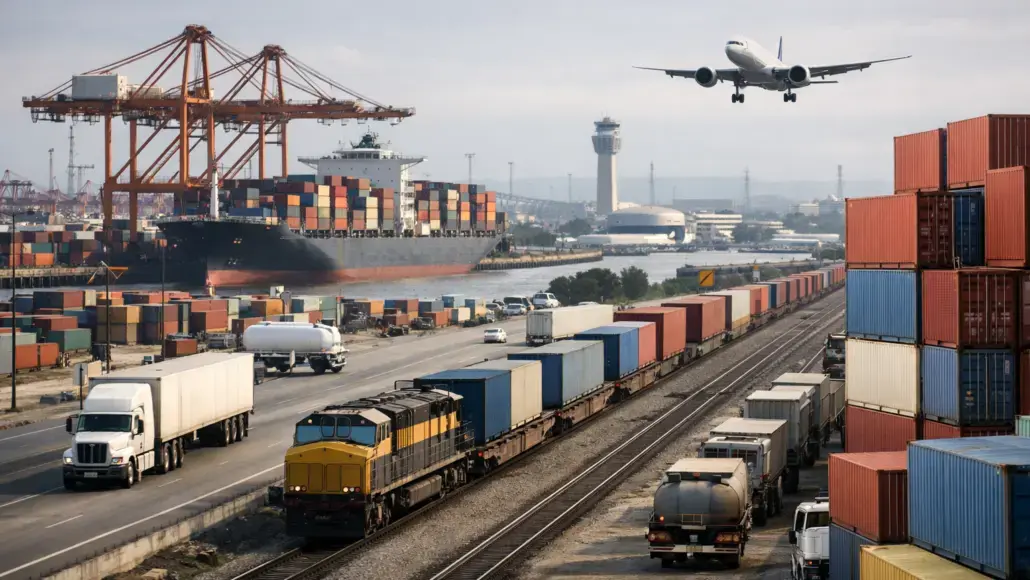
It is not disruptions that go on to build supply chain resilience, but they uncover weaknesses, reliance, and risks that might have been concealed during years of prosperity. Above all else, they show if resilience had been built up before. Advance decisions, the global presence of logistics operators, a diverse operational network, and the capacity to quickly reroute cargo between seaports, airports, and railroads, as well as road transport, are key to their potential to ensure the seamless flow of goods.
So, how are disruptions impacting how we think about supply chain management? As the General Manager of Eastern Europe, CEVA Logistics, Ewa Włodarczyk, explains, for the past several years, the most significant issue facing global logistics has not been efficiency or cost optimization, but rather supply chain resilience. Disruptions due to geopolitical disputes, disputes over trade, or limitations on capacity along with critical transport routes give rise to quantifiable losses for national economies. Disruptions to critical chokepoints in maritime transport, for example, are projected to generate losses of more than USD 10 billion per year for the world’s economy. Increased freight expenses create additional expenses estimated to reach USD 3.4 billion. This has direct implications for companies in a wide range of industries, right from automotive and food production to electronics manufacturing. The result is shortages of parts, interruptions of the continuity of production, and higher operating expenses.
Flexibility is not the only thing; speed makes sense too
The fact is that being able to prepare alternative scenarios in advance, build networks of interconnected transportation options, and, above all, execute them fast is what effective risk management means today.
It is no surprise that a growing number of businesses choose to shift away from traditional models that depend on a single dominant port, terminal, or transportation corridor. More often they are using alternative seaports, airports, rail and road links, as well as multimodal transport solutions, which enable them to quickly adapt supply chains to shifting conditions.
An excellent instance of this kind of a strategy is the reaction by CEVA to the recently announced closure of the Strait of Hormuz. Rather than opening up a single alternative route, a complete system of interlinked transport solutions was introduced. CEVA Logistics has gone on to introduce alternative transport services such as corridors via Turkey, rail transport, sea-air solutions, and TIR operations, all backed by its own road transport network across the GCC region.
This allowed for a swift redirection of the cargo flows and the preservation of the stability of the supply chains, even if one of the most significant trade routes in the world was disrupted.
This also points to an additional important fact – the security of the supply chain in one region frequently relies on the operational capacity and logistics systems built in completely distinct markets as well as locations. The possibility of moving operations to other ports, warehouses, terminals, or transport corridors in a short time is available just to a logistics operator who has a well-developed global infrastructure, strong ties with reliable partners and reputable carriers, and modern technologies when it comes to operational management and visibility of shipments.
East and Central Europe’s Role
In this context, Central and Eastern Europe is becoming increasingly important. The region is no longer perceived just as a source of cheap labor when it comes to manufacturing or a passageway. It has a strategic location and real potential so as to become an important logistics hub for Europe. The region’s substantial warehousing, road, rail, air, and maritime infrastructure, along with expanding intermodal terminal capacities and accessibility to Baltic Sea ports, means it could serve an important part in keeping supply chains moving, especially at times of disruption.
A New Concept in Logistics
It is worth noting that the modern logistics in the years to come will be defined by agility, adaptability, and a unified approach. It will be those operators who can restructure an entire supply chain in a matter of hours utilizing the power of their global networks that will possess the competitive edge and not those who just have a single alternative route. Resilience is no longer just a supplement to efficiency but its basic necessity and an investment that offers value precisely if unanticipated events occur.