

























The industrial landscape is currently witnessing a profound shift in how physical labor and logistics are executed within the four walls of the warehouse. For decades, automation was synonymous with massive, fixed infrastructure such as conveyor belts and heavy sorting machines that required significant capital investment and offered little in the way of flexibility. The introduction of Autonomous Mobile Robots (AMRs) has dismantled this rigid paradigm, introducing a level of agility and intelligence that was previously confined to the realm of speculative fiction. These sophisticated machines are not merely replacing manual labor they are fundamentally redefining the operational DNA of the modern warehouse, allowing facilities to adapt to the volatile demands of global commerce with unprecedented speed and precision.
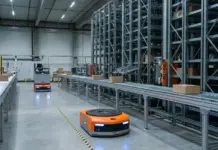
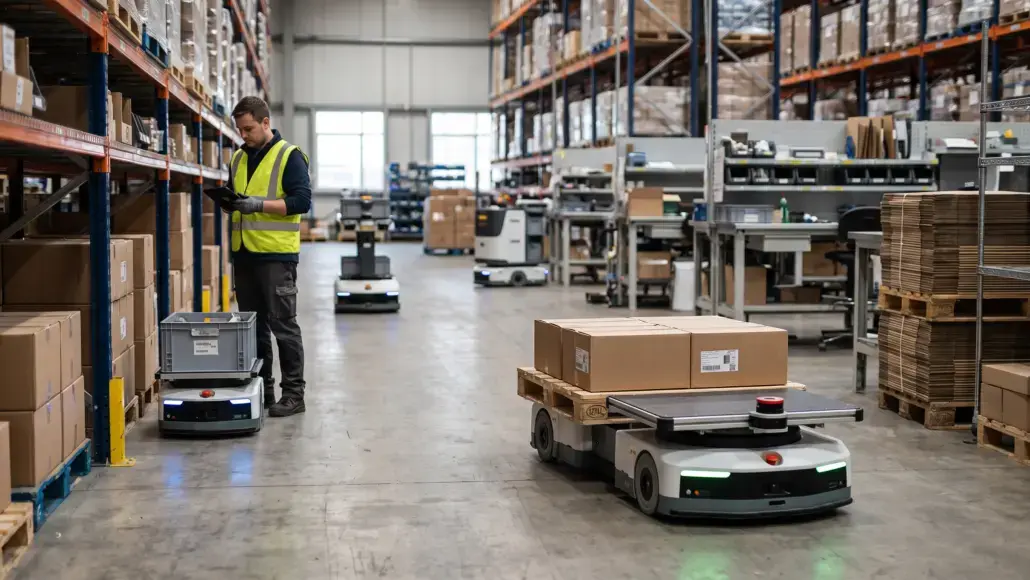
At the center of this transformation is the ability of Autonomous Mobile Robots to navigate complex, dynamic environments without the need for predefined tracks or wires. Unlike their predecessors, the Automated Guided Vehicles (AGVs), AMRs utilize an array of onboard sensors, cameras, and sophisticated software to build a real-time map of their surroundings. This allows them to detect obstacles, reroute themselves when a path is blocked, and safely interact with human coworkers. This inherent flexibility is the primary driver behind their widespread adoption. In an era where product life cycles are shorter and consumer expectations for rapid delivery are higher than ever, the ability to reconfigure a warehouse layout or scale a robotic fleet overnight is a critical competitive advantage.
The Evolution from Fixed Automation to Flexible Mobility
The history of warehouse automation has been one of increasing complexity but also increasing rigidity. Traditional systems were designed for high-volume, low-variety operations where the flow of goods was predictable and stable. However, the rise of e-commerce has flipped this model on its head. Modern facilities must now handle an immense variety of SKUs, often in small quantities, and with high fluctuations in demand. Autonomous Mobile Robots provide the solution to this challenge by decoupling automation from the building’s physical structure. Because they do not require fixed paths, they can be deployed in existing facilities with minimal disruption, allowing businesses to automate their material handling incrementally.
This mobility allows for a more decentralized approach to warehouse operations. Instead of goods moving to a central sorting station, AMRs can bring the sorting and processing capabilities to where the goods are stored. This reduces the time spent on empty travel and minimizes the wear and tear on floor infrastructure. Furthermore, the modular nature of AMR technology means that a fleet can be expanded or contracted in response to seasonal peaks. During the holiday rush, a company can lease additional robots to handle the surge in volume, returning them once the demand subsides. This “Robotics as a Service” (RaaS) model lowers the barrier to entry for smaller firms and ensures that larger enterprises are not burdened with idle assets during quiet periods.
Intelligent Navigation and Environmental Awareness
The “autonomous” in Autonomous Mobile Robots is powered by a suite of technologies that allow the machine to “see” and “think” about its environment. LiDAR (Light Detection and Ranging) sensors create a detailed 3D map of the warehouse, while depth-sensing cameras identify specific objects and people. This environmental awareness is crucial for maintaining safety in a busy facility. When an AMR encounters a human worker or a stray pallet, it does not simply stop it calculates a new path around the obstacle, ensuring that the flow of goods remains uninterrupted. This ability to make independent decisions is what distinguishes AMRs from the older, track-bound generations of robots.
Furthermore, the intelligence of these robots is often augmented by cloud-based orchestration platforms. These systems collect data from the entire fleet to identify patterns and optimize traffic flow across the warehouse. If a particular aisle is becoming congested, the orchestration software can direct robots to alternative routes, preventing bottlenecks before they form. This macro-level coordination, combined with the individual robot’s micro-level navigation, creates a highly efficient ecosystem that is greater than the sum of its parts. As the algorithms behind these systems continue to improve, we can expect to see even higher levels of autonomy and coordination, leading toward the eventual goal of the “lights-out” warehouse.
Reducing Physical Strain and Enhancing Workplace Safety
One of the most immediate benefits of deploying Autonomous Mobile Robots is the significant reduction in physical strain on the human workforce. Warehouse work is notoriously demanding, involving miles of walking every shift and the frequent lifting of heavy items. By taking over these repetitive and physically taxing tasks, AMRs allow human employees to focus on more complex activities that require cognitive skill and dexterity. This not only improves productivity but also leads to a significant reduction in workplace injuries, such as strains, sprains, and fatigue-related accidents. A safer workforce is a more stable and efficient workforce, which directly contributes to the bottom line.
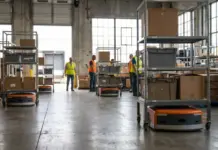
Safety is further enhanced by the precision and predictability of robotic movement. Unlike human-driven forklifts, which are prone to operator error and limited visibility, AMRs are equipped with 360-degree sensory coverage. They never get tired, never get distracted, and always adhere to established safety protocols. In high-traffic zones where humans and machines must interact, the presence of autonomous systems reduces the risk of collisions. Many modern AMRs are also equipped with audio and visual signals to alert nearby workers of their presence and intended direction. This transparent communication between man and machine is essential for building a culture of trust and collaboration in the automated warehouse.
Impact on Operational Throughput and Fulfillment Speed
The primary metric of success in any warehouse is throughput the amount of goods that can be processed and shipped in a given time frame. Autonomous Mobile Robots dramatically increase this metric by eliminating the “travel time” that typically accounts for up to 50% of a picker’s day. Instead of a worker walking to a remote corner of the warehouse to retrieve an item, the AMR brings the item (or the entire shelf) to the worker. this “goods-to-person” model can double or even triple picking rates, allowing facilities to handle significantly higher order volumes without increasing their physical footprint or headcount.
This increase in speed is critical for meeting the demands of modern fulfillment. Customers now expect their orders to be processed and shipped within hours, not days. AMRs enable this rapid turnaround by streamlining the entire material handling process, from receiving and put-away to picking and packing. When every movement is optimized by a central intelligence and executed by a tireless robot, the time it takes to move an order from the dock to the truck is minimized. This operational velocity is not just about efficiency it is about meeting the promises made to the customer and maintaining a brand’s reputation for reliability in a competitive market.
Scalability and Integration with Legacy Systems
One of the misconceptions about warehouse automation is that it requires a complete overhaul of existing systems. In reality, Autonomous Mobile Robots are designed to be highly integrative. Most modern AMR platforms can be easily connected to existing Warehouse Management Systems (WMS) and Enterprise Resource Planning (ERP) software. This allows the robots to receive task assignments and report their status in real-time, ensuring that the digital records of the facility are always accurate. The ability to layer autonomous technology on top of legacy infrastructure allows businesses to modernize their operations without the need for a massive, high-risk “rip and replace” project.
Scalability is another key advantage of the AMR approach. Unlike fixed conveyor systems, which have a hard cap on their capacity, a robotic fleet can grow alongside the business. A company can start with a small pilot program of five robots to automate a single process and then gradually expand to a fleet of hundreds as the benefits are realized. This low-risk path to automation is particularly appealing to medium-sized enterprises that need to stay competitive but have limited capital budgets. By allowing for incremental investment and growth, Autonomous Mobile Robots democratize access to advanced technology, ensuring that the benefits of the digital revolution are available to businesses of all sizes.
Future Horizons: Swarm Intelligence and Cross-Facility Autonomy
As we look toward the future, the capabilities of Autonomous Mobile Robots will continue to expand through the application of swarm intelligence. Inspired by natural systems like ant colonies or beehives, swarm intelligence allows a large group of robots to coordinate their actions without a centralized controller. This decentralized approach makes the fleet incredibly resilient if one robot fails, the others can instantly adapt and cover its tasks. Swarm systems are also highly efficient at solving complex logistical problems, such as optimal pathfinding in a crowded space or the rapid reorganization of inventory in response to a sudden change in demand.
Furthermore, we are moving toward a future where autonomy is not confined to the warehouse floor but extends to the entire supply chain. We can envision a world where Autonomous Mobile Robots offload goods from autonomous trucks, transport them through a smart warehouse, and then load them onto autonomous delivery drones all without human intervention. While this level of end-to-end autonomy is still several years away, the building blocks are already being deployed today. The transformation of warehouse operations through AMRs is just the first step in a broader revolution that will make the movement of goods faster, safer, and more efficient than ever before in human history.
In summary, Autonomous Mobile Robots are the catalysts for a new era of logistics. By providing the flexibility, intelligence, and scalability that modern commerce demands, they are helping businesses overcome the limitations of traditional, fixed automation. The impact of these machines is felt across every aspect of the warehouse, from the physical safety of the workers to the speed and accuracy of order fulfillment. As the technology continues to mature, the role of the AMR will only become more central, serving as the reliable and agile backbone of the global supply chain. The journey toward full digital transformation is ongoing, but with the power of autonomous mobility, the future of the warehouse has never looked brighter.