
























The narrative surrounding automation has frequently been framed as a zero-sum game, where the advancement of technology inevitably comes at the expense of human employment. However, the reality unfolding on the floors of the world’s most advanced logistics centers tells a different story one of partnership rather than replacement. The integration of AMRs and Human Collaboration is proving to be the most effective way to meet the escalating demands of global commerce. By leveraging the tireless precision of Autonomous Mobile Robots (AMRs) alongside the critical thinking and dexterity of human workers, businesses are creating a synergistic environment that is more productive, safer, and more adaptable than any purely manual or purely automated system could ever be.
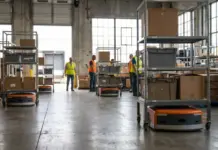
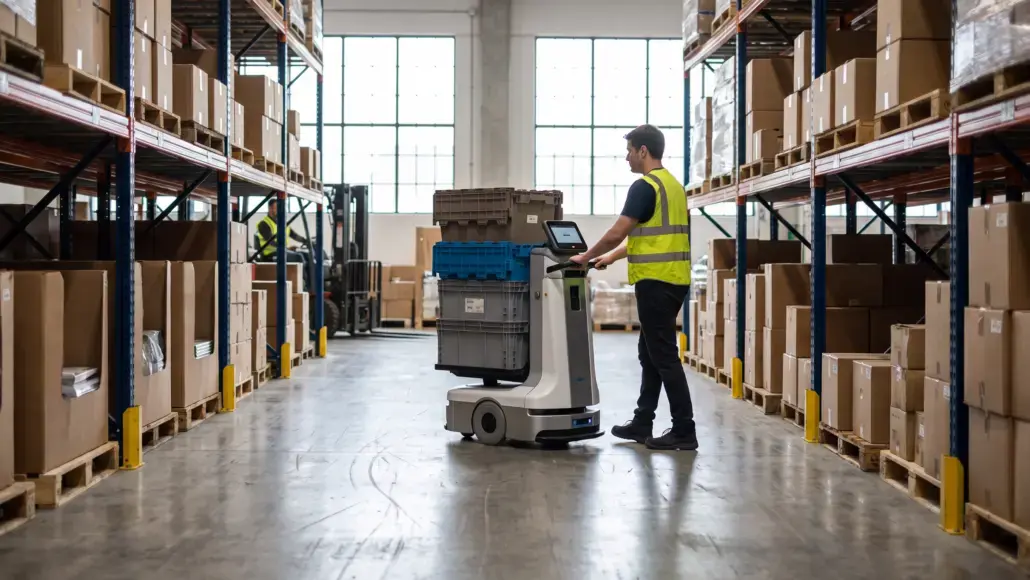
This collaborative approach recognizes that humans and robots possess fundamentally different but complementary strengths. Robots excel at repetitive, physically demanding tasks and the rapid processing of large datasets. Humans, on the other hand, are unmatched in their ability to handle irregular objects, solve unexpected problems, and exercise nuanced judgment. In a modern warehouse, AMRs and Human Collaboration means that the robot handles the heavy lifting and long-distance transport, while the human worker focuses on the complex picking and quality control tasks that require a “human touch.” This division of labor not only increases throughput but also elevates the role of the worker from a manual laborer to a technology-enabled specialist.
Building a Culture of Shared Success and Safety
The successful implementation of collaborative robotics requires more than just high-tech hardware it requires a cultural shift within the organization. Workers must see AMRs not as threats to their livelihoods, but as tools that make their jobs easier and safer. When AMRs and Human Collaboration is introduced correctly, with transparent communication and adequate training, it fosters a sense of empowerment among the staff. Employees who are freed from the physical strain of walking miles a day or lifting heavy boxes often report higher levels of job satisfaction and are more likely to stay with the company long-term. This reduction in turnover is a significant, if often overlooked, benefit of collaborative automation.
Safety is the cornerstone of this collaboration. Modern AMRs are designed from the ground up to operate safely around people. Equipped with 360-degree sensor arrays and advanced collision-avoidance algorithms, these robots are more like “smart assistants” than industrial machines. They can detect a person’s presence from a distance and adjust their speed or path accordingly. This proactive approach to safety reduces the risk of accidents that are common in traditional warehouses, such as forklift collisions or injuries caused by fatigue. As workers become accustomed to the presence of these intelligent machines, a relationship of trust is built, where the human-robot team operates as a single, coordinated unit.
Zones of Collaboration: Optimized Workflows for Peak Performance
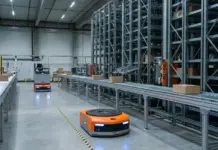
In a collaborative warehouse, the physical space is often organized into zones that optimize the interaction between humans and robots. In a “zone picking” model, for example, human workers stay within a specific aisle or area, while AMRs travel between them to collect the items and move them to the next stage of the process. This minimizes the time workers spend on empty travel and ensures that their expertise is applied where it is most needed. The AMRs and Human Collaboration in this scenario allows for a much smoother and more consistent flow of goods, as the robots can be dynamically reallocated to busier zones in real-time.
Another effective model is “collaborative kitting,” where a robot brings a mobile workbench or tray to a human worker, who then assembles a complex order or performs a specialized inspection. The robot acts as a mobile support system, providing the worker with the necessary materials and digital instructions. This setup is particularly valuable for handling high-value or fragile items that require careful human intervention. By providing the worker with exactly what they need, exactly when they need it, the AMR reduces errors and increases the speed of the operation. These optimized workflows are the physical manifestation of a successful partnership between human intuition and robotic efficiency.
Technology as an Equalizer: Empowering a Diverse Workforce
One of the most profound impacts of AMRs and Human Collaboration is its ability to democratize warehouse work. By taking over the most physically demanding aspects of the job, collaborative robots make warehouse roles accessible to a much wider demographic. Workers who might have previously been excluded due to physical limitations, age, or stamina can now perform at a high level with the assistance of a robot. This is a critical advantage in a tight labor market where finding and retaining qualified staff is a constant challenge. Automation, in this sense, is an equalizer that expands the talent pool and promotes a more inclusive workplace.
Furthermore, the digital interface of the AMR provides an intuitive way for workers to interact with complex warehouse management systems. Instead of having to memorize SKU locations or navigate cumbersome handheld scanners, workers are guided by the robot’s screen, which can display pictures of items, highlight the correct bin, and provide multi-language instructions. this reduces the “time-to-competency” for new hires, allowing them to become productive members of the team within hours rather than days. AMRs and Human Collaboration thus serves as a bridge between the worker and the digital world, making the warehouse a more accessible and supportive environment for everyone.
The Role of Communication and Real-Time Feedback
Effective collaboration is built on communication. In the context of AMRs and Human Collaboration, this means that the robot must be able to communicate its status and intentions to its human partners clearly. Many AMRs use light signals, sounds, and screens to indicate their next move or to request assistance. For example, a robot might pulse a soft light to show it is waiting for a pick, or use a specific tone to alert a worker that a path is blocked. This constant, non-intrusive flow of information ensures that everyone on the floor is aware of the robotic activity, reducing uncertainty and potential frustration.
Conversely, the system must also listen to the human worker. Modern collaborative platforms allow workers to provide feedback to the system, such as flagging a damaged item or suggesting a more efficient way to organize a pick tray. This feedback loop is essential for the continuous improvement of the operation. By treating the worker as an active participant in the optimization process, businesses can leverage the localized knowledge of their staff to refine the robotic algorithms. When AMRs and Human Collaboration includes a two-way dialogue, the resulting system is far more resilient and capable of handling the nuances of real-world logistics.
Strategic Resilience and the Future of Collaborative Logistics
The true value of a human-robot partnership becomes most apparent during times of disruption. Whether it is a sudden spike in order volume, a supply chain interruption, or a change in warehouse layout, the collaborative model is inherently more resilient. Because the system is flexible, humans and robots can be quickly redeployed to meet new challenges. This agility is a key component of strategic resilience, allowing businesses to maintain a high level of service even under pressure. The AMRs and Human Collaboration creates a dynamic ecosystem that can “flex” in response to the environment, providing a stable foundation for long-term growth.
Looking ahead, we can expect the level of collaboration to deepen as artificial intelligence becomes more sophisticated. We are moving toward a future of “social robotics,” where AMRs can understand subtle human cues and anticipate a worker’s needs. Imagine a robot that sees a worker reaching for a heavy item and automatically positions its tray to catch it, or a system that adjusts its pace based on the worker’s current productivity level to prevent burnout. This high-level empathy and coordination will be the next frontier in AMRs and Human Collaboration, further blurring the line between human effort and robotic assistance.
Economic and Operational Benefits of the Partnership
From an economic perspective, the collaborative model offers a faster return on investment (ROI) than total automation. Because the robots are working alongside existing staff in an existing facility, the capital expenditure and implementation time are significantly lower. Businesses can see improvements in throughput and accuracy almost immediately, without the multi-year timeline associated with large-scale “dark warehouse” projects. The operational benefits are equally clear: higher fulfillment speed, lower error rates, and a more scalable operation that can grow with the business.
In summary, the partnership between AMRs and Human Collaboration is the defining characteristic of the modern, successful warehouse. By rejecting the idea that technology must replace people, businesses are unlocking a new level of performance that combines the best of both worlds. The resulting environment is one of efficiency, safety, and empowerment, where technology serves as a force multiplier for human potential. As we continue to navigate the complexities of the digital age, the human-robot team will remain the reliable and agile engine at the heart of the global supply chain, ensuring that the world’s goods move with both precision and heart.