



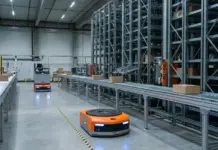















The intersection of artificial intelligence and mobile robotics has ushered in a new era for the logistics industry, one characterized by autonomous decision-making and unprecedented operational velocity. As global markets expand and the demand for rapid fulfillment intensifies, traditional warehouses are finding it increasingly difficult to keep pace using conventional methods. The introduction of AI-Powered AMRs (Autonomous Mobile Robots) has provided the necessary technological bridge, allowing facilities to transcend the limitations of manual labor and fixed automation. These intelligent machines are not just tools for moving boxes they are the engines of a modern industrial revolution that is driving significant productivity gains and enabling sustainable business growth in an increasingly complex world.
What distinguishes AI-Powered AMRs from basic automated vehicles is their ability to process vast amounts of data in real-time to optimize their own performance. Equipped with sophisticated machine learning algorithms, these robots can learn from their environment, adapting to changes in warehouse layout, traffic patterns, and inventory fluctuations. This self-optimizing capability means that the longer the robots are deployed, the more efficient they become. This creates a powerful cycle of continuous improvement that directly impacts the facility’s bottom line. By reducing downtime, minimizing errors, and maximizing the use of every available square meter, AI-driven robotics are setting a new standard for what a productive warehouse can achieve.
The Intelligence Behind the Movement: Machine Learning and Perception
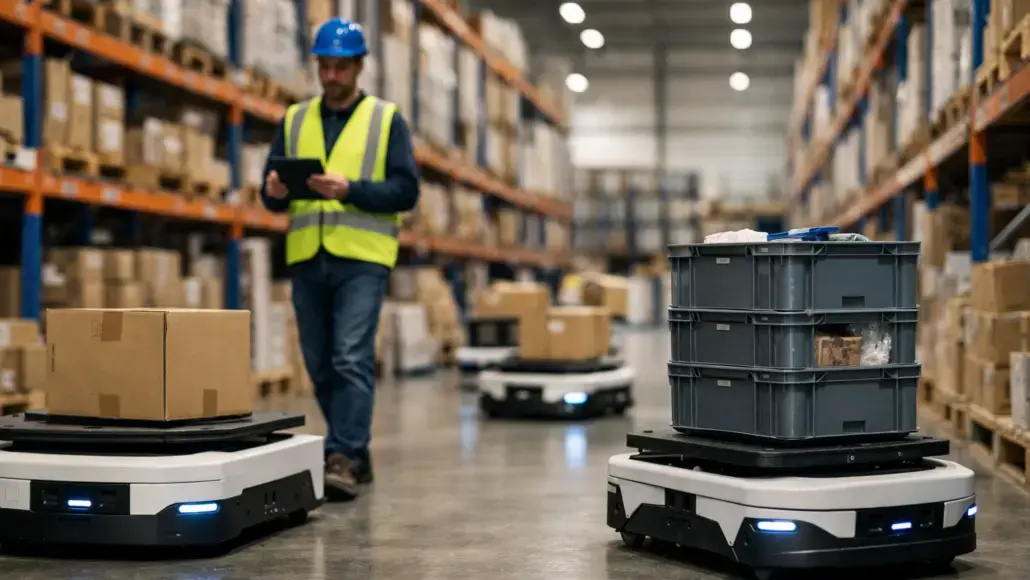
The core of AI-Powered AMRs lies in their perception systems and their ability to interpret complex sensory data. Traditional automation relies on simple “if-this-then-that” logic, which quickly breaks down in the unpredictable environment of a busy warehouse. In contrast, AI-driven robots use neural networks to recognize and classify objects, predict the movements of humans and other vehicles, and navigate around obstacles with surgical precision. This high-level perception is what enables these robots to work safely and effectively in shared spaces, eliminating the need for expensive and restrictive safety fencing.
Beyond navigation, AI is used to optimize the “logic of work” performed by the robots. For example, machine learning can analyze order histories to predict which items will be in high demand, prompting AI-Powered AMRs to proactively move those items to more accessible locations a process known as predictive slotting. The AI can also optimize the sequence of tasks, ensuring that a robot completes multiple pickups and drop-offs in a single trip, thereby minimizing travel distance and maximizing energy efficiency. This intelligent orchestration of movement is the key to unlocking the high-throughput capabilities that modern e-commerce demands.
Driving Scalability and Business Expansion
For many businesses, the ability to scale operations is often limited by the availability of labor and the cost of physical space. AI-Powered AMRs address both of these constraints simultaneously. By automating the most repetitive and labor-intensive tasks, these robots allow companies to handle significantly higher volumes without a proportional increase in headcount. This is particularly crucial in regions where labor is scarce or expensive. Furthermore, the efficiency gains provided by AI-driven robotics allow facilities to process more goods within their existing footprint, effectively increasing the capacity of the warehouse without the need for costly real estate expansions.
This scalability is not just about handling more orders it is about enabling growth into new markets and product categories. With the agility provided by AI-Powered AMRs, a business can quickly reconfigure its operations to handle a different type of inventory or to implement a new fulfillment strategy, such as micro-fulfillment or direct-to-consumer shipping. The ability to pivot quickly in response to market opportunities is a hallmark of a growth-oriented company. By investing in intelligent automation, businesses are not just solving today’s logistical challenges they are building a flexible and resilient foundation that can support their ambitions for years to come.
Enhancing Labor Productivity and Employee Engagement
A common misconception is that AI-Powered AMRs are designed to replace human workers. In reality, the most successful implementations are those that focus on human-robot collaboration. By taking over the “three Ds” tasks that are Dull, Dirty, or Dangerous robots free up human employees to focus on roles that require high-level problem solving, quality control, and customer service. This shift in the nature of work leads to higher labor productivity, as human skills are applied where they add the most value. Furthermore, the reduction in physical strain leads to a healthier, more motivated workforce, which is essential for maintaining high levels of performance.
Intelligent automation also provides workers with better tools to do their jobs. AI-Powered AMRs can be integrated with wearable devices and voice-directed systems to provide workers with real-time instructions and feedback. This reduces the time spent on training and minimizes the cognitive load on the employee, allowing them to work faster and with greater accuracy. When workers see that technology is there to support them rather than compete with them, engagement levels rise. A culture of innovation is fostered, where employees are encouraged to find new ways to leverage the robotic fleet to improve their daily workflows.
Data-Driven Insights and Operational Visibility
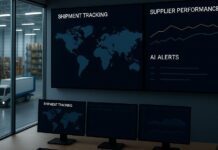
One of the most valuable by-products of deploying AI-Powered AMRs is the immense amount of data they generate. Every movement, every pick, and every environmental interaction is recorded and analyzed. This provides management with a level of operational visibility that was previously impossible. Through advanced analytics dashboards, managers can see real-time heat maps of warehouse activity, identify bottlenecks as they form, and monitor the health and performance of every robot in the fleet. This data-driven approach to management allows for more precise resource allocation and more effective strategic planning.
The insights gained from AI-Powered AMRs also extend to inventory management. Because the robots are constantly interacting with the stock, they can provide a continuous, real-time audit of inventory levels and locations. This reduces the reliance on manual cycle counts and minimizes the risk of stockouts or misplaced items. Furthermore, the AI can identify trends in inventory movement that might indicate underlying issues in the supply chain, such as vendor delays or quality control problems. By turning the warehouse into a data-rich environment, AI-driven robotics empower leaders to make more informed, evidence-based decisions that drive long-term success.
Improving Sustainability and Energy Efficiency
In the modern business environment, productivity and sustainability are no longer mutually exclusive. AI-Powered AMRs contribute to a “greener” warehouse in several ways. First, the optimization of travel paths significantly reduces the energy consumption of the robotic fleet. By taking the most direct route and minimizing idle time, the robots use less electricity per unit moved. Furthermore, many modern AMRs are equipped with energy-efficient motors and advanced battery management systems that allow them to operate for longer periods between charges.
The precision of AI also leads to less waste. Higher picking accuracy means fewer returns, which reduces the carbon footprint associated with reverse logistics and repackaging. Additionally, the ability of AI-Powered AMRs to maximize storage density allows companies to store more products in smaller, more energy-efficient buildings. Heating, cooling, and lighting a large warehouse accounts for a significant portion of its environmental impact by doing more with less space, businesses can substantially reduce their overall carbon footprint. Sustainability is not just a moral imperative it is an operational strategy that leads to cost savings and a stronger brand reputation.
The Road Ahead: Autonomous Learning and Cross-Platform Integration
The future of AI-Powered AMRs lies in the development of even more sophisticated forms of autonomous learning. We are moving toward a world where robots can not only adapt to their current environment but can also share their “knowledge” with other robots across a global network. If a robot in one warehouse discovers a more efficient way to navigate a specific type of floor surface, that information could be instantly uploaded to the cloud and shared with thousands of other robots worldwide. This collective intelligence will accelerate the pace of innovation and lead to even greater productivity gains.
Furthermore, we will see deeper integration between AI-Powered AMRs and other emerging technologies, such as 5G telecommunications and the Internet of Things (IoT). 5G will provide the low-latency connectivity required for even more complex real-time coordination, while the proliferation of IoT sensors will provide the robots with an even richer understanding of their surroundings. As these technologies converge, the warehouse will become a fully integrated, self-optimizing node in a global, digital supply chain. The journey toward total operational excellence is being led by AI-Powered AMRs, and the companies that embrace this technology today will be the leaders of tomorrow’s economy.
In conclusion, the deployment of AI-Powered AMRs is a transformative step for any logistics operation looking to enhance its productivity and support long-term growth. By combining the physical mobility of robotics with the analytical power of artificial intelligence, these systems solve the most pressing challenges of modern fulfillment. From improving speed and accuracy to enhancing labor engagement and sustainability, the benefits are clear and compelling. As we look to the future, the role of intelligent automation will only become more central, serving as the essential catalyst for innovation and excellence in the global marketplace.