























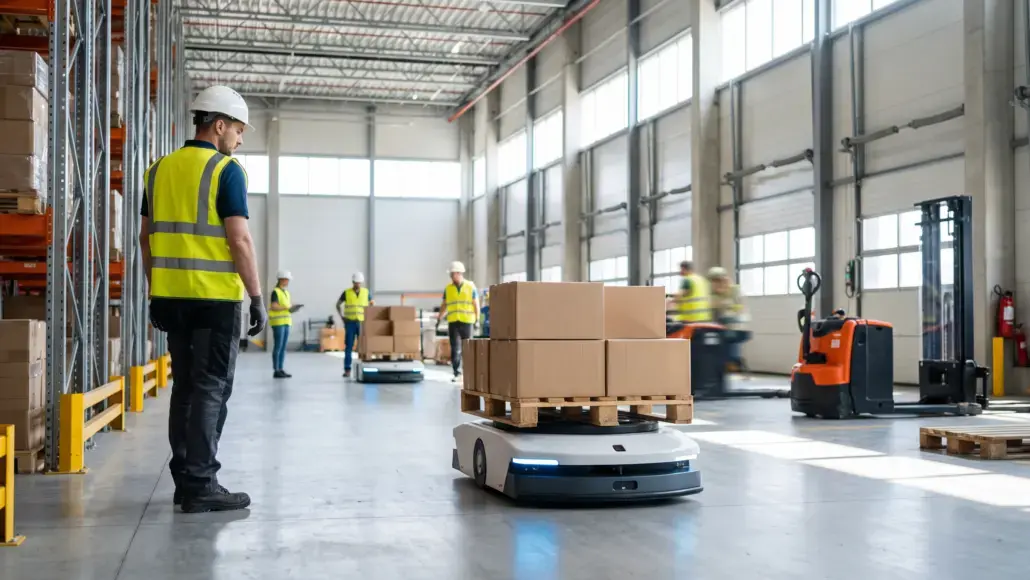
The fundamental challenge of any distribution center lies in the movement of goods from their storage locations to the packing stations and eventually to the shipping docks. Traditionally, this process, known as picking, has been the most labor-intensive and costly aspect of warehouse operations, often accounting for more than half of the total operating budget. The physical exertion required of human pickers, who may walk upwards of ten miles in a single shift, inevitably leads to fatigue, errors, and high turnover rates. The implementation of AMRs for Warehouse Picking has emerged as a transformative solution to these persistent issues. By automating the transport of materials and assisting workers in the retrieval process, these robots are not just improving productivity they are fundamentally enhancing the sustainability and scalability of the fulfillment process.
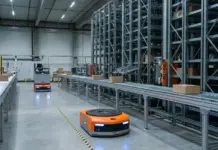
Autonomous Mobile Robots (AMRs) are specialized units designed to handle the specific needs of order fulfillment within a dynamic environment. Unlike older technologies that required rigid tracks or significant modifications to the warehouse floor, AMRs for Warehouse Picking are flexible and intelligent. They use a combination of LiDAR, 3D cameras, and sophisticated software to navigate safely alongside human employees. Their primary role in the picking process is to eliminate “non-value-added travel” the time workers spend walking between storage aisles and packing stations. By handling the heavy lifting and the long-distance transport, AMRs allow human workers to stay within assigned zones, focusing on the tasks that require human dexterity and judgment.
Transforming the Picking Paradigm: From Person-to-Goods to Goods-to-Person
For decades, the standard method of warehouse fulfillment was the “person-to-goods” model. In this setup, a worker receives a pick list and travels through the warehouse, locating items and placing them on a cart. This method is inherently inefficient due to the vast distances involved and the time spent navigating traffic and obstacles. AMRs for Warehouse Picking facilitate a shift toward more efficient models, such as “goods-to-person” or “zone picking.” In a goods-to-person system, the robots actually move the shelving units or pallets containing the required items directly to a stationary worker. This eliminates travel time entirely for the picker, leading to a dramatic increase in the number of items that can be processed per hour.
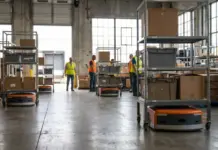
Alternatively, in a “collaborative picking” or “zone picking” model, workers stay within a specific area of the warehouse, and the AMRs travel between them. A robot arrives at a worker’s location, displays the item to be picked on its screen, and waits for the worker to place the item on its tray. Once the pick is confirmed, the robot moves to the next zone or to the packing station. This hybrid approach combines the best of both worlds: the dexterity of the human hand and the tireless mobility of the robot. By keeping workers in a confined area, businesses can significantly reduce physical fatigue and improve the overall ergonomics of the workplace, leading to a more engaged and stable workforce.
The Role of Software in Optimizing Material Handling Workflows
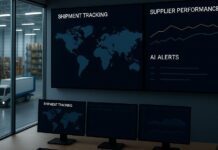
The hardware of a robot is only as effective as the software that orchestrates it. In the context of AMRs for Warehouse Picking, the coordination of the fleet is managed by a centralized Fleet Management System (FMS). This software is the intelligence that decides which robot should handle which order and which path it should take through the warehouse. By integrating with the facility’s Warehouse Management System (WMS), the FMS can prioritize orders based on their urgency and the location of the inventory. This ensures that the robotic fleet is always utilized at its maximum capacity and that the most critical shipments are processed first.
Advanced orchestration software also performs dynamic path planning. A warehouse is a constantly changing environment where aisles can be blocked by pallets and traffic patterns shift throughout the day. The software analyzes real-time data from the robots’ sensors to identify potential bottlenecks and reroute the fleet accordingly. This level of responsiveness prevents “robotic traffic jams” and ensures that the flow of materials remains smooth even during peak periods. Furthermore, the software can optimize the batching of orders, grouping similar items together to minimize the number of trips a robot needs to make. This algorithmic precision is what allows AMRs for Warehouse Picking to achieve levels of efficiency that are simply impossible for manual operations.
Enhancing Accuracy and Reducing Fulfillment Errors
Order accuracy is a vital performance indicator for any logistics operation. An incorrect item in a shipment leads to costly returns, customer dissatisfaction, and potential brand damage. AMRs for Warehouse Picking contribute to higher accuracy by providing a multi-layered verification process. When a robot arrives at a picking location, its screen can display a picture of the item, the required quantity, and even the specific slot on the robot’s tray where the item should be placed. This visual guidance reduces the cognitive load on the worker and minimizes the likelihood of a “mis-pick.”
Many AMRs are also equipped with built-in scales or scanners that can verify the item as it is placed on the robot. If the weight of the item does not match the expected value, the robot can alert the worker immediately, allowing the error to be corrected on the spot. This “real-time auditing” ensures that the quality control happens at the point of picking, rather than at the final packing station. By catching errors early in the fulfillment cycle, businesses can significantly reduce the time and cost associated with rework. The result is a more reliable fulfillment process that delivers the right product to the right customer every time, fostering long-term loyalty and trust.
Material Handling Efficiency Beyond the Pick List
While picking is the most visible application, AMRs for Warehouse Picking are also transforming general material handling tasks. Inbound operations, such as receiving and put-away, benefit significantly from autonomous transport. Instead of workers manually hauling pallets from the receiving dock to the storage aisles, AMRs can take over the heavy transport. This allows the receiving team to focus on inspecting and cataloging the incoming goods, speeding up the time it takes for new inventory to become available for sale. The robots can even be programmed to prioritize the put-away of high-demand items, ensuring they are ready for picking as quickly as possible.
Replenishment is another area where AMRs excel. Maintaining the correct stock levels in active picking zones is essential for preventing delays. A smart WMS can trigger a replenishment task as soon as stock levels fall below a certain threshold, and an AMR can automatically transport the required inventory from a bulk storage area to the picking face. This seamless movement of materials ensures that pickers are never waiting for stock to arrive, maintaining a high level of throughput throughout the shift. By automating the mundane and repetitive transport of goods across the facility, AMRs act as the connective tissue that keeps the entire warehouse operation synchronized and efficient.
Adaptability to Existing Infrastructure and Scalability
One of the most compelling arguments for AMRs for Warehouse Picking is their ability to work within existing warehouse infrastructure. Unlike traditional automated storage systems that require high ceilings, specialized flooring, and a total reconfiguration of the facility, AMRs can be deployed in almost any standard warehouse. They can navigate around existing shelving, use standard loading docks, and even travel between different floors using smart elevators. This low barrier to entry allows businesses to begin their automation journey without the need for a massive, disruptive capital project.
This adaptability also facilitates extreme scalability. A company can start with a small pilot program to automate a single high-volume product line and then gradually expand the fleet as they see a return on investment. If the business moves to a new facility, the robots can simply be packed up and redeployed in the new location within days. This flexibility is essential in today’s fast-changing market, where businesses must be able to scale their capacity up or down in response to economic shifts or changes in consumer behavior. With AMRs, the warehouse is no longer a static asset but a dynamic and scalable platform for growth.
The Future of Autonomous Picking: Vision and Dexterity
The next frontier for AMRs for Warehouse Picking involves the integration of advanced computer vision and robotic arms to achieve “piece picking” the ability for a robot to autonomously identify and pick individual items from a bin. While currently most AMRs assist human pickers, the technology for fully autonomous picking is maturing rapidly. By combining high-resolution 3D cameras with machine learning, robots are becoming capable of handling a wider variety of objects, including those that are fragile or irregularly shaped. This will eventually lead to a “hands-free” picking process for many product categories.
Furthermore, we will see closer integration between AMRs and other forms of automation, such as automated packing machines and autonomous loading systems. In the warehouse of the future, an AMR will not only bring an item to a packing station but will also coordinate with a robotic packer to ensure the item is boxed securely and labeled correctly. This end-to-end automation will further reduce fulfillment times and lower operational costs. The transition to AMRs for Warehouse Picking is just the beginning of a broader technological shift that will make the movement of goods faster, more accurate, and more efficient than ever before.
In conclusion, the deployment of AMRs for Warehouse Picking represents a significant leap forward in logistics management. By addressing the inefficiencies of manual picking and providing a flexible, scalable path to automation, these robots are helping businesses meet the challenges of the modern e-commerce era. From improving worker ergonomics and safety to enhancing order accuracy and throughput, the benefits are multi-faceted and profound. As the technology continues to evolve, AMRs will remain at the heart of the smart warehouse, serving as a vital tool for any organization committed to operational excellence and customer satisfaction in a rapidly changing global market.