
























The global logistics landscape is currently navigating a period of unprecedented disruption, driven by the rapid integration of artificial intelligence into core operational frameworks. As supply chains grow increasingly complex and consumer expectations for rapid delivery reach new heights, the traditional warehouse model has become a bottleneck that requires more than just incremental improvements. The emergence of AI-Powered Smart Warehouses represents a fundamental shift in how goods are stored, processed, and distributed across the globe. By leveraging sophisticated algorithms, machine learning, and advanced robotics, these facilities are not merely reacting to market demands but are actively predicting them, thereby setting a new standard for excellence in the modern industrial age.
Operational efficiency within a warehouse environment has historically been measured by the speed of manual labor and the accuracy of paper-based tracking systems. However, the introduction of intelligent systems has expanded these metrics to include predictive capacity, real-time adaptability, and autonomous decision-making. AI-Powered Smart Warehouses utilize a vast array of data points ranging from historical order patterns to external weather conditions to create a highly responsive ecosystem. This transition from a reactive to a proactive operational stance is what distinguishes a truly modern facility from its predecessors. The ability to anticipate surges in demand or potential supply chain interruptions allows management to reallocate resources dynamically, ensuring that the flow of goods remains uninterrupted even under significant pressure.
The Role of Machine Learning in Predictive Inventory Management
At the heart of any successful smart facility is the ability to manage inventory with surgical precision. Traditional methods often rely on safety stock levels and manual auditing, which frequently lead to either overstocking or stockouts. Machine learning algorithms change this dynamic by analyzing multi-dimensional datasets to forecast demand with high accuracy. These systems can identify subtle trends that would be invisible to human planners, such as the seasonal popularity of specific product categories or the impact of social media trends on buying behavior. By integrating AI-Powered Smart Warehouses with these predictive tools, businesses can significantly reduce carrying costs and minimize the waste associated with obsolete inventory.
Furthermore, machine learning facilitates better space utilization within the facility. By understanding which items are frequently ordered together or which products have the highest turnover rates, the system can suggest optimized slotting strategies. This means that high-velocity items are placed in the most accessible locations, reducing travel time for both human workers and autonomous robots. The cumulative effect of these small optimizations is a dramatic increase in throughput. When every square meter of a warehouse is used effectively and every movement is calculated for maximum efficiency, the overall operational cost per unit drops, providing a substantial competitive advantage in a crowded marketplace.
Autonomous Mobile Robots and Robotic Orchestration
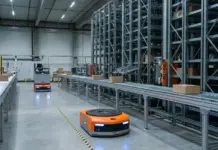
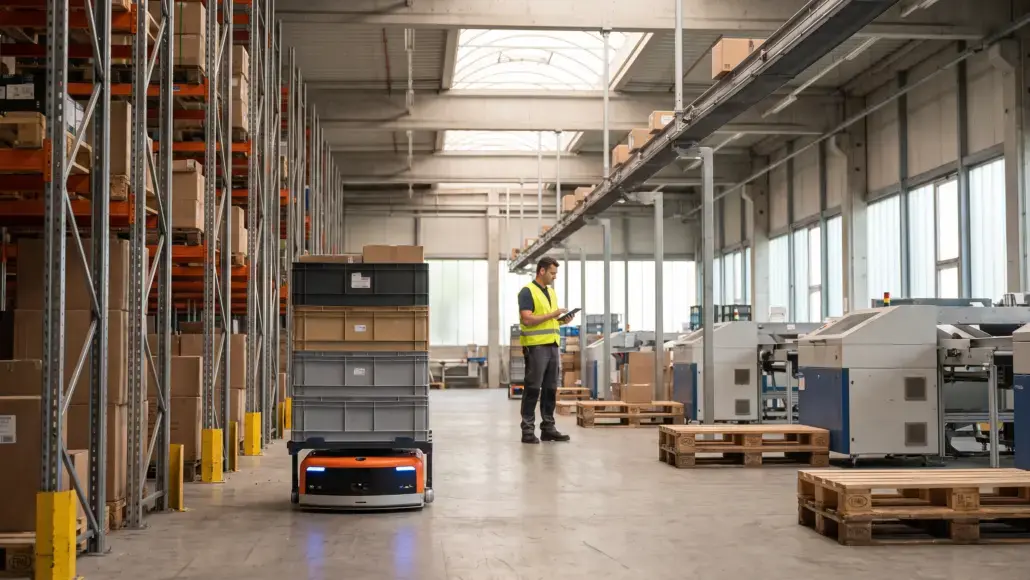
The physical manifestation of intelligence in a warehouse is most often seen in the form of robotics. Unlike the rigid, fixed automation systems of the past, modern autonomous mobile robots (AMRs) are flexible and capable of navigating dynamic environments alongside human staff. These robots use onboard sensors and AI to map their surroundings, avoiding obstacles and finding the most efficient paths to their destinations. In AI-Powered Smart Warehouses, the orchestration of these robotic fleets is managed by a centralized intelligence that assigns tasks based on real-time priority and proximity. This level of coordination ensures that no robot is idle and that the most urgent orders are always prioritized.
Robotic systems are also increasingly taking over the most physically demanding and repetitive tasks, such as heavy lifting and long-distance transport. This not only improves safety by reducing the risk of workplace injuries but also allows human employees to focus on higher-value activities that require complex problem-solving and dexterity. The synergy between humans and machines is a cornerstone of the modern smart facility. Rather than replacing the workforce, AI serves as a force multiplier, enabling teams to achieve levels of productivity that were previously unimaginable. As robotic technology continues to evolve, we can expect to see even more sophisticated applications, such as autonomous packing and sorting systems that can handle a wider variety of product shapes and sizes.
Labor Optimization through Intelligent Resource Allocation
While automation is a major component of the smart warehouse, human labor remains a critical asset that must be managed with equal intelligence. AI systems are now being used to optimize workforce scheduling by predicting labor requirements based on anticipated order volumes. By analyzing historical performance data, the AI can suggest the most effective team compositions for specific shifts, ensuring that skills are matched to the tasks at hand. This data-driven approach to labor management helps to avoid the costs of overstaffing during quiet periods while ensuring that enough resources are available during peak seasons.
Intelligent labor management also extends to real-time guidance for warehouse staff. Wearable devices and voice-directed picking systems, powered by AI, provide workers with precise instructions and the most efficient routes through the aisles. This reduces the cognitive load on the employee and significantly decreases the likelihood of errors. When a worker is empowered with real-time data, their efficiency increases, and their job satisfaction often improves as they can see the direct impact of their efforts on the warehouse’s overall performance. AI-Powered Smart Warehouses thus create a more supportive and organized work environment, which is essential for retaining talent in a competitive labor market.
Integration of Real-Time Data and Warehouse Technology
The true power of AI is only realized when it is integrated into a broader technological ecosystem. This includes the Internet of Things (IoT), cloud computing, and advanced telecommunications. In a smart warehouse, thousands of sensors continuously feed data into the AI engine, providing a granular view of every operation. From the temperature of a storage zone to the battery life of a forklift, every detail is monitored and analyzed. This real-time visibility allows for immediate corrective actions for example, if a sensor detects an anomaly in a conveyor belt’s performance, the system can schedule maintenance before a breakdown occurs.
This predictive maintenance is a vital aspect of maintaining operational efficiency. Unexpected equipment failure can bring a warehouse to a standstill, causing delays that ripple through the entire supply chain. By using AI to monitor the health of critical infrastructure, businesses can transition to a “just-in-time” maintenance model, where repairs are performed only when necessary but before failure is imminent. This approach extends the lifespan of expensive warehouse technology and ensures that the facility remains operational at all times. The seamless integration of these technologies creates a resilient infrastructure that is capable of handling the demands of modern commerce.
Enhancing Sustainability in Modern Warehousing Operations
As global awareness of environmental issues grows, sustainability has become a key performance indicator for many businesses. AI-Powered Smart Warehouses contribute to green initiatives by optimizing energy consumption and reducing waste. Intelligent lighting and climate control systems use sensors to adjust settings based on occupancy and ambient conditions, ensuring that energy is not wasted in empty areas of the building. Furthermore, AI-driven route optimization for vehicles reduces the carbon footprint associated with internal logistics by minimizing unnecessary travel.
Waste reduction is another area where AI excels. By improving inventory accuracy and reducing the number of damaged goods through better handling, smart warehouses minimize the amount of material that ends up in landfills. Additionally, AI can assist in optimizing packaging by selecting the smallest possible box size for each order, reducing both shipping costs and the consumption of packaging materials. These sustainable practices are not just good for the planet they also lead to significant cost savings and enhance the brand’s reputation among environmentally conscious consumers. In the long run, the efficiency gains provided by AI are inextricably linked to the facility’s overall sustainability.
The Future of Smart Warehousing and Global Commerce
Looking ahead, the evolution of AI-Powered Smart Warehouses will likely be characterized by even deeper integration and greater autonomy. We are moving toward a future where warehouses are not just points of storage but are active nodes in a global network of “dark warehouses” facilities that can operate with minimal human intervention. While we are not yet at a stage of total autonomy, the building blocks are already in place. The continuous improvement of natural language processing will allow for more intuitive interactions between humans and AI systems, while advances in computer vision will enable robots to perform increasingly complex visual inspections.
The impact of these advancements extends far beyond the walls of the warehouse. Efficient warehousing is the foundation of a robust economy, enabling the fast and reliable movement of goods that powers businesses and improves lives. As more companies adopt AI-Powered Smart Warehouses, we will see a general stabilization of supply chains and a reduction in the costs of consumer goods. The journey toward full digital transformation is ongoing, but the progress made so far is a testament to the transformative power of intelligence in the industrial sector. Those who embrace these changes will lead the way, while those who cling to legacy systems risk becoming obsolete in a rapidly changing world.
In summary, the transition to AI-driven operations is not merely a technological upgrade but a strategic imperative. By focusing on predictive management, robotic orchestration, and real-time data integration, AI-Powered Smart Warehouses are redefining the boundaries of what is possible in logistics. The result is an operation that is faster, more accurate, and more resilient than ever before. As we continue to refine these technologies, the smart warehouse will remain a critical pillar of global trade, ensuring that the world’s goods move with the precision and speed that the modern era demands.