




























In the architectural framework of a modern logistics operation, the Warehouse Management System (WMS) has long served as the central brain. However, as the industry moves toward total digitization, the role of this software has expanded from simple record-keeping to becoming a dynamic engine for orchestration. The emergence of Smart Warehouse Management Systems represents a critical evolution, providing the intelligence required to manage increasingly complex fleets of robots, vast sensor networks, and high-speed fulfillment demands. This is no longer just a system for tracking where items are it is a platform for driving end-to-end automation, ensuring that every resource whether human or machine is utilized to its absolute maximum potential in a synchronized dance of productivity.
The transition to Smart Warehouse Management Systems is fueled by the need for greater agility and scalability. Traditional WMS platforms often struggle with the sheer volume of data generated by modern automated equipment. In contrast, a smart system is designed to ingest and analyze real-time data from every corner of the facility, using AI to make split-second decisions that optimize the flow of goods. By acting as a unified control plane, these systems eliminate the data silos that often hinder efficiency. Whether it is prioritizing orders based on shipping deadlines or dynamically rerouting robots to handle a sudden surge in volume, the smart WMS provides the high-level coordination that is essential for a truly automated warehouse to function correctly.
The Core Features of a Modern Intelligent WMS
To drive effective automation, a WMS must possess several key characteristics that distinguish it from legacy software. First and foremost is real-time connectivity. A smart system is never out of sync with the physical floor. Through deep integration with IoT sensors and automated machinery, the WMS has a continuous, live view of inventory levels, equipment status, and labor productivity. This allows for proactive management for example, if the system detects that a specific picking zone is becoming a bottleneck, it can automatically reassign tasks to other areas to maintain a steady throughput. This level of responsiveness is what allows Smart Warehouse Management Systems to achieve such high levels of efficiency.
Another critical feature is advanced algorithmic optimization. Beyond simple rule-based logic, smart systems use machine learning to solve complex logistical problems, such as wave planning and labor allocation. The system can analyze thousands of potential scenarios to find the most efficient way to fulfill a batch of orders, considering factors like travel distance, equipment availability, and worker fatigue. This data-driven approach removes the guesswork from warehouse management, allowing for a more predictable and consistent operation. By continuously learning from past performance, the system gets smarter over time, identifying new ways to shave seconds off a process or reduce the cost per unit shipped.
Integration Strategies for Seamless Robotic Orchestration
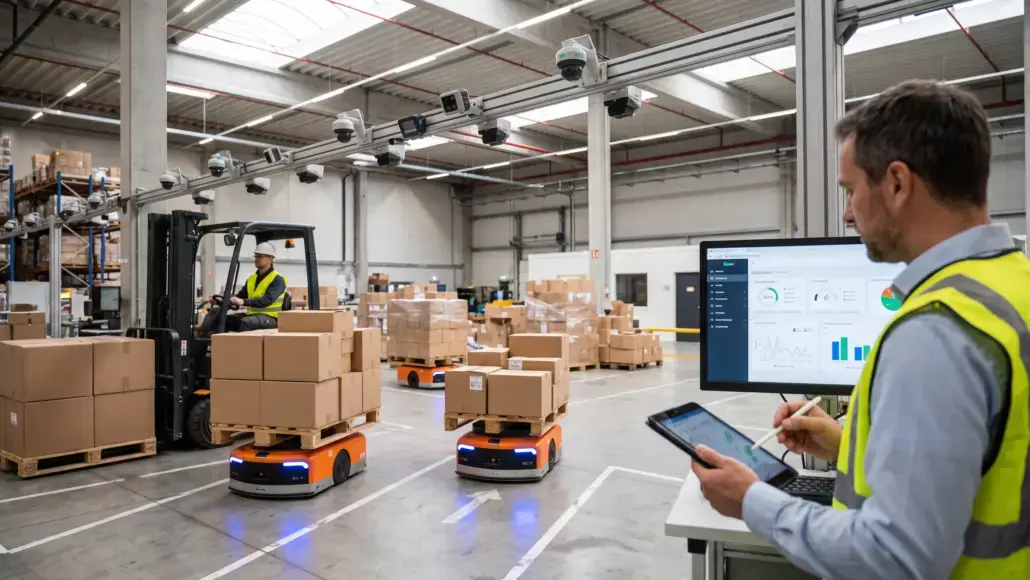
As warehouses adopt a wider variety of automated solutions, from autonomous mobile robots (AMRs) to automated storage and retrieval systems (AS/RS), the challenge of orchestration becomes paramount. A smart WMS acts as the “conductor” of this robotic orchestra, ensuring that different types of automation work together harmoniously. Without a centralized Smart Warehouse Management System, these technologies often operate in isolation, leading to inefficiencies and potential conflicts. The WMS provides a common language and a unified command structure, allowing a robot from one manufacturer to seamlessly hand off a pallet to a conveyor system from another.
This orchestration extends to the interaction between humans and machines. A smart system knows where every worker and every robot is located at all times. It can assign tasks based on who is closest and best equipped for the job. For instance, if a heavy item needs to be moved a long distance, the system will assign it to a robot, while a human worker is directed to perform a task that requires fine motor skills and judgment. By balancing the workload between the two, the WMS maximizes the strengths of each, creating a collaborative environment that is far more productive than either could be alone. This seamless integration is the cornerstone of the modern automated facility.
Enhancing Order Fulfillment through Real-Time Analytics
In the era of next-day and even same-hour delivery, the speed of order fulfillment is a primary competitive differentiator. Smart Warehouse Management Systems drive this speed by optimizing every step of the fulfillment process. From the moment an order is placed on a website, the WMS begins the orchestration. It identifies the most efficient picking path, reserves the required inventory, and prepares the shipping documentation. Because the system has real-time visibility into the shipping carriers’ schedules, it can prioritize orders to ensure they make the earliest possible departure, significantly reducing the “click-to-ship” time.
Real-time analytics also allow for more sophisticated fulfillment strategies, such as cross-docking and wave-less picking. Cross-docking involves moving items directly from receiving to shipping without ever placing them in long-term storage, a process that requires perfect timing and coordination. Wave-less picking allows the warehouse to process orders as they arrive rather than in large, static batches, providing a much smoother workload and faster turnaround for urgent shipments. By enabling these advanced techniques, Smart Warehouse Management Systems help businesses meet the growing consumer demand for speed and reliability, all while keeping operational costs in check.
Cloud-Based Architecture and Global Scalability
The physical limitations of on-premise servers are increasingly incompatible with the needs of modern logistics. Most Smart Warehouse Management Systems are now built on cloud-based architectures, providing several key advantages. First is scalability a cloud system can easily handle the massive spikes in data and activity that occur during peak shopping seasons like Black Friday. Second is accessibility managers can access the WMS from anywhere in the world, providing total visibility into the operation regardless of their physical location. This is especially important for companies with multiple warehouses across different geographic regions.
Cloud-based systems also facilitate faster innovation. Rather than waiting years for a major software upgrade, cloud users receive continuous updates that introduce new features and security patches. This ensures that the warehouse is always using the most advanced tools available. Furthermore, the cloud makes it easier to integrate the WMS with other enterprise systems, such as Enterprise Resource Planning (ERP) and Transportation Management Systems (TMS). This creates a unified “digital thread” that connects the entire supply chain, from the raw material supplier to the final customer. The result is a more transparent, resilient, and responsive business model that can adapt to any market condition.
Labor Management and the Human Element of Automation
Despite the focus on machines, the human element remains a vital part of the warehouse. Smart Warehouse Management Systems include sophisticated labor management modules that help businesses get the most out of their workforce while improving employee satisfaction. By providing clear, data-driven performance metrics, the system allows for objective evaluations and targeted training. Workers can see their own productivity in real-time, which often serves as a powerful motivator. Furthermore, the WMS can identify when a worker is struggling or over-exerted, allowing managers to intervene and provide support before it leads to burnout or injury.
Automation also changes the nature of warehouse work, shifting it from repetitive manual labor to more technical roles focused on managing and maintaining the smart systems. The WMS supports this transition by providing intuitive interfaces and mobile tools that empower workers with information. Instead of being told what to do, workers are guided by the system to make better decisions. This increased autonomy often leads to higher job satisfaction and lower turnover rates, which is a major advantage in a tight labor market. By focusing on the synergy between humans and technology, Smart Warehouse Management Systems create a more sustainable and productive work environment for everyone.
The Future of Smart WMS: Predictive Intelligence and Beyond
The evolution of warehouse management is far from over. In the coming years, we can expect to see Smart Warehouse Management Systems become even more predictive and autonomous. Advances in artificial intelligence will allow the system to anticipate problems before they occur, such as predicting a mechanical failure in a conveyor belt or forecasting a labor shortage weeks in advance. The WMS will move from being a reactive tool to a truly proactive partner in the management of the facility. We may even see “self-optimizing” systems that can change their own configurations and rules based on real-time market data without any human intervention.
Another exciting frontier is the integration of Blockchain technology for enhanced transparency and security. By creating a tamper-proof record of every transaction and movement within the warehouse, Blockchain can provide a level of trust that is essential for global trade. This will be particularly valuable for high-value goods and pharmaceutical products where the integrity of the supply chain is critical. As these technologies mature and converge, the Smart Warehouse Management System will remain the essential digital backbone of the logistics industry, driving the next wave of automation and ensuring that the world’s goods move with the precision and speed that the modern era demands.
In summary, the transition to Smart Warehouse Management Systems is a fundamental requirement for any business looking to leverage the power of automation. By providing the real-time visibility, robotic orchestration, and predictive analytics required to manage a modern facility, these systems are redefining the boundaries of operational excellence. From improving order fulfillment speed to enhancing labor productivity and sustainability, the benefits are clear. As we look to the future, the smart WMS will continue to evolve, serving as the intelligent heart of a fully digitized and automated global supply chain.