





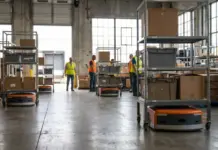


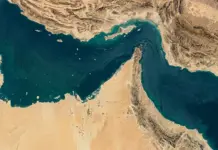







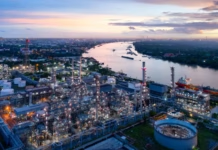






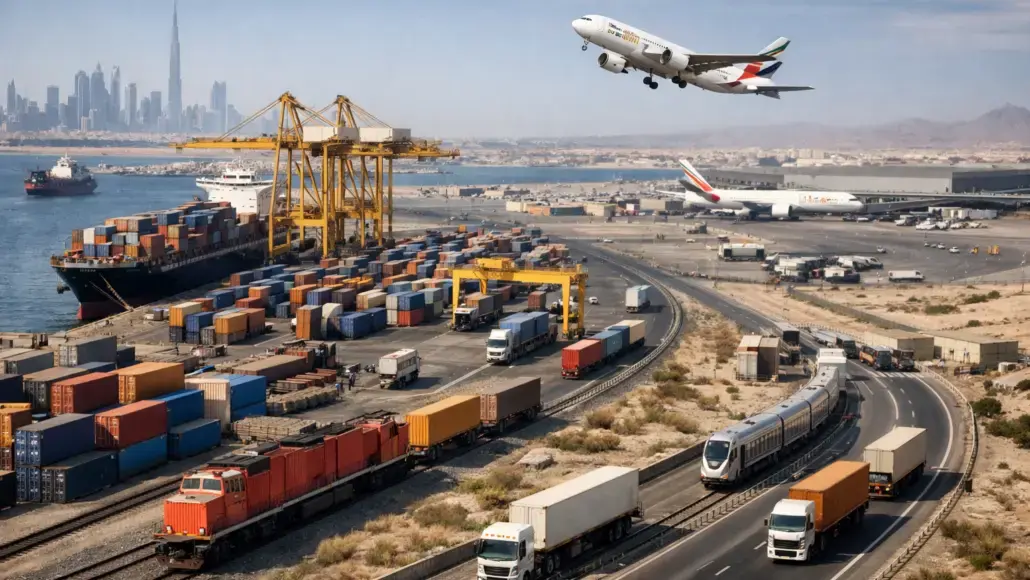
The United Arab Emirates is bolstering its integrated supply chain infrastructure in 2026 by linking maritime, land, air, and rail as well as free zone operations in order to sustain global trade flows and improve transit flexibility. The country has transformed from a conventional import-export hub to an end-to-end logistics platform connecting manufacturing and storage straight to ports and airports, as well as border crossings. Regional developments are further speeding up multi-modal integration.
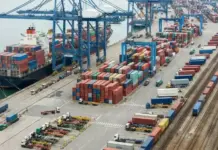
The development in the integrated supply chain infrastructure can be gauged from the fact that recently, the Sharjah Ports, Customs and Free Zones Authority, in cooperation with Oman Customs, created a logistics corridor linking the coastal ports of Sharjah, including Khorfakkan, which will have a capacity of 10 million containers in the times to come with the ports of Sohar, Duqm, and Salalah in Oman. It is well to be noted that Sharjah is developing the Al Dhaid Logistics Complex in the UAE, which will cover more than 16 million square feet and possess an initial capacity of 1.5 million TEUs.
Interestingly, Hafeet Rail signed contracts in February 2025 to design and build railway facilities in Oman, while rail freight is growing cross-border capacity. In 2026, Etihad Rail moved around 1.8 million tonnes of sulphur, more than 4 million tonnes of aggregates as well as 129,000 containers via 11 terminals connecting key industrial hubs and ports, such as Khalifa Port and Jebel Ali, in the UAE.
Notably, Abu Dhabi Airports Free Zone is increasing its air freight capacity with the 8.3 million square metre Al Falah Logistics Park and an East Midfield cargo terminal which is due to open in 2027 with a capacity of 1.5 million tonnes per year. Fujairah Terminals processed over 70,000 TEUs and 100 cargo ships on the east coast in the wake of the recent regional disruptions, serving as an alternate trade route along with the planned constructions at Rugeilat Port along with Dibba Al Fujairah.
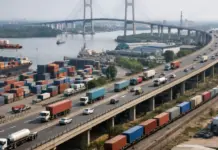
The Dubai Logistics Corridor in Dubai is still connecting Jebel Ali Port and Al Maktoum International Airport for sea and air freight. During the same period, Jebel Ali Free Zone – Jafza attracted AED854 million in new investments, boosting the capacity of manufacturing, logistics, and healthcare, as well as food production.
Digital tracking infrastructure and platforms like ADDED, grew its partner network in 2026 to include more than 30 logistics operators and also enabled real-time rerouting of cargo and coordination of emergency responses.
These operational capabilities have supported the real GDP growth of the UAE by 3% in the Q1 of 2026 to AED485 billion at constant rates, while non-oil foreign trade reached an unprecedented AED1.937 trillion in the H1 of 2026.
The fact is that a better logistics ecosystem continues to lure big multinationals, such as the healthcare provider Novo Nordisk, which set up one of its three worldwide distribution hubs in the country.
These developments are a reflection of the synergies created between ports, airports, railroads, roads, free zones, and storage facilities, as well as digital systems so as to facilitate trade. This multi-route framework improves cargo access, rerouting, storage, manufacturing, re-exportation, and distribution capabilities, putting supply chain robustness at the heart of the economic growth of the UAE.