

























The warehouse environment is a visually dense and constantly shifting landscape where thousands of distinct items are in a state of perpetual motion. Managing this volume of physical assets has historically relied on the human eye and the handheld scanner a combination that is inherently limited by speed and the inevitability of error. However, the rise of artificial intelligence has introduced a new paradigm through the deployment of visual recognition systems. Computer Vision for Warehouse Inventory Tracking is not just a technological upgrade it is a total transformation of how a facility perceives and manages its stock. By turning standard camera feeds into sophisticated data collection tools, businesses can now achieve a level of inventory precision that was previously considered unattainable.
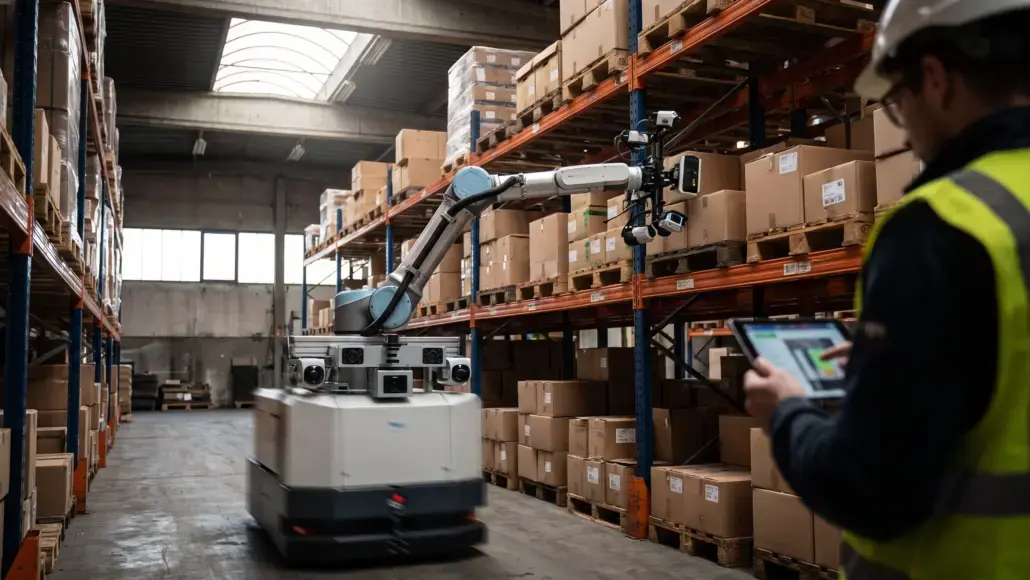
At its core, computer vision involves the use of AI algorithms to interpret and understand visual information from the world. In a warehouse context, this means that cameras mounted on walls, ceilings, and even autonomous robots can “read” labels, identify product shapes, and monitor the occupancy of shelves without any human intervention. When we discuss Computer Vision for Warehouse Inventory Tracking, we are talking about a system that never blinks and never tires. It provides a continuous, real-time audit of every square inch of the facility, ensuring that the digital records in the warehouse management system are always a perfect reflection of the physical reality on the floor. This shift from manual to automated visual monitoring is the key to unlocking new levels of operational efficiency.
Automated Cycle Counting and Real-Time Stock Auditing
One of the most immediate impacts of this technology is the elimination of traditional cycle counting. In a typical warehouse, inventory audits are disruptive, labor-intensive events that often require shutting down sections of the facility. Even with frequent counting, discrepancies between the system and the shelf are common. Computer Vision for Warehouse Inventory Tracking changes this by performing a “perpetual count.” As cameras scan the aisles, the AI identifies every item in view and cross-references it with the inventory database. Any discrepancy a missing box, a misplaced pallet, or an incorrect label is flagged instantly for correction. This proactive approach ensures that errors are caught and fixed in minutes rather than weeks.
This automated auditing process is particularly valuable in high-velocity environments where goods are moving quickly. In a traditional setup, the delay between a physical move and the system update can lead to “phantom inventory” or stockouts that disrupt fulfillment. With computer vision, the system sees the move as it happens. When a picker removes an item from a shelf, the camera detects the change in volume and updates the stock level in real-time. This level of responsiveness allows for more aggressive inventory management strategies, as managers can trust that the data they see on their screens is 100% accurate at all times.
Improving Picking Accuracy and Reducing Fulfillment Errors
Picking errors are a major source of cost and customer dissatisfaction in the logistics industry. Even with barcode scanning, items can be misidentified, or the wrong quantity can be selected. Computer vision provides an additional layer of verification that is far more robust than traditional methods. By using overhead cameras at picking stations or integrating vision systems into wearable devices, the AI can visually confirm that the correct item has been placed in the shipping container. If a worker accidentally picks a blue shirt instead of a green one, the system can provide an immediate visual or auditory alert, preventing the error from ever leaving the warehouse.
This “visual verification” also extends to the inbound process. When a shipment arrives at the loading dock, computer vision systems can automatically scan the labels and inspect the condition of the boxes. It can count the number of units received and compare it to the purchase order in seconds. This not only speeds up the receiving process but also ensures that any damage or shortages are documented immediately for insurance and vendor management purposes. By automating the visual inspection of both inbound and outbound goods, Computer Vision for Warehouse Inventory Tracking creates a seamless chain of custody that protects the integrity of the entire supply chain.
Space Utilization and Shelf Occupancy Monitoring
Efficient use of space is the hallmark of a well-run warehouse, but monitoring shelf occupancy is often a manual and subjective task. Managers have traditionally walked the aisles to look for empty slots or underutilized shelving. Computer vision automates this process by providing a real-time map of shelf occupancy. The AI can identify exactly how much volume is available in each slot, allowing for much more precise storage planning. When integrated with Computer Vision for Warehouse Inventory Tracking, this data enables dynamic slotting, where the system suggests the optimal location for new arrivals based on their dimensions and turnover rates.
Beyond just identifying empty spaces, computer vision can also detect “honeycombing” a phenomenon where partially filled pallets or shelves lead to significant wasted volume. The system can identify these inefficiencies and suggest consolidation tasks to free up space. This level of granular spatial awareness is especially important in urban micro-fulfillment centers where space is at a premium and every cubic centimeter must be utilized effectively. By maximizing the storage density of the facility, businesses can postpone the need for expensive physical expansions and get more value out of their existing real estate.
Enhancing Workplace Safety and Security Through Visual AI
While the primary focus is often on inventory, the safety and security benefits of visual AI are equally profound. A warehouse is a high-risk environment where humans and heavy machinery interact in close proximity. Computer vision systems can be programmed to monitor for safety violations, such as workers not wearing proper protective equipment or forklifts exceeding speed limits. If a person enters a “no-go” zone where automated machinery is operating, the system can instantly trigger a safety shutdown to prevent an accident. This proactive approach to safety is far more effective than relying on human supervision alone.
Security is also significantly enhanced. Traditional CCTV systems are passive they record footage that is only reviewed after an incident has occurred. Computer Vision for Warehouse Inventory Tracking makes security active. The AI can be trained to recognize suspicious behaviors, such as unauthorized access to high-value storage areas or the concealment of products. Because the system is already tracking every item in the warehouse, any movement of an item that is not associated with a legitimate work order can be flagged as a potential theft. This creates a powerful deterrent and provides management with the tools they need to protect their assets in a modern, automated way.
The Role of Edge Computing and Camera Technology
The effectiveness of a vision-based tracking system is highly dependent on the hardware and the computing architecture behind it. Modern smart cameras are often equipped with “on-board” processing, known as edge computing. This means that the visual data is analyzed right at the source, rather than being sent to a central server for processing. This significantly reduces latency and minimizes the bandwidth required to run the system. In a warehouse with hundreds of cameras, edge computing is essential for maintaining the real-time responsiveness required for effective Computer Vision for Warehouse Inventory Tracking.
The quality of the cameras themselves has also improved dramatically. High-definition sensors, thermal imaging, and 3D depth-sensing cameras (LiDAR) allow the system to “see” in ways that the human eye cannot. For example, thermal cameras can detect overheating motors in conveyor systems, while 3D sensors can accurately measure the dimensions of irregular packages for shipping optimization. As these technologies become more affordable, we will see them integrated into every aspect of the warehouse, from the loading dock to the final packing station. The combination of advanced optics and powerful AI is what makes computer vision the ultimate tool for the digital warehouse.
Future Developments: Gesture Control and Human-Robot Collaboration
Looking forward, the evolution of computer vision will move beyond simple observation toward interactive collaboration. Gesture recognition will allow warehouse workers to interact with automated systems simply by moving their hands. A picker could point to a shelf to request a robotic assistant or use a hand signal to confirm the completion of a task. This natural interaction will reduce the need for bulky handheld devices and make the workspace more intuitive and ergonomic. Computer Vision for Warehouse Inventory Tracking will eventually become a shared sensory layer that both humans and robots use to navigate and coordinate their activities.
Furthermore, the integration of vision systems with “cobots” (collaborative robots) will enable more complex tasks, such as autonomous kitting and assembly. Robots will be able to see and understand the orientation of parts, allowing them to pick and place items with a level of dexterity that was previously only possible for humans. As the AI becomes more sophisticated, it will also be able to perform qualitative inspections, identifying subtle defects in products or packaging that might otherwise be missed. The journey toward a fully visual, fully automated warehouse is well underway, and those who adopt these technologies today will be the ones who define the future of the industry.
In conclusion, Computer Vision for Warehouse Inventory Tracking represents one of the most significant leaps in logistics technology in recent decades. By providing a continuous, accurate, and automated view of the physical world, it solves the age-old problem of inventory discrepancy and operational inefficiency. From enhancing safety and security to optimizing space and reducing errors, the applications of visual AI are limited only by our imagination. As we continue to refine these systems, the warehouse will become a more transparent, responsive, and productive environment, serving as the reliable heart of a truly modern global economy.