

















As global supply chains are being reshaped, the logistics sector in Vietnam is becoming known as a possible new growth engine, not just to cut costs but also to transform the country from a point of transit into a regional center for supply chain organisation, manufacturing, and trade connectivity throughout ASEAN.
With digitalisation, green transition as well as geopolitical shifts sweeping restructuring across global trade, logistics is no longer a back-end function, but it is indeed becoming an increasingly important determinant of economic performance, particularly as global supply chains in Vietnam strengthen its integration into. The challenge currently is not just to make deliveries faster but to create a modern, interconnected logistics ecosystem that can organise supply chains at a regional level.
In this context, the release of the logistics services development strategy for 2025–2035, alongside a vision for 2050, by the prime minister is a watershed moment in Vietnam’s development mindset since logistics is defined for the first time not just as a supporting service but also as a strategic foundation of national competitiveness.
The strategy sets forth specific targets, such as an annual growth of 12-15%, a reduction of the cost of logistics to 12-15% of GDP, acceleration of digital transformation, and the establishment of a minimum of five logistics centres of international norms. Authorities are also moving quickly to convert policy into action, carrying out implementation plans with specific duties and timeframes.
Logistics is no longer just transportation and has evolved into an indicator of economic competitiveness’, opines Nguyen Sinh Nhat Tan, the Deputy Minister of Industry and Trade. They can help Vietnamese goods access markets and go on to integrate more deeply into international networks by bolstering linkages to create end-to-end supply chains, especially due to global supply chains in Vietnam, it becomes known as a new manufacturing hub in Asia.
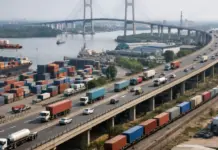
However, in spite of its strategic geo-economic location, the logistics sector of Vietnam still faces challenges such as high expenses and fragmented infrastructure access between road, rail, and seaports as well as inland container depots, along with limited regional coordination.
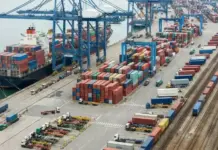
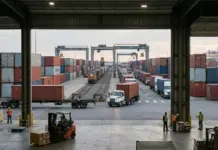
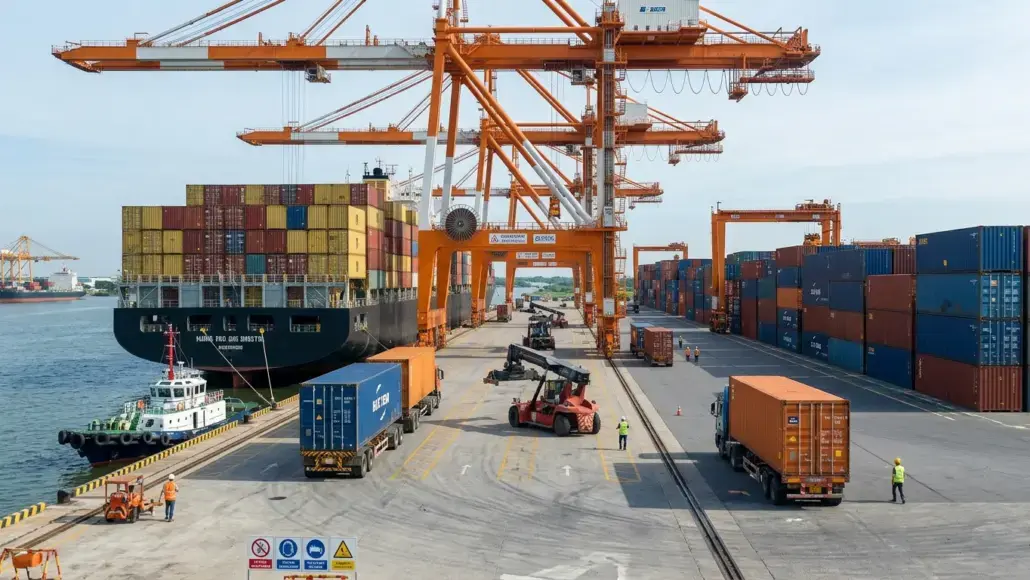
The biggest breakthrough has been the development of logistics centres as a convergence point when it comes to infrastructure, services, markets, and data as well as supply chains, said the Deputy Director of the MoIT’s Agency for Domestic Market Surveillance and Development, Bui Nguyen Anh Tuan. The focus happens to be on creating regional as well as inter-regional hubs connected to seaports, dry ports, railways, border gates, and motorways as well as e-commerce platforms, preventing dispersed investment and establishing large-scale nodes in order to link global as well as regional supply chains.
There are many views from the business angle that the new logistics strategy is creating a lot of possibilities for domestic enterprises in order to participate more deeply within global supply chains.
The strategy is not just a policy orientation but a real turning point in terms of allowing local logistics firms to move from a disorganised service model to large-scale infrastructure investment, said the General Director of OPL Logistics JSC, Tran Ngoc Khanh. The government’s focus on creating logistics centers associated with seaports and inland container depots as well as intermodal railways is an important opportunity for Vietnamese enterprises so as to further integrate into global value chains.
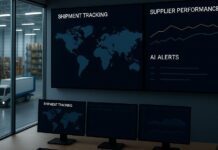
But the problems remain, such as a lack of connectivity infrastructure, a lack of incentives to make the transition green, and the fragmentation of data systems among various regulatory agencies. In the future, smart logistics must have data sharing but also artificial intelligence so as to enable smooth, open and enhanced supply chains.
SLP Vietnam’s Nguyen Le Hang pointed out that green logistics and modern infrastructure offer three primary advantages – cost efficiency, pace and flexibility. She said that compliance with green guidelines, green energy usage, and transparent emissions data has grown into a passport for businesses to connect with major international customers, draw in investment and boost their position within global supply chains.
At the local level, the main economic centers are pretty actively positioning themselves in the national logistics network. Ho Chi Minh City has been working towards establishing an international logistics hub, whereas, on the other hand, Hanoi is working on urban logistics, and Hai Phong is establishing port logistics and green transportation. However, experts said fragmentation and ineffective investment will stay a high risk unless there is stronger regional coordination.
They concur that the construction of a green, smart, tiered, as well as interconnected logistics system will significantly enhance national competitiveness by reducing logistics, production, as well as export costs. This is particularly crucial as Vietnam aims for high and sustainable growth in the 2026-2030 period.
By coordinating institutional reform, construction of infrastructure, digitalisation, green transition as well as regional linkages, logistics will become an innovative means of growth. More importantly, this is a chance for Vietnam to become a regional centre for supply chain organisation, transitioning from just being a transit point to a vital connector of production and trade along with logistics within the ASEAN region.