































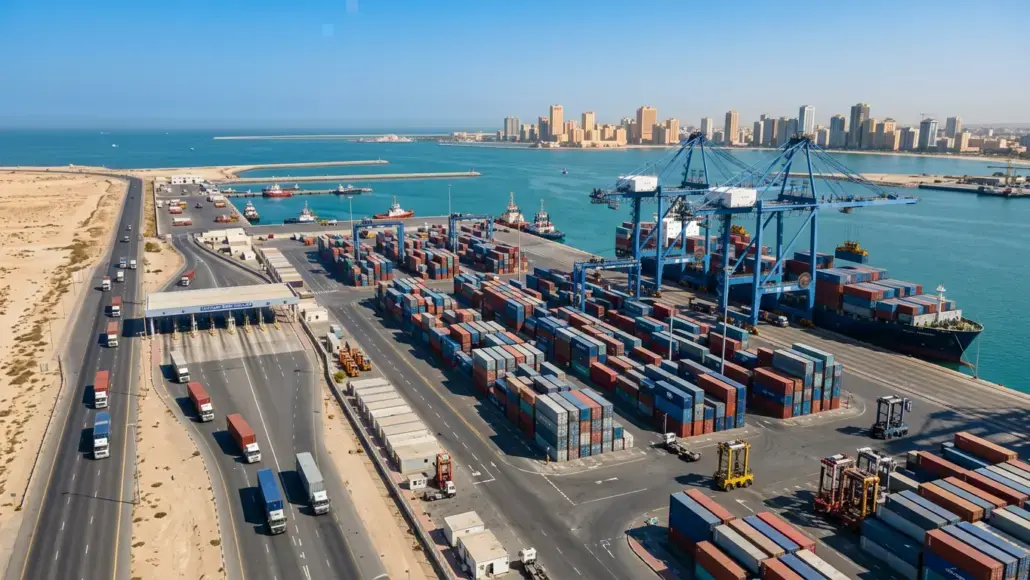
The Sharjah Ports, Customs and Free Zones Authority has gone ahead and unveiled an integrated logistics corridor built in cooperation with Oman Customs within the framework of an advanced logistics system to enhance the connectivity of the Emirate of Sharjah with the Omani ports through land borders.
The integrated logistics corridor is meant to improve the effectiveness and long-term viability of regional supply chains, to improve the flow of trade, and to broaden the logistics alternatives which are available to the business community.
The corridor encompasses a number of Omani ports, headed by Sohar Port, given its strategic location near the UAE, as well as Duqm Port and Salalah Port. They are incorporated in a flexible network of logistic routes that guarantee constant trade flows and adapt to changing market demands.
Seamlessly integrated in the logistics ecosystem of Sharjah
The corridor is within the integrated logistics ecosystem based on the complementary nature of its maritime infrastructure along its eastern as well as western coasts.
Khorfakkan Port happens to be an important part of this system as a major regional maritime hub and a key point of entry to enhance the effectiveness of cargo handling and container operations.
The new corridor combines the incorporation of maritime and land transport, offering a seamless logistics expansion that broadens market access and boosts operational effectiveness. It is not a substitute for existing maritime routes but adds versatility to the system and expands logistics alternatives.
Active operations at the land border crossings
The corridor is activated via the land border crossings of Sharjah, mainly Khatmat Malaha Border Crossing in Kalba as well as Al Madam Border Crossing, which optimises the efficiency of logistics connectivity between ports and commercial centers within the UAE and the Sultanate of Oman, whilst making sure the smooth movement of cargo between the two sides.
First shipments begin operations
After fulfilling all the technical and coordination requirements imposed by the relevant entities, the corridor’s live operations formally commenced on 14 May 2026.
The first shipments have already been shipped from Port Khalid to Sohar Port through Khatmat Malaha, an achievement that reconfirms readiness for operation, shows the success of the integration between sea and land routes and opens up wider opportunities for seamless trade flows between both sides.
Cargo movement in both directions has also started, which further enhances the integration of logistics between Sharjah and Oman.
Operational benefits and simplified processes
By means of coordination between Sharjah Customs and Omani Customs, the corridor provides users with a complete set of standard and customs support measures that ensure a seamless and integrated experience for users throughout all stages of transit.
One of the main advantages is that the customs clearance procedures can be completed right at the border crossings in Sharjah, specifically at Khatmat Malaha and Al Madam, eliminating the necessity for further transfer steps. This leads to a significant reduction of processing time, faster release of cargo, lower costs for land transport, along with an improved overall cargo flow.
The corridor is backed by a high-tech system of fast-track shipment lane configuration, preliminary processing of data and direct shipping under customs supervision. Also, it depends on the real-time exchange of data and mutual coordination, which facilitates faster deployment, increased reliability and good operational effectiveness.
Geographic proximity as a competitive advantage
The corridor happens to be a flexible logistics route strengthened by the close geographical distance between entry points in Sharjah as well as Omani ports, especially Sohar. This minimises transit times, optimises operational efficiency and enhances supply chain robustness under different scenarios.
Support for industry and access to markets
The corridor provides import, export, and re-export procedures and allows local manufacturers, trading companies, and free zone businesses to reach local and global markets with adaptable logistics solutions. This drives the company’s competitiveness and enhances performance in operations.
It also helps in the movement of goods coming via Sohar and other Omani ports into the UAE’s local markets through the land crossings in Sharjah, helping diversify supply chains, encouraging robustness and providing improved business opportunities.
Global standards for operational integration
A joint working team has been set up by the two sides so as to coordinate operations and establish data exchange standards. This supports the efficiency of the customs and provides a high level of flow along with reliability, in accordance with international best practices within protection, risk and security.
The opening of the corridor reinforces the close economic ties between the UAE and the Sultanate of Oman and emphasises the increasing degree of strategic integration between the two sides, allowing them to progressively develop an integrated logistics system that ensures trade moves smoothly and efficiently, stated the Sharjah Ports, Customs and Free Zones Authority.
The Authority said the corridor is a significant advancement towards enhancing Sharjah’s position as a prominent regional logistics hub, offering flexible alternatives that expedite trade flows and help businesses adjust to evolving operational conditions.
Future perspective
It is well to be noted that the integrated logistics corridor is expected to have a strategic role in the development of a comprehensive transportation system centred around the complementarity of various modes of transport. Future plans include the expansion of the corridor to serve air freight offerings, improving flexibility in the supply chain and sustainability, and fostering regional economic growth along with reinforcing the position of Sharjah as a prominent logistics hub within the region.