




![Busy port scene with stacked shipping containers, large cranes, and cargo ships in a bay, beside a coastal highway and rail line on the right.] }} (Note: The input requires a valid JSON with an array of strings in altTexts. Here is a corrected version.)Let's provide proper JSON.](https://www.supplychaininforms.com/wp-content/uploads/2026/09/trade-and-logistics-infrastructure-218x150.webp "Turkey Looks to Upgrade Trade and Logistics Infrastructure")


























China has consented to deal with U.S. concerns with regard to supplies of rare earth materials utilised to make semiconductors however, chipmakers will continue to face supply issues and uncertain time frames for delivery for critical production inputs.
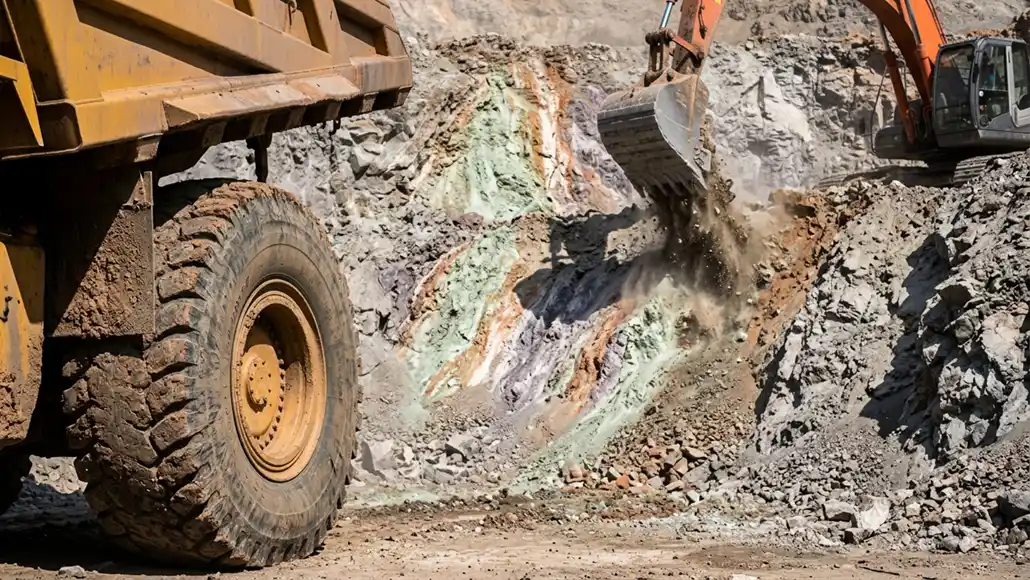
According to the White House, the deal covers materials such as yttrium, scandium, and neodymium as well as indium, which continue to be subject to export controls imposed by Beijing in 2025. As per the Reuters restrictions, they have continued to disrupt aerospace as well as semiconductor supply chain snags in spite of earlier trade agreements.
It goes on to follow a summit between US President Donald Trump and Chinese President Xi Jinping in Beijing.
One of the White House factsheets said that China is going to be responsive to U.S. worries about shortages in supply chains. Beijing also concurred on holding talks on limits on exports of rare earth processing equipment as well as manufacturing technology, Reuters said.
Availability of speciality materials is restricted regardless of diplomatic agreement. Semiconductor makers continue to struggle with securing Chinese export licences for essential parts such as scandium, utilised in advanced radio-frequency as well as 5G semiconductor applications, as reported by Tom’s Hardware.
The report went on to say that the export permits are still buyer-specific, leaving procurement teams trying to book quantities for long-term production in a state of uncertainty. Regardless of ongoing trade talks between Washington and Beijing, some manufacturers have pointed to extended sourcing cycles along with fluctuating shipment authorisations.
Reuters reports that China controls more than 90% of the rare earth materials in the world. That focus still impacts component pricing and inventory planning, as well as manufacturing scheduling leading to semiconductor supply chain snags.
In spite of a 2025 trade truce, manufacturers are still under pressure, a source cited by Tom’s Hardware claimed. The publication said licences are still granted selectively and unpredictably.
Industry groups are also calling for more manufacturing diversification. Sales of global chips will impact $1 trillion in 2026, mainly driven due to demand for AI infrastructure, semiconductor trade group SEMI said, as reported by Reuters.
According to Ajit Manocha, the SEMI chief executive, only six of the 64 semiconductor fabrication plants planned for Asia through 2029 are in Southeast Asia. He added that they would like to see more hubs coming in. His remarks came at an industry event in Kuala Lumpur. He further opines that it is really important to see Southeast Asia step up.
Interestingly, concerns about supply resilience remain with the concentration of new fabs in China as well as Taiwan. Reuters reported that geopolitical risks that impact raw material sourcing remain, and there are scarcity levels of helium as well as bromine.