

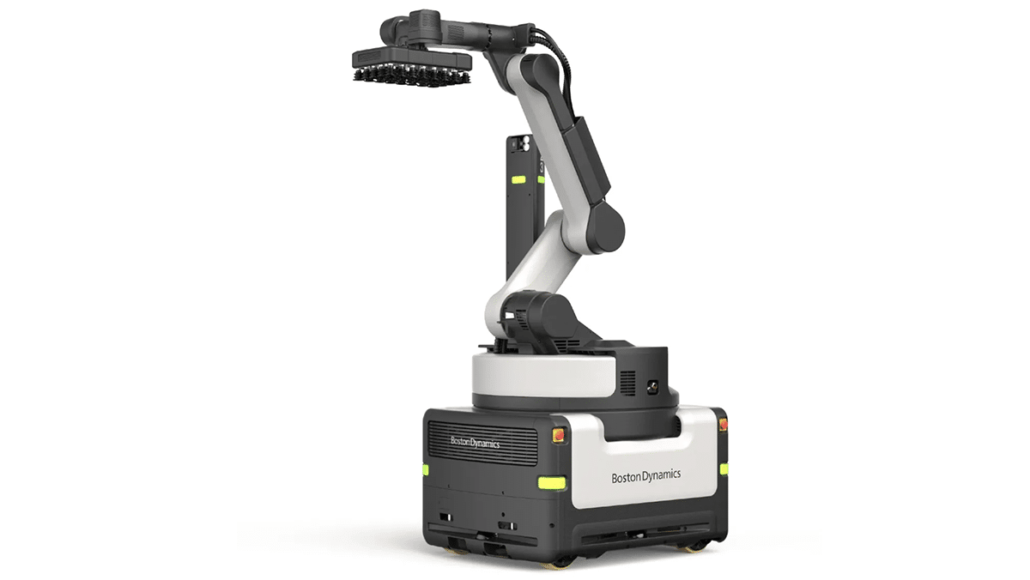
Boston Dynamics has announced Stretch Gen 2, which is the next generation of its autonomous mobile trailer unloading robot.
Drawing from lessons learned from first-generation deployments, Stretch Gen 2 Robot features major hardware and architectural improvements designed to maximize uptime and simplify maintenance when it comes to high-volume logistics settings.
It is well to be noted that Stretch is the market leader when it comes to robotic unloading and, as a first mover, has more installations compared to any rivaling product within the logistics sector. The team analyzed data from over 100,000 operating hours and also tens of millions of boxes that Stretch had previously unloaded to pinpoint the most common reasons for unexpected downtime.
The end result is a tough robot for durability and a modernized modular design for plug-and-play part exchanges for simpler upkeep and serviceability.
Vice President & General Manager of Logistics Robotics at Boston Dynamics, Brian Donnelly said, “Our customers count on Stretch to keep freight moving, and every hour a robot sits idle is an hour of work that piles up on the dock. With Gen 2, we focused on the things that actually took robots offline in the real world. We made it tougher, we made it simpler to service, and we made sure it keeps getting better long after it’s deployed.”
The hardware shifts begin with dependability. Stretch Gen 2 makes use of rugged automotive connectors that can withstand the vibration right from fast box handling and driving over rough floors. A new gripper having new valve systems and improved sensing capabilities gives greater grip and positioning, optimizing quick picks.
New continuous rotation joints rotate past 360 degrees without encountering rigid stops that used to create mechanical stress. By eliminating 81% of the internal cabling – around half a mile of it – the biggest source of intermittent electrical faults and wiring wear is removed. The emergency stop is now lower and recessed, and the external panels were made from new materials, so a falling box is much less likely to cause an accidental safety stop or break a panel.
The Stretch Gen 2 Robot has been re-engineered so as to minimize the occurrence of service calls, but when it does require maintenance, it goes much faster. For instance, changing a whole swerve drive used to take a day, but now it’s about an hour. No more dynamic cables or complex harnesses. Standardized, robust fasteners reduce the number of tool changes and hands-on time to repair.
New onboard diagnostics and upkeep tools allow more routine service to be performed by a customer’s own maintenance crew, keeping robots on the dock with less dependence on outside support.
Also, the new robot runs on a new onboard computing system that is constantly updated. There is a rollout of software updates on a regular basis that improve case identification, movement planning, pick methods, and world modelling for the entire fleet – no hardware modifications are required.
Stretch Gen 2 unloads up to 1000 cases per hour, a speed that is highly influenced by factors such as case weight and how neatly or disorderly cases are piled. It features a multipick capability that boosts performance to the highest speeds. The battery lasts two shifts, and a quick charger will bring it to 90% charge within approximately 75 minutes. That means it has onboard lighting to work in dark trailers, and its vision system is pre-trained so as to detect most packages right out of the box with no programming required.