





























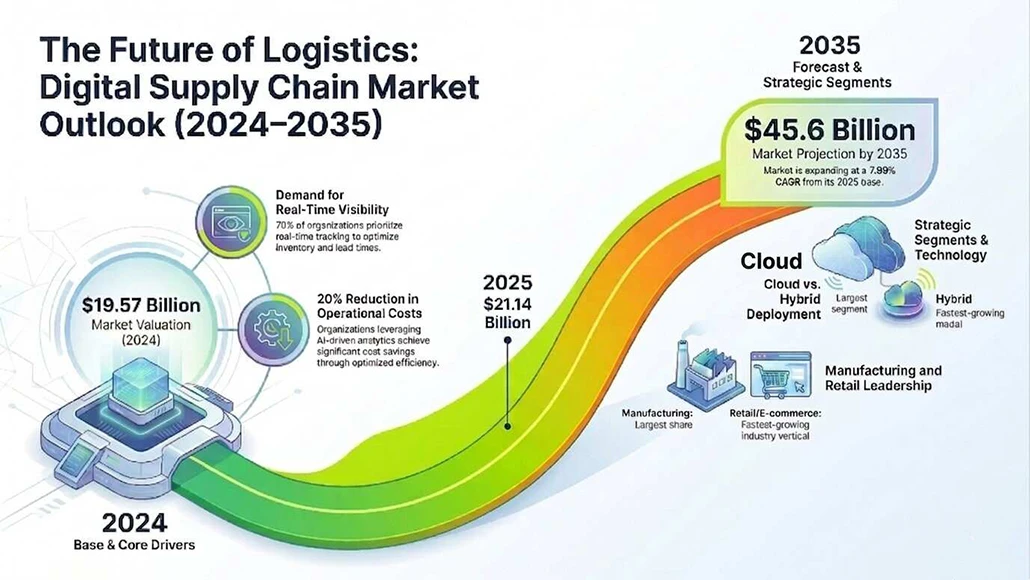
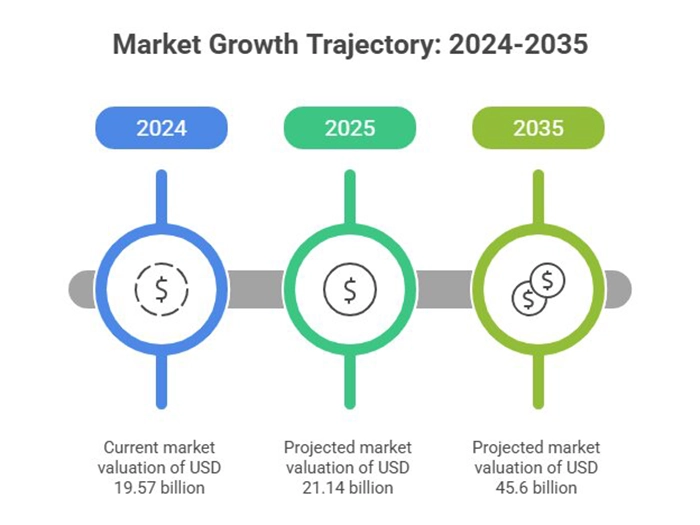
The global landscape of logistics and production is undergoing a radical transformation as organizations move away from traditional models toward integrated, technology-driven ecosystems. This transition is characterized by the adoption of artificial intelligence (AI), the Internet of Things (IoT), and cloud computing to enhance operational agility and transparency. As of 2024, the market was valued at approximately USD 19.57 billion. As businesses continue to prioritize digital transformation, the digital supply chain market forecast 2035 suggests a period of sustained and robust expansion.
Market Valuation and Growth Trajectory
The industry is currently positioned at a critical growth juncture. Following the 2024 valuation, the market is projected to rise to USD 21.14 billion in 2025. Over the subsequent decade, the market is expected to achieve a valuation of USD 45.6 billion by 2035. This growth represents a compound annual growth rate (CAGR) of approximately 7.99% during the forecast period from 2025 to 2035. This upward trend is primarily fueled by an escalating demand for real-time visibility and the necessity for automation in complex global logistics networks.
Primary Market Drivers
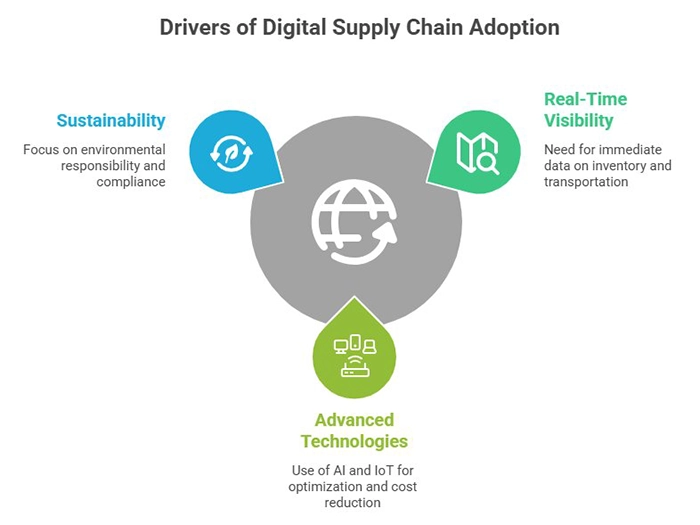
Several pivotal factors are accelerating the adoption of digital supply chain solutions globally.
- Real-Time Visibility and Transparency A primary driver is the critical need for end-to-end visibility across the entire supply chain. Organizations require immediate data regarding inventory levels, transportation status, and supplier performance to maintain a competitive advantage. Current data indicates that approximately 70% of organizations now prioritize real-time tracking capabilities to optimize inventory management and reduce lead times.
- Integration of Advanced Technologies The rapid deployment of AI and machine learning is fundamentally reshaping how supply chains operate. These technologies facilitate predictive analytics and automated decision-making, allowing firms to optimize processes and significantly lower costs. Research suggests that organizations leveraging AI in their supply chains can achieve a reduction in operational costs of up to 20%. Furthermore, the digital supply chain market forecast 2035 highlights that the integration of IoT sensors provides valuable insights for logistics planning and environmental monitoring.
- Sustainability and Regulatory Compliance Environmental responsibility has moved from a peripheral concern to a central market driver. Companies are implementing digital platforms to track carbon emissions, optimize transportation routes, and minimize waste to meet consumer demands and regulatory standards. Nearly 75% of consumers express a willingness to pay more for environmentally friendly products, prompting businesses to adopt “green” supply chain practices. Additionally, as supply chains cross international borders, digital solutions help navigate complex trade and safety regulations, with compliance-focused firms reducing their risk exposure by up to 30%.
Segmental Market Insights
The market is segmented by deployment models, solution types, industry verticals, and functional capabilities, each exhibiting unique growth patterns.
Deployment Models: Cloud vs. Hybrid
The market offers cloud, on-premise, and hybrid deployment options. Currently, cloud-based deployment dominates the market share due to its inherent scalability, cost-efficiency, and capacity for real-time data sharing across distributed networks. While on-premise solutions remain relevant for organizations with extreme security requirements, there is a significant shift toward cloud platforms. However, the hybrid model is identified as the fastest-growing segment. Hybrid solutions provide the agility to scale resources via the cloud while maintaining critical operations within a secure on-premise infrastructure.
Solution Types: Planning and Visibility
By solution, the market is categorized into planning and optimization, execution and control, collaboration and automation, and analytics and visibility. Planning and optimization currently represent the largest segment, as these tools are essential for aligning supply with demand and enhancing overall operational efficiency. Conversely, the analytics and visibility segment is the fastest-growing. This surge is driven by the urgent need for data-driven decision-making and the utilization of big data to identify bottlenecks and optimize performance.
Industry Verticals: Manufacturing and Retail
The manufacturing sector holds the largest share of the digital supply chain market. This dominance is due to the widespread adoption of automation, predictive maintenance, and digital technologies in production processes. Meanwhile, the retail and e-commerce sector is the fastest-growing vertical. Driven by consumer demand for faster delivery and personalized experiences, retail organizations are aggressively investing in digital systems to improve inventory management and order fulfillment. The healthcare sector is also emerging as a significant segment, focusing on the secure management of medical supplies and data.
Functional Capabilities: Warehouse and Inventory
Warehouse management stands as the largest segment within functional capabilities, benefiting from advancements in automation that optimize storage and distribution. However, inventory management is the fastest-growing functional segment. Organizations are increasingly using AI and IoT to achieve real-time inventory visibility, which is essential for reducing both stockouts and the costs associated with excess inventory.
Regional Forecast and Analysis
The global market exhibits varying degrees of maturity and growth potential across different regions.
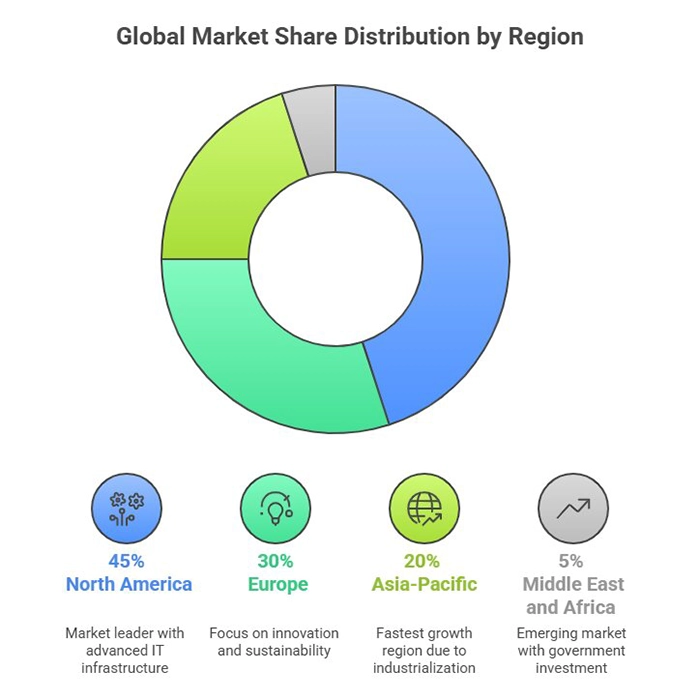
- North America: This region is the current market leader, holding approximately 45% of the global share. Its position is bolstered by advanced IT infrastructure and a high rate of digital technology adoption among major organizations.
- Europe: Accounting for roughly 30% of the market, Europe focuses heavily on innovation and sustainability. Regulatory pressures from the EU regarding environmental standards are driving organizations to adopt digital solutions for transparency and compliance.
- Asia-Pacific: This region is expected to witness the fastest growth during the forecast period. Rapid industrialization, expanding e-commerce, and significant infrastructure investments in countries like China, India, and Japan are primary contributors to this expansion. Currently, it holds about 20% of the global market share.
- Middle East and Africa: While currently holding a smaller share of approximately 5%, this region is evolving as governments invest in technology to diversify their economies and improve efficiency.
Emerging Opportunities and Future Shifts
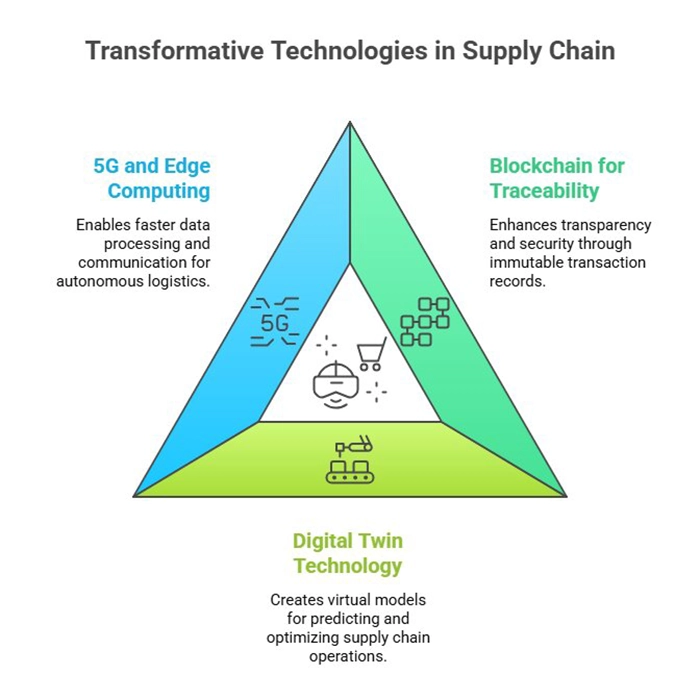
The digital supply chain market forecast 2035 identifies several transformative technologies that will define the next decade of operations.
- Blockchain for Traceability Blockchain technology is gaining significant traction as a solution for improving transparency and security. By creating immutable transaction records, it allows companies to verify product authenticity and ensure regulatory compliance. This is particularly vital in industries like pharmaceuticals and food, where traceability is critical for safety.
- Digital Twin Technology Organizations are increasingly adopting digital twin technology to create virtual models of their supply chain networks. These simulations allow businesses to predict potential disruptions and optimize their operations before implementing changes in the physical world.
- 5G and Edge Computing By 2035, the integration of 5G connectivity and edge computing will enable faster data processing and improved communication between partners. This infrastructure will support more advanced autonomous logistics systems and real-time responsiveness.
Market Challenges and Barriers
Despite the optimistic digital supply chain market forecast 2035, several challenges may hinder widespread adoption.
- Implementation Costs: The high initial investment required for infrastructure, software, and skilled personnel remains a significant barrier, particularly for small and medium-sized enterprises.
- Legacy Systems: Many organizations struggle with integrating modern digital platforms into outdated legacy infrastructure. This process is often technically complex and time-consuming.
- Security Concerns: As supply chains become more data-dependent and cloud-based, they become more vulnerable to cyber threats. Maintaining robust cybersecurity measures is essential for protecting sensitive data and maintaining stakeholder trust.
Future Outlook to 2035
The future of the digital supply chain market is characterized by a shift toward total operational resilience and customer-centricity. By 2035, the market is expected to be robust, driven by the convergence of AI, blockchain, and IoT. Organizations will continue to prioritize flexibility and agility to navigate the increasing complexity of global trade. Ultimately, the focus on efficiency, transparency, and environmental responsibility will not only define competitive dynamics but also transform the digital supply chain into a fundamental pillar of modern global commerce.