




![Busy port scene with stacked shipping containers, large cranes, and cargo ships in a bay, beside a coastal highway and rail line on the right.] }} (Note: The input requires a valid JSON with an array of strings in altTexts. Here is a corrected version.)Let's provide proper JSON.](https://www.supplychaininforms.com/wp-content/uploads/2026/09/trade-and-logistics-infrastructure-218x150.webp "Turkey Looks to Upgrade Trade and Logistics Infrastructure")

























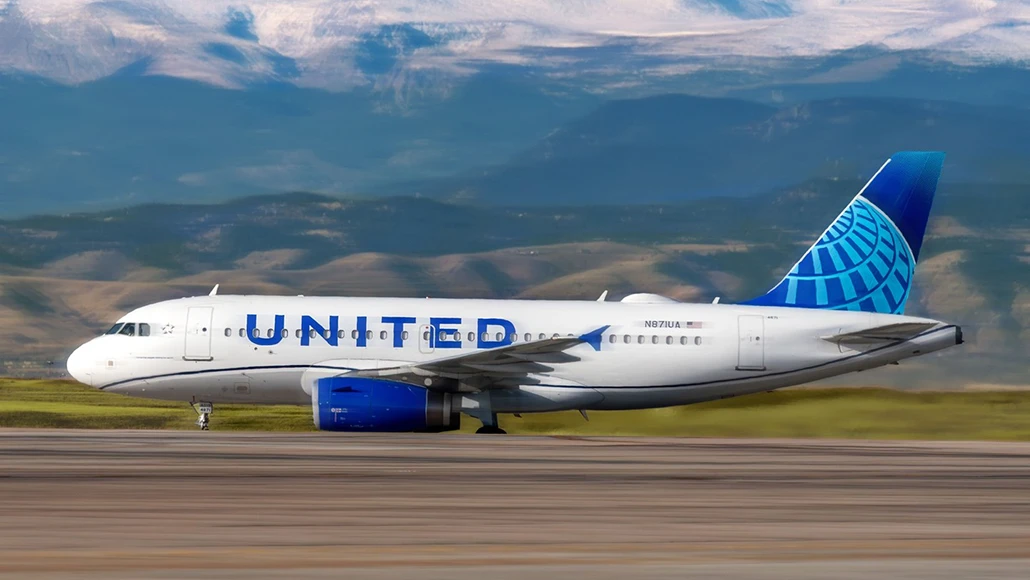
United Airlines will begin charging market disruption fee on cargo starting May 1st in an attempt to help offset the increasing cost of jet fuel and an array of other operating expenses caused by, or aggravated by, the Iran war. The move came ahead of earnings results that showed an unexpected decline in United’s cargo revenue in the first quarter.
United Cargo recently told shippers about market disruption fee on cargo, blaming rising costs of doing business around the world. The fee is region-dependent, and customers were advised to contact their United sales rep for rates applicable to particular trade lanes.
Jet fuel, usually an airline’s second-largest expense after labour, has nearly doubled in price since the United States and Israel struck Iran on Feb. 28. A number of transport companies have recently increased their fuel surcharges, but the United fee has a host of cost inputs. It’s like the U.S. Postal Service, which will impose an 8% surcharge on parcel products starting Sunday to help offset a variety of skyrocketing transportation costs.
Stephanie Robbe Kramer, United Cargo spokeswoman, in a message to FreightWaves, said that “United Cargo is experiencing rising costs being imposed on us by suppliers, partners and the wider market. The fee is a function of a confluence of external pressures throughout the air cargo ecosystem, including the impacts from our suppliers, our partners and broader market conditions. It is not one factor but a combination of several factors.”
The airline did not set a time frame for the disruption fee, stating only that it will track conditions closely and share any changes to this fee as conditions evolve.
United Airlines said on the afternoon of April 21, 2026, that cargo revenue in the first quarter was $422 million, down 1.6% year-over-year. The sales shrink was surprising as the global air cargo market grew about 6.5% in the first two months of the year compared with 2024, and spot-market shipping rates jumped 25% to 40% since March 1 as consumer demand has grown amid lower industry capacity due to Middle East flight restrictions linked to the war. Delta Airlines said cargo revenue rose 9% to $226 million in the first quarter. Rival American Airlines said on April 23 that its cargo revenue rose 12.9% to $219 million.
Kramer declined to discuss reasons for the loss in cargo revenue.
In all, United Airlines posted a $900 million pre-tax profit, or adjusted earnings per share of $1.19, above analysts’ expectations, with operating revenue up 10.6%. It intends to reduce 5% of its capacity for the rest of the year to help control costs during a volatile period.
Amsterdam Schiphol reply
Separately, Amsterdam Schiphol Airport said on April 23, 2026, that it would temporarily cut airport charges by over 10% so as to help airlines deal with the sharp spike in jet fuel prices due to the Iran war and ensure they keep flying to the Netherlands as many cut capacities to save costs.
The discounts are valid from April 27 through March 31, 2027.
This week Lufthansa Group said it would cancel 20,000 flights at its European hubs throughout the next six months to save on fuel.