




























The attack on Iran by the U.S. as well as Israeli forces on February 28, 2026, and with it the retaliatory actions, have all gone on to add to the growing supply chain disruptions across the world, hence in a way further impacting the lead times and supply availability along with shipping routes and, of course, likely company revenues.
According to Manager, Product Development and Innovation at Institute for Supply Management – ISM, Jim Fleming, CPSM, CPSD, “Crises in areas such as transportation, energy, supplier sources, security, and supply and demand are growing exponentially.”
The disruption may as well lead to almost two-thirds of companies expecting to lose revenue, as supply chains go on to experience a 40% surge in cost-to-serve post-disruption on average, says research from advisory services firm Gartner.
So as to weather the situation, risk management is still mission-critical for supply management organizations, says Fleming. Greater visibility into end-to-end supply chains and sourcing closer to home, along with scenario and resilience planning, are critical.
Oil and Natural Gas
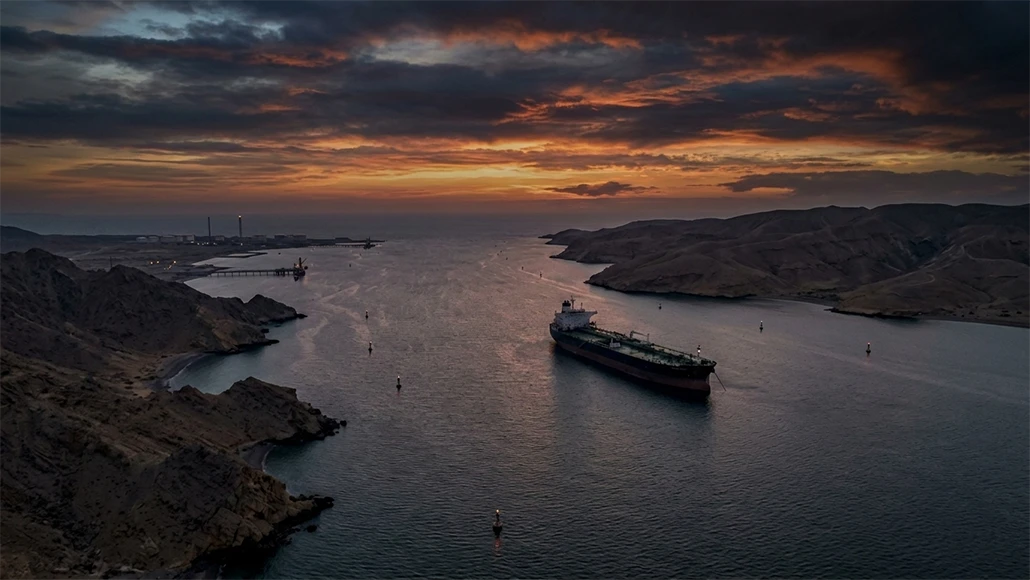
The immediate concern for many is what the attack goes on to mean for energy and fuel expenses. Iran has gone ahead and effectively shut the Strait of Hormuz, which interestingly is the only way in and out of the Persian Gulf, which is indeed going to impact oil, natural gas, and also gasoline prices.
It is well to be noted that the U.S. crude oil prices have in fact jumped over 7%, whereas the international oil benchmark, Brent, has surged 9%.
According to the Chair of the Institute for Supply Management® (ISM®) Manufacturing Business Survey Committee, Susan Spence, MBA, “This will drive prices up more than they have already been.”
This trend apparently follows the 17% growth in oil prices ever since the first of the year. Spence adds, “Obviously, we will see an impact at the pump as retail gas moves 2.5 cents for every US$1 increase in the price of crude oil but at this point, experts are saying that if the war is not prolonged, it should not be a major inflationary hit.”
As per KPMG US energy strategy leader Angie Gildea, “The Strait of Hormuz is the most important pressure point when it comes to the global energy markets. Any sort of a sustained disruption to Hormuz leads directly into a higher oil price environment. There are buffers like strategic reserves and rerouted cargoes as well as elevated floating inventories; however, those all happen to be just the stopgaps.”
She adds, “This incident is a supply shock with an uncertain timeline when the critical variable is duration. Businesses should be stress testing for both short and long-term disruption.”
VP analyst at the supply chain practice with Gartner, David Gonzalez, says that he doesn’t expect the oil and natural gas prices to skyrocket. He adds that “Iran generates around 4 percent of global oil production and 6 percent of natural gas, not insignificant by any means, but not large enough to substantially move the needle on price. Yes, we saw some movement in the price of oil, but that was to be expected following the tumultuous events of the past couple of days.”
Notably, the OPEC+ group, which is a consortium of OPEC members as well as non-member oil-producing nations, has gone ahead and agreed to a very slight increase in the output of oil 206,000 barrels per day for April 2026 due to the disruption, added Gonzalez.
A more prominent effect of the closure of the Strait of Hormuz, as per Gonzalez, happens to be the effect on ocean container traffic, which is headed for Persian Gulf ports like Jebel Ali and Khalifa as well as Dammam. He says, “These are critical in the supply of consumer goods and materials headed for the UAE, Bahrain, Qatar, and Kuwait. Shipping lines such as CMA CGM and Hapag-Lloyd have announced an embargo on these ports as they are refusing to sail through the Straits – other shipping lines will follow their lead.”
Shipping and lead times along with supply availability
Still, there are many industries that won’t immediately get impacted by the Strait of Hormuz issue, opines Ashley Hetrick, the sourcing and supply chain principal with BDO USA, the professional services firm. She remarks, “Therefore, the impact on many manufacturers and retailers may feel muted, as lower order volumes give carriers and shippers room to absorb delays.”
The issue for most manufacturers, as per Hetrick, is most likely to be one of the listed three –
- Where at all do they have dependencies on items such as petrochemical byproducts that are produced out of or rather shipped via Hormuz?
- What is going to be the effect on shipments that are now routing around the Cape of Good Hope to avoid the Red Sea and the Suez Canal? Rerouting around Africa can go ahead and add another two weeks to transit times.
- What kind of a downstream effect are Hormuz disruptions as well as longer vessel trips around Africa going to have on the total capacity of the vessel?
The area has indeed been a source for shipping challenges not just for today but for years. Spence added that ISM Manufacturing Business Survey panelists in the Transportation Equipment cited the Suez Canal and Red Sea conflict as a major source of driving the cost up and, with it, the transit time.
According to one of the panelists, geopolitical risk, specifically in the Middle East as it is related to commodity and also energy markets, happens to remain a matter of issue and is getting tracked by the business. The panelist adds that there are risk concerns that are related to increased cost as well as transit time for the rerouted shipments because of the conflict in the Red Sea and Suez Canal. These kinds of conditions are getting monitored through business and also rerouting measures that are implemented wherever possible.”
Peter Sand, The chief analyst at Xeneta, which happens to be the Oslo, Norway-based digital freight platform, said in a statement that the repercussions when it comes to a joint military operation by the U.S. and Israel against Iran and also subsequent retaliatory action are going to result in much further weaponization of trade and also shatter hopes related to a large-scale return of container shipping to the Red Sea in 2026. Until the recent months, he further said that many carriers had been sailing around the Cape of Good Hope because of attacks by Houthi militia, which is Iran-backed.
The fact is that it is most likely that those attacks are going to get resumed, Sand said. Carriers are anyway sure to reverse the decision to return services to the Red Sea and at the same time also prioritize crew safety, along with the safety of the ship as well as cargo.
Any plans in terms of a phased return of container shipping to the Red Sea in 2026 are going to be shelved until the security situation becomes much clearer, said the statement.
Since the start of 2026, the average spot rates from China to the U.S. East as well as West coasts are down 32% and 35%, respectively. Sand remarked that those from China to North Europe as well as the Mediterranean have decreased 23% and 33%.
Says Sand, “With a large-scale return of container ships to the Red Sea in 2026 now unlikely, freight rates on major global trades will continue to soften but will not fall as hard as previously expected in the second half of the year as more services return to Suez Canal transits.”
Compared to the past, the Red Sea crisis started in December 2023, and the average spot rates to Northern Europe as well as the Mediterranean from China, which, as per Sand, “the two trades most operationally impacted by the diversions around the Cape of Good Hope still happen to be up 48% and 79%, respectively.”
Services Sector Effect
There are many companies in the services sector that might as well feel a little direct impact from the situation, opines Steve Miller, CPSM, CSCP, Chair of the ISM Services Business Survey Committee.
However, others may be more heavily hit, particularly those in the construction, finance & insurance, mining, transportation & warehousing, and wholesale trade industries. Impacts may also extend to retail trade, he says.
Among the impacted dynamics are –
Shipping. When it comes to the transportation & warehousing businesses, disruption is going to completely depend upon where their primary ocean routes happen to be, says Miller.
Miller adds that “those not in the affected regions will have similar pricing opportunities that they implemented during the coronavirus pandemic, with container prices escalating significantly. Those with assets in the region will have the additional costs to move those assets as well as the additional time and cost impacts for having to run alternative routes.” The fact is that because of the longer transit times, more assets are going to be needed in order to move the same freight assets that are likely priced at a premium and with additional security costs.
A work trip or vacation on your mind? Miller says, “For airlines, international travel just got a lot riskier. Insurance costs and also security costs will increase, while the travel frequency by many travelers concerned with potential flying risks will drop significantly while the conflict remains in the daily news cycle.”
Construction and mining. Materials such as cement, concrete, steel, and aluminum and also clay, sand, and stone happen to be produced in the Middle East, and the production and transport costs are going to see significant growth if this conflict drags on, says Miller.
He further adds that “for some mining activities, the conflict will cause mandatory service disruptions to guarantee employee safety. Given the pressure there has been on the construction industry, other than those servicing utilities, it is possible that inventories for these materials could be very tight, leading to decisions by builders to use alternative materials or delaying build schedules.”
Consumer goods. Textiles, jewellery, and also food products such as nuts, olive oil, and even spices are among consumer goods that are imported from the Middle East. As per Miller, “The conflict could put a significant squeeze on specialty items, but I don’t expect it will have a significant impact on consumer staples. These will cause minor downward pressure on the retail trade and agriculture, forestry, fishing & hunting industries.”
Utilities, which primarily depend upon petroleum products to produce energy that they offer their customers, are going to see their costs of operation rise substantially. According to Miller, “War is typically a situation that allows suppliers to renege on their sales agreements, and I expect that oil companies will use this situation to charge a war premium on their products, regardless of where they are based.”
Certain other services-related businesses. Miller also says that “for the rest, it will be those with exposure to services companies based in the Middle East, like IT and outsourced services providers, and everyone who has a significant energy need. We already saw oil prices spike, and it is unlikely that Venezuelan petroleum capacity will be able to be brought into the market quickly enough to offset the impact in the short term.”
Strategies to minimize the risk
Supply management organizations can also anticipate certain increases in costs as well as base rates and insurance premiums along with surcharges, remarks Gonzalez.
Tried-and-true methods may not be beneficial in periods of prominent volatility as well as risk, Hetrick adds, in part due to the old resilience playbook of alternate suppliers along with blanket inventory growth, which is simply too slow as well as too expensive.
Hetrick adds that “companies with true SKU‑ and business‑line profitability visibility will have a clear advantage during this period of disruption. When shipping insurance and lead times spike, they can make fast, confident decisions about what to prioritize, what to delay, and what no longer makes economic sense, while others are forced to react blindly.”
To react at the speed required to go ahead and address the growing supply chain disruptions such as the Iran attack, Fleming remarks that the companies must make utmost use of risk management solutions. Those that have made investments when it comes to operational agility are going to have both short and also long-term benefits, as they would be able to swiftly pivot while at the same time decreasing the effect when it comes to their bottom lines.
Examples of such investments are –
- Multitier supplier visibility platforms
- Control towers, which offer near-real-time insights when it comes to supply, demand, and inventory as well as logistics
- Modular bill of materials – BOMs which enable component substitution
- Flexible manufacturing footprints that are going to allow pivots to alternate the production locations
Transitioning to an operating model with worst-case scenario planning, Hetrick says, is indeed going to allow the manufacturers to prioritize the mitigation activities pertaining to revenue- and service-critical goods flows, determining when and where to hold shipments as far as origin points are concerned so as to avoid any losses and costly delays and communicate revised service expectations to the customers.
Gartner, in a statement, has advised organizations to –
- Coordinate with C-suite and also communicate response strategies, specifically in areas such as transportation and logistics
- Execute logistics workarounds by way of alternate carriers as well as routes, and also look forward to seeking solutions with the present set of carriers
- Do an overall budget review with the CFO by way of using what-if scenarios
- Put in place risk assessment so as to gauge short- and long-term effects.
As it would happen with many disruptions, Gonzalez says that “it is a war of attrition, and this entire year is going to be disrupted and volatile. If it is over in a couple of weeks, they should be back to normal in 2 months.”