

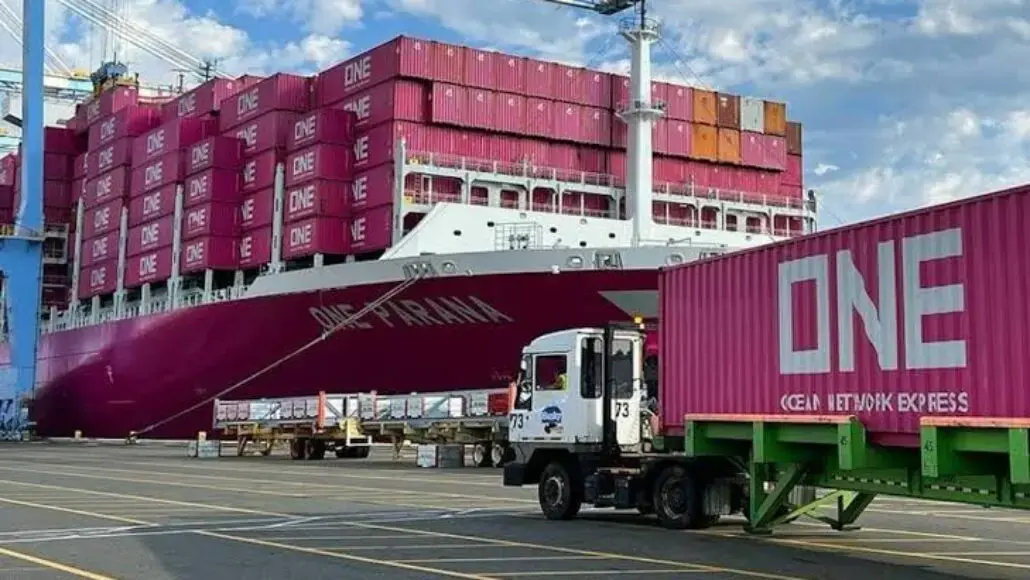
Ocean Network Express – ONE has gone ahead and confirmed it will be returning to the Red Sea via a slot charter with RCL – Regional Container Lines along with other partners, as part of a newly formed Red-Sea China Service.
Apparently, this move comes as international carriers carefully reconnect with the route in light of indications of decreased Houthi strikes on shipping and rising demand so as to have direct East-West links.
ONE will take up slot charter with RCL on rotation connecting key Chinese export hubs like Shanghai, Qingdao, and Nansha as well as Shekou with strategic ports in the Red Sea region such as Jeddah in Saudi Arabia and Sokhna in Egypt, along with Aqaba in Jordan, as part of the fortnightly scheduled service.
The rotation, carried out with 3,000-TEU vessels, aims to provide dependable capacity without crossing the Suez Canal, showcasing adaptability in network planning and risk control following past security interruptions.
The return to Red Sea operations is part of a broader project led by RCL and Global Feeder Shipping as well as TS Lines in order to establish a Far East-Red Sea corridor to accommodate the high volume of consumer goods, machinery, and building supplies that are bound for the Middle Eastern markets.
Interestingly, Evergreen Marine has also jumped on the bandwagon with its own slot schedules on the service, thus increasing cooperative capacity on the lane.
The route’s return is a sign of improving security and increasing commercial demand, industry watchers say, although major global lines are proceeding cautiously with full Suez transits until long-term safety guarantees for crews and ships are secured.
The eight-week rotation of the Red-Sea China Service is designed to provide uninterrupted flow of trade with low operational risk and to provide shippers a substitute connection that meets market demands and builds on regional ties.
The return under a slot charter model is a strategic decision by ONE to capitalize on the market and optimize capacity.
Working with RCL and others, the carrier will be able to efficiently expand its service coverage while allowing for changing trade practices in an intricate geopolitical setting.
The fact is that this service is a measured but significant return to a critical corridor for Asia-Middle East maritime trade.