

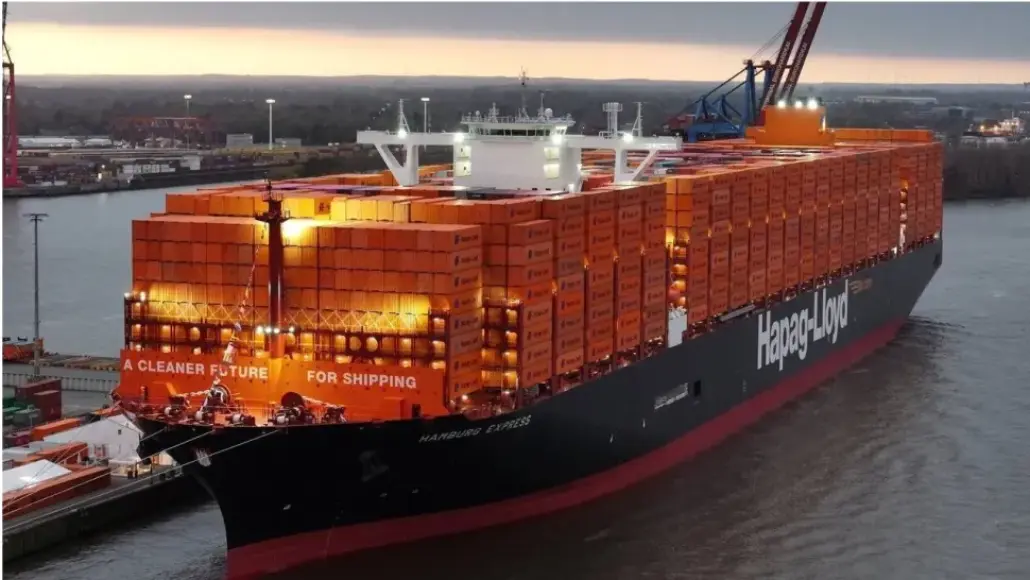
On November 17, 2026, Maersk and Hapag-Lloyd confirmed the return of AE1, AE2, and AE3 services of their Gemini Cooperation to the trans-Suez route and Red Sea, substituting voyages diverted around Africa.
The changes, which will occur in a gradual transition from December 2026 into January 2027, will impact Asia-Europe services, but their ability to free up vessel capacity provides U.S. importers an opportunity to watch the rollout.
They will now sail using the trans-Suez route instead of going round the Cape of Good Hope. Maersk stated in a customer advisory.
The change is a further move towards re-establishing shorter shipping routes between Asia and Europe. It could also change the amount of vessel capacity carriers require to continue providing those services, with potential effects on capacity deployments anywhere in their global networks. But those effects are uncertain as congested conditions and network alterations continue to soak up shipping bandwidth.
Global liners such as Maersk and Hapag-Lloyd have been diverting scheduled services away from the Suez-Red Sea route since late 2023, after the Houthi rebels from Yemen attacked merchant shipping in their support of Gaza. But maritime carriers are coming back as Houthi attacks have decreased, and longer diversions have added expense and complexity to operations.
The first of the three services to make the planned rotation will be AE2. The Mary Maersk, voyage 650W, will begin its rotation at Ningbo on December 4, 2026.
Next in line is Alette Maersk, voyage number 652W, departing Shanghai on December 20, 2026. The first sailing listed for AE1 is scheduled to be Damietta Express, voyage number 702W, leaving Shanghai on January 14, 2027. These are dates at the initial loading ports, not dates for transiting the canal.
The new rotations include a transit of the Suez Canal in both directions. Maersk said the modifications would boost transit times but warned that their execution depends on a stable environment in the Red Sea and regular evaluation of regional safety standards.
The announcement also signifies a wider routing change at Gemini. The return of the three services will result in Maersk and Hapag- Lloyd was the first to reinstate a Suez routing on all its Asia-Europe services, after modifications to other Gemini loops earlier.
Impact on the US is capacity, not direct routing
The effect on the U.S. market is indirect. Shorter journeys can release vessels from longer rotations, giving carriers the opportunity to reconfigure capacity throughout their networks, said Maersk.
That does not imply that U.S. importers ought to anticipate an immediate relief in standard ocean freight rates. The return to Suez would free up the capacity that had been tied up in alternate routes around Africa, DHL Global Forwarding said, but predicted congested conditions and network changes of a major scale might keep supply chains pressured through 2027. Recent acts of violence affecting shipping along a global stretch from the Black Sea to the Strait of Hormuz to the Somali coast add to an air of ambiguity that further contributes to elevated ocean rates.
Security and congestion are still constraints
DHL said wider network alterations could take an additional 6 to 12 months to complete as carriers relocate vessels and rebalance services, provided that security requirements do not compel further adjustments. It said over 10% of the world’s container ship fleet is still held up by congestion in ports.
For cargo owners, the situation means that greater vessel availability and reliable delivery times may not be a match. Maersk’s own security limitation further leaves open the potential that the stipulated rotations could be changed if circumstances in the Red Sea worsen.
The return of Gemini to the Suez Canal could ease global vessel supply and impact future carrier deployment decisions for US importers, retailers, and manufacturers, but a combination of regional demand, congestion, and security hazards will dictate how much of a positive impact filters through US trade lanes.