


















In the times that we live in, as AI takes control of the supply chains, it is moving far beyond its role as a digital assistant, as indicated by the new DHL Logistics Trend Radar 8.0. The report notes that advances in AI, robotics, and automation are changing both logistics operations as well as the workforce itself. As intelligent systems get better at planning, deciding, and acting autonomously, organizations need to reconsider their skills, security, governance, and worker experience while establishing more resilient and environmentally friendly supply chains.
According to the Chief Commercial Officer of DHL and Head of DHL Customer Solutions & Innovation, Katja Busch, “Supply chains are changing faster than ever as AI and workforce trends increasingly influence one another. The organizations that succeed will be those that understand these shifts early and are able to turn them into practical advantages for their business and their people. The Trend Radar helps them focus on the developments that will matter most.”
AI as an operating layer across logistics
When we say AI takes control of the supply chains, it is AI in logistics which is moving from assistance to autonomy. One of the key conclusions drawn from the Logistics Trend Radar 8.0 is the rise of agentic AI, which is one of the most influential trends identified in the report. Earlier generations of AI were mostly focused on responding to prompts or analyzing information, but agentic AI has the ability to independently plan, choose, and take action toward specific goals, allowing intelligent technologies to work more closely with human expertise.
Along with this is AI analytics that allows organizations to find patterns, predict disruptions, anticipate outcomes, and suggest actions at an unprecedented rate and magnitude. Together, these advances are creating progressively autonomous and flexible supply chains that can, for example, anticipate shortages of inventory, reroute shipments due to disruptions, and modify transportation capacity in real time.
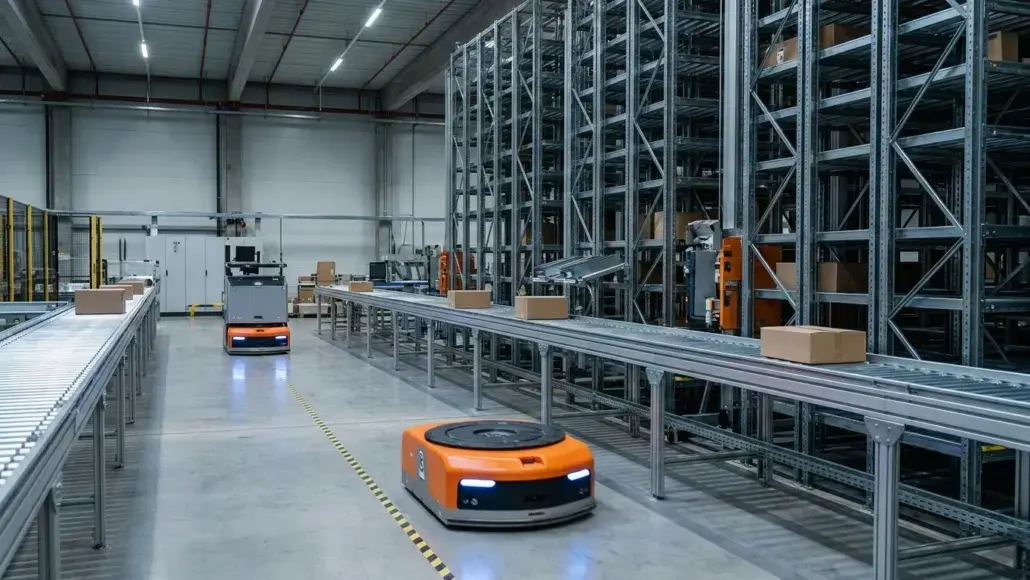
In addition, the radar highlights new trends that extend beyond the impact of AI on operational efficiency. AI commerce is changing the way consumers and companies find and buy products. Compute Economy goes on to underscore the strategic significance of computing infrastructure and data center logistics. Humanoids are an emerging longer-term trend that could be a game-changer for AI-driven automation in physical spaces. These trends, collectively, suggest continued evolution throughout digital and physical supply chains, from AI-assisted purchasing journeys to AI-enabled automation in warehouses.”
As per Klaus Dohrmann, Vice President of Innovation and Trend Research, DHL Customer Solutions & Innovation, “Until now, AI has helped people perform tasks more efficiently. The next chapter is about action. We’re entering an era of autonomous and physical AI, where intelligent systems can actively perceive the world, navigate complex environments, and make decisions with minimal human intervention.”
The future of logistics is still a people business
The Logistics Trend Radar 8.0 places a great deal of emphasis on the evolving nature of work as AI, automation, and robotics become progressively integrated into logistics operations. The report emphasizes technologies like wearable sensors, remote operations, and collaborative robotics, as well as AI-powered workplace assistants that assist in creating safer, more efficient, and more stimulating workplaces. These technologies help minimize repetitive tasks and assist with day-to-day decision-making, so employees can spend time on higher-value activities like solving issues, customer service, and operational supervision.
It is well to be noted that Employee Belonging and the Augmented Workplace are two trends emerging as employees work increasingly with AI assistants and collaborative robots as well as digital devices. The effect of these technologies will transform numerous roles across frontline operations, technical roles, and knowledge-based duties, creating a requirement for novel abilities and new ways of working. The challenge for business leaders is no longer just about implementing new technologies, but making sure employees have the skills, trust, and backing to use them effectively.
Says Chief Human Resources Officer and Labour Director, DHL Group, Thomas Ogilvie, “Technology is transforming the way we work, but people remain the driving force behind every successful supply chain. We’re already seeing AI assistants, wearable devices, and collaborative robots helping employees work more safely, reduce repetitive work, and focus on higher-value tasks. The future of logistics will not be defined by human versus AI, but by how effectively organizations combine human expertise with increasingly capable technologies.”
Business Imperative: Responsible AI
As organizations assume more autonomous duties, they need to make sure that their standard artificial intelligence systems are implemented ethically, safely, and transparently. The report points to trends such as AI Ethics and Cybersecurity 2.0 that enable organizations to reconcile innovation with governance, resilience, and security. As intelligent systems become more and more integrated into critical operations like demand forecasting, inventory planning, and transport decision-making, effective security measures and human supervision are becoming just as crucial as the technologies themselves.
Sustainability continues to be a long-term business priority
Sustainability remains a key driver of logistics innovation, as it has in previous editions. Examples include decarbonization, sustainable fuels, circularity, and heavy vehicle electrification, as well as light vehicle electrification, which show how organizations are using electric delivery fleets, scaling alternative fuels, and redesigning supply chains for recycling and resource efficiency as they seek lower-carbon processes.