








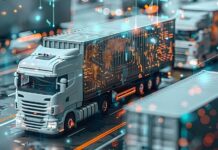
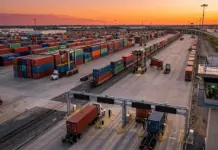
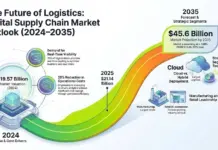







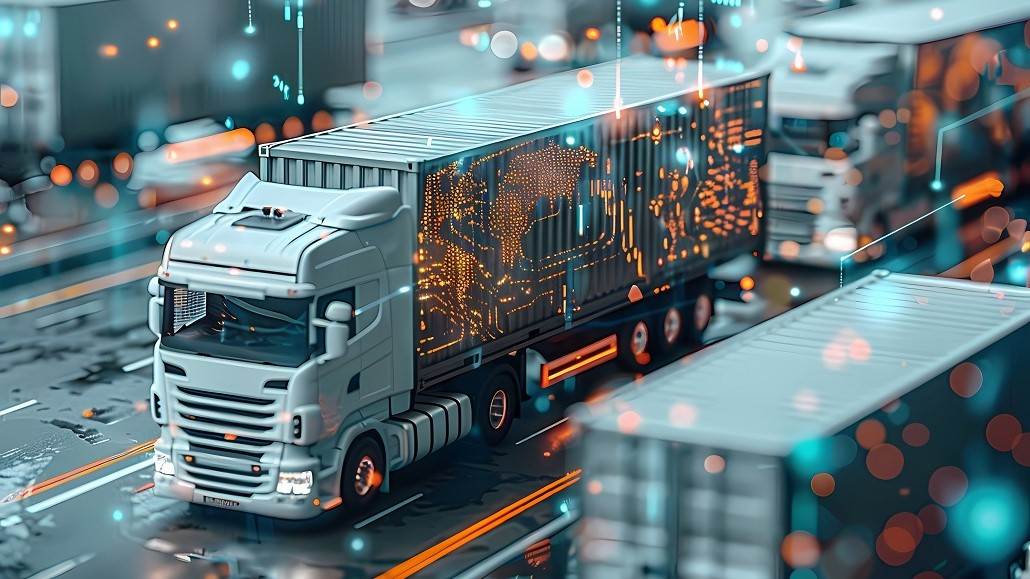
The logistics sector has undergone a profound evolution, transitioning from a traditional labour-intensive industry to a high-tech powerhouse where information is the most valuable cargo. In this modern era, a company’s success is no longer dictated simply by the size of its fleet but rather by its sophisticated ability to manage and interpret the data those vehicles generate. As global trade routes become increasingly complex and urban centres grow more congested, the traditional methods of logistics are proving insufficient. Consequently, the industry is witnessing a seismic shift toward intelligent systems, with the market for these innovations projected to reach a staggering $194.13 billion by 2032, fuelled by a 20.8% annual growth rate. This transformation is fundamentally driven by the integration of smart mobility technology in logistics, a concept that is turning transportation from a mere cost item into a sustainable, competitive business advantage.
Defining the New Era of Movement
At its core, smart mobility represents the merging of disparate transportation processes into a single, cohesive, and intelligent system capable of constant communication. Traditionally, logistics functioned in silos; a trucking company might operate entirely independently from the warehouse it served, leaving dispatchers to bridge the gap through manual phone calls and fragmented communication.
The advent of smart mobility technology in logistics has dismantled these barriers. Today, all operations are interconnected, ensuring that information flows continuously between vehicles, cargo sensors, and terminals throughout the entire journey. The ultimate objective is a logistics ecosystem that operates with peak efficiency, safety, and sustainability, simplifying complex delivery cycles while providing a reliable service that saves both time and capital for all stakeholders involved.
The Architectural Pillars of Smart Transportation
To understand how this transformation occurs, one must look at the technological components that serve as the foundation of the modern smart system. These technologies act as the nervous system and the brain of the fleet.
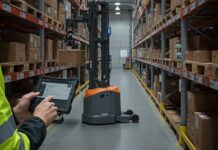
- IoT and Advanced Telematics: The Internet of Things (IoT) serves as the “eyes and ears” of the logistics chain. Sensors embedded in vehicles, containers, and pallets provide a continuous stream of real-time data regarding their status. Advanced telematics give dispatchers total visibility, monitoring everything from fuel levels and engine temperature to tyre pressure and unauthorised access to cargo areas. This high-speed communication allows for a rapid response to any irregularities.
- AI-Powered Route Optimization: While logistics departments once spent hours planning routes manually, Artificial Intelligence now handles these tasks with superior precision. AI considers variables such as mileage, traffic patterns, weather conditions, and even road inclines, the latter being crucial for managing the battery life of electric vehicles. By eliminating “empty runs”, AI-driven optimization significantly reduces operational costs.
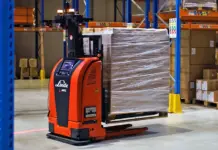
- Autonomous Systems and Robotics: Automation is already revolutionizing closed facilities like ports and warehouses. Autonomous vehicles operate 24/7 without the risk of fatigue-related errors, while drones provide an ideal solution for delivering small, time-sensitive packages, such as medicines, in congested urban areas where traditional vehicles would be delayed.
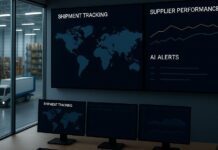
- Real-Time Transparency via Cloud Platforms: In the current market, “visibility” means knowing the exact status of a package at any given second. Cloud-based platforms aggregate data from every vehicle, providing a transparent, fair view of the process to everyone from the sender to the end customer.
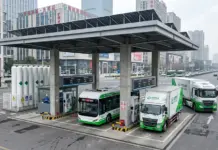
- Sustainable EV Fleets: The shift toward electric fleets is a response to both environmental demands and long-term cost-efficiency. Although they require new infrastructure, electric vehicles are easier to maintain and utilise renewable energy, insulating companies from the volatility of gasoline prices.
Solving Modern Business Pain Points
When these technologies are integrated into a singular strategy, they create powerful smart mobility technology in logistics solutions that address the most critical challenges facing executives today.
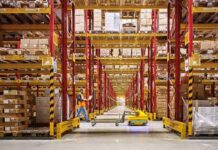
One of the most significant advancements is warehouse-transport synchronization. By automatically detecting an approaching vehicle, the system instructs the warehouse to prepare the cargo in advance, eliminating loading queues and ensuring staff work with precision. Furthermore, cargo monitoring has become essential for the transportation of sensitive goods. Smart sensors monitor temperatures for food and medicine, automatically generating compliance reports for regulatory bodies.
On the delivery front, last-mile optimization systems recalculate tasks in real-time to account for accidents or new orders, managing the most expensive stage of the delivery process with surgical efficiency. Additionally, predictive maintenance has moved the industry away from reactive repairs. Systems now analyse component wear to schedule service before a breakdown occurs, maximizing fleet uptime and preventing costly mid-route delays. All these functions are typically consolidated into a single fleet management system, providing managers with a transparent, unified view of all business workflows, from fuel accounting to order tracking.
The Tangible Benefits of Intellectualized Logistics
The decision to invest in Smart Mobility Technology in Logistics is increasingly backed by clear economic and operational incentives.
- Operational Cost Reduction: Efficiency gains in fuel consumption and the elimination of idling or under-capacity runs lead to direct bottom-line improvements.
- Unprecedented Accuracy: Smart traffic management and forecasting have pushed delivery accuracy levels toward nearly 100%, drastically reducing delays.
- Sustainability and Brand Equity: As environmental regulations and consumer expectations shift, a proven sustainability strategy involving reduced emissions makes a brand more attractive to both customers and investors.
- Enhanced Safety Protocols: Smart assistants monitor driver behavior to prevent fatigue-related accidents and traffic violations, protecting both personnel and the integrity of the product.
- Business Scalability: Because many of these solutions are cloud-based, businesses can scale their operations, connect new partners, and open branches without the need to replace their entire IT infrastructure.
Addressing the Challenges of Implementation
Despite the clear advantages, the transition to a fully integrated system of Smart Mobility Technology in Logistics is not without its hurdles. The primary barrier remains the high implementation cost, which includes the initial purchase of expensive hardware like sensors and new vehicles, as well as the software development and staff training required.
Furthermore, tech integration issues often arise when attempting to marry new innovations with legacy systems. In many cases, third-party professionals must develop middleware to ensure data transfers occur without failure. Data security is another critical concern; as management becomes entirely digital, the risk of cyber-attacks increases, requiring constant attention and investment to protect vehicle traffic and sensitive information. Finally, there is a lingering lack of infrastructure. The full potential of autonomous and electric vehicles is often limited by the quality of roads and the availability of charging stations outside of major metropolitan hubs.
The Future: A Unified Ecosystem
Looking ahead, the industry is moving toward a state where all transportation services will be autonomous and operate within a unified ecosystem. In the smart cities of the future, AI will manage deliveries in real time, operating with a level of seamlessness that was previously unimaginable. While overcoming the initial challenges of cost and infrastructure requires significant organisational change, the benefits of high efficiency and safety far outweigh the risks. Logistics has ceased to be a simple matter of moving boxes; it has become a smart, automated service that defines the modern marketplace.