
















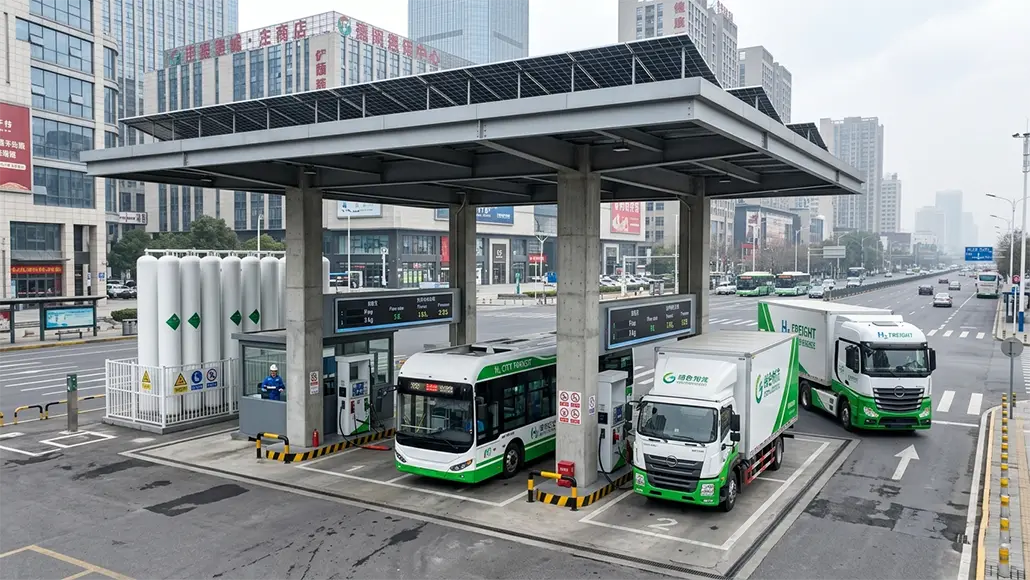
China has just taken a big step forward by issuing a new national guideline to cut price of hydrogen to around €3/kg- an estimate that has not been confirmed by the Chinese officials as yet. The government wants to speed up the move from oil refining as well as chemical factories to everyday usage, particularly fuel cell electric vehicles – FCEVs when it comes to trucks, buses, and even heavy equipment. This is not just a half-baked idea, but the fact is that hydrogen is indeed a top priority in the 15th Five-Year Plan – 2026–2030, and the National Energy Administration – NEA has gone ahead and put policies in place so as to build a complete hydrogen infrastructure, right from production to refueling. If it works out, to cut price of hydrogen to around €3/kg could eventually bridge the gap with diesel, therefore giving green hydrogen a real chance to get widely used and hence in a way power the next wave of industrial decarbonization within mining, shipping, and also other industries.
Turning strategy into objectives
The fact is that it was not just a coincidence that hydrogen came up in the 15th Five-Year Plan. In late 2025, analysts with S&P Global and ING went on to confirm what many people had been assuming – hydrogen is going from being a pilot project to becoming a key part of national strategy. The NEA has been busy making plans for a roadmap after 2025 that is going to bring hydrogen production and energy storage from the lab to the market. The new rule makes it clear – go ahead and cut prices to about €3 per kilogram. That specific objective gives regional planners and provincial implementers a good starting point as they lay out industrial clusters and transportation corridors, as well as the hydrogen infrastructure that is going to support everything right from trucking fleets to off-grid power.
Understanding how to make green hydrogen
China’s plan happens to be based on green hydrogen, which is made by using clean energy so as to split water into hydrogen and oxygen. Just imagine wind turbines turning and solar panels soaking up the sun in places having immense resources. That power runs electrolyzers, which break down H₂O into hydrogen and oxygen. S&P Global opines that Chinese producers claim their costs are between $3 and $3.50 per kilogram. What is the NEA’s challenge? By the end of the decade, that number is going to be almost 50% of what it is now. If they could do that, it would indeed change the game when it comes to hydrogen fuel cells, thereby making them more affordable and attractive in terms of heavy-duty trucks, trains, and also industrial boilers.
Building a Value Chain That Is Competitive in Cost
It is a known fact that one of the biggest strengths of China is its vertical integration. Domestic manufacturers can sell electrolyzers and compressors, as well as storage tanks, for about 25% less vis-à-vis what you would pay in Europe or North America because they make them all in one place.
The NEA’s 2026 plan offers
- Capex subsidies that pay for as much as 20% of green hydrogen plants along with other hydrogen-related infrastructure
- Pilot programs to grow hydrogen ecosystems in particular regions
- Rules for combining hydrogen production with coal as well as other new energy sources
- Proposals pertaining to a national green fuel certification system
Through linking economies of scale and cash incentives, as well as a single set of rules to the €3/kg target, China has the opportunity to create hydrogen hubs that are ready for the market rather than just a bunch of trials.
Deployment of regional hubs and infrastructure
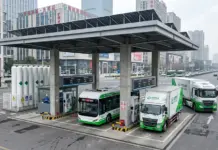
Apparently, China is focusing on provinces having a lot of renewable energy and industrial demand, such as Inner Mongolia, Hebei, and also Shandong, instead of taking a one-size-fits-all approach. These places are already putting in big electrolyzers and planning high-pressure refueling stations for mining trucks and various other big vehicles. With that €3/kg benchmark in mind, local governments and state-owned companies can alter the economics of a project, whether it is putting together solar-wind-hydrogen setups or rather making storage and distribution networks function better.
Global & Domestic Effects
If China can accomplish this, the effects could be massive. If equipment gets cheaper and green hydrogen production gets easier, Europe and North America may as well have to offer more incentives or they would risk falling behind. Back home, lower hydrogen prices could speed up the process of making transportation, mining, and heavy manufacturing cleaner, while at the same time decreasing smog in cities. As per Energies Media, China already makes about 50% of the world’s hydrogen from renewable sources, and this push could enable them to keep that lead.
Challenges and What Steps to Take
Trying to get to €3/kg is not a cake walk. Grid operators will have to balance new renewable energy sources along with smart dispatching to keep production genuinely low-carbon. As hydrogen infrastructure grows, safety rules and a robust certification system need to keep up. One would probably see a two-speed picture, with regions having a lot of resources moving ahead quickly and others falling behind. If China wants to reach its cost objectives by 2030, it will need to set clear goals, report regularly, and also maybe even make changes to its policies along the way.
The most recent guideline from China makes it clear that the time for hydrogen R&D is over. Now it’s time to grow, lower costs, and hit tough price objectives. It will depend on NEA-backed pilot programs and how quickly fleets migrate to hydrogen fuel cells while keeping the whole chain green from the electrolyzer to the tailpipe if €3/kg goes on to become a reality. As the hydrogen world watches Beijing, one question comes to mind – will this strategic choice make other big players amp up their game?