

























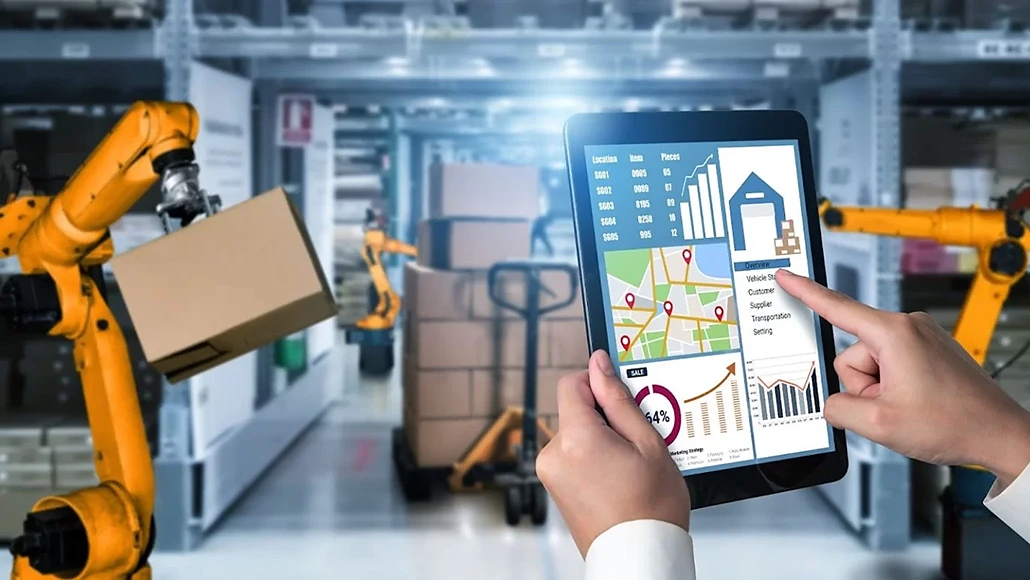
The global supply chain is currently undergoing a period of profound transformation, driven by the need for unprecedented speed, precision, and cost-efficiency. In this high-stakes environment, the impact of robotic process automation in logistics has emerged as a definitive catalyst for operational excellence, shifting the paradigm from manual, error-prone workflows to streamlined, data-driven systems. For executives and logistics professionals, RPA represents more than just a technological upgrade it is a strategic imperative that allows organisations to reallocate human capital toward high-value initiatives while bots handle the repetitive, high-volume tasks that previously hampered growth.
The Quantitative Case for Automation: Efficiency and Cost Savings
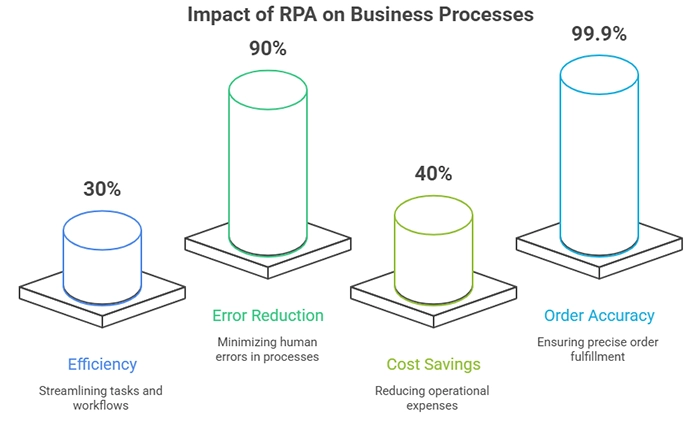
The primary driver behind the adoption of robotic process automation in logistics is the immediate and measurable improvement in operational metrics. Organisations integrating these solutions report a dramatic shift in their performance indicators, moving away from the limitations of traditional manual processing. By automating repetitive tasks, companies are seeing a 30% increase in overall efficiency, which effectively allows the workforce to transition from doing to strategizing.
Beyond mere speed, the financial implications are significant. The implementation of RPA in logistics and supply chain management can lead to:
- 40% Operational Cost Savings: By slashing the manual labour required for repetitive data tasks, firms can optimise their financial performance and reduce overhead.
- 90% Error Reduction: Manual data entry is inherently susceptible to human error RPA enhances accuracy across order fulfilment, inventory management, and shipping.
- 9% Order Accuracy: This near-perfect precision is a critical factor in driving heightened customer satisfaction and long-term brand loyalty.
Streamlining the Logistics Lifecycle
To understand the full scope of robotic process automation in logistics, one must look at the specific business applications that these bots manage daily. These solutions are designed to automate the lifecycle of a shipment, from the initial order entry to the final payment audit. By identifying manual bottlenecks, RPA accelerates task completion and streamlines the entire logistics chain.
Key use cases within this lifecycle include:
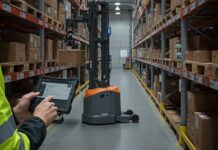
- Inventory Tracking and Management: Continuous monitoring of stock levels without manual intervention.
- Order Processing and Data Entry: Eliminating the need for staff to manually input supply chain data, which reduces delays and improves data integrity.
- Shipment Scheduling and Route Planning: Optimising how and when goods move to ensure smooth, automated workflows.
- Freight Management: Automating the complex logistics of moving goods across various carriers and modes of transportation.
Orchestration and Integration: The Power of Connectivity
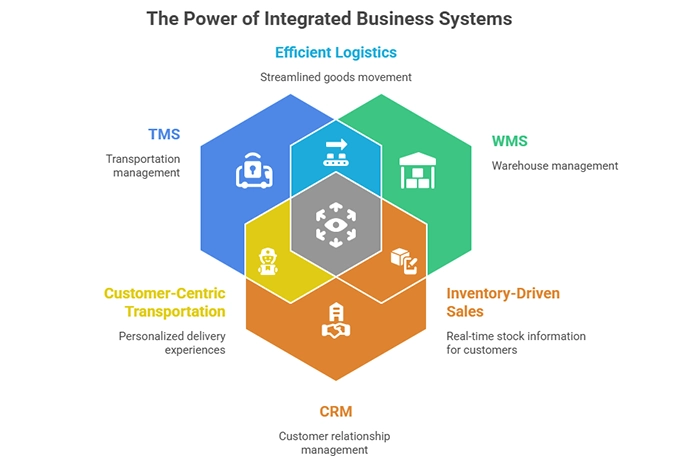
A common concern for executives is whether new technology will require a complete overhaul of their existing digital infrastructure. However, the true strength of robotic process automation in logistics lies in its ability to integrate seamlessly with current systems, such as Transportation Management Systems (TMS) and Warehouse Management Systems (WMS). This creates a unified approach that eliminates departmental silos and fosters end-to-end visibility.
This workflow orchestration ensures that diverse applications and systems can exchange data automatically, fostering efficient collaboration across the entire supply chain. Because RPA can work with existing interfaces, there is often no need for a radical change to underlying systems, allowing for a smoother transition and faster return on investment.
Advanced Analytics and Proactive Management
Modern RPA solutions go beyond simple task execution by incorporating intelligent analytics. By leveraging data collected from various points in the supply chain, companies can uncover trends, optimize resource allocation, and make informed, data-driven decisions. This shift toward Intelligent Analytics allows logistics providers to move from a reactive stance to a proactive one.
One of the most critical aspects of this proactive approach is intelligent exception handling. In traditional logistics, a disruption, such as a delayed shipment or a data mismatch, often requires manual intervention, leading to further delays. RPA systems are now equipped to detect and resolve these issues in real time, ensuring smooth operations and minimising disruptions to the customer experience.
Financial Precision: Freight Audit and Payment
The financial side of logistics is perhaps one of the most complex areas to manage manually. Intelligent freight audit and payment solutions powered by RPA can automate complex invoice audits, validate rates against contracts, and generate detailed reports. This level of automation not only saves significant time but also reduces financial risks by ensuring that billing is always accurate and that discrepancies are caught immediately.
Implementing RPA: A Scalable Strategy
Implementing robotic process automation in logistics is a structured process that begins with a thorough assessment of existing processes to identify the best candidates for automation. The journey typically follows a clear roadmap:
- Assessment: Blueprinting and identifying processes that will yield the highest ROI.
- Implementation: The actual automation of process execution, moving tasks from human hands to digital bots.
- BI & Analytics: Using the data generated by automated processes to derive decision-making intelligence.
- AI & ML Integration: Tying machine learning back into the system to enhance decision-making capabilities over time.
These solutions are inherently scalable, designed to handle increased order volumes, warehouse expansions, and additional distribution channels as a business grows. Whether a project is a small-scale pilot implemented in a few weeks or a large-scale initiative taking several months, the flexibility of the technology ensures it can be customised to specific business needs.
Conclusion: Driving the Future of Transportation
The evidence provided by the sources makes a compelling case: the impact of robotic process automation in logistics is transformative. By delivering substantial gains in efficiency, drastic reductions in errors, and significant cost savings, RPA allows logistics companies to operate with a level of agility that was previously unattainable.
As the industry continues to evolve, the ability to automate repetitive tasks and integrate complex data systems will be the dividing line between market leaders and those left behind. For the modern logistics professional, the question is no longer if they should adopt RPA, but how quickly they can implement these solutions to secure their competitive advantage