























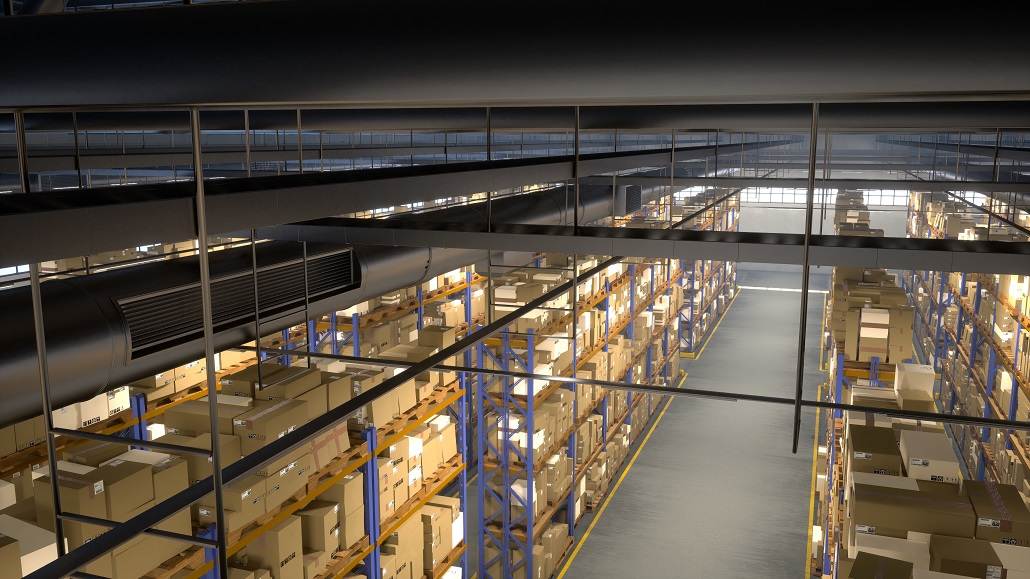
In the competitive landscape of modern logistics, the most profitable facilities are those that treat space not merely as a physical container but as a scientific variable. To optimise warehouse storage design is to unlock a facility’s true potential, transforming a static cost centre into a dynamic engine of productivity and profitability. For the executive overseeing a complex supply chain, understanding the principles of layout, verticality, and automation is no longer optional it is a fundamental requirement for handling higher cargo volumes and meeting the relentless demands of rapid order fulfilment.
The primary purpose of warehouse storage is clear, to house goods securely and safely, preventing injury and property damage until the moment of shipment. However, the modern challenge lies in the delicate balance between maximum space utilisation and seamless workflow efficiency. Achieving this equilibrium requires a meticulous approach to engineering, one that considers everything from the turning radius of an articulated forklift to the specific fire safety clearances required by national standards.
1. Scaling Up: The Logic of Verticality and Mezzanine Integration
When floor space is at a premium, the most logical direction for expansion is upward. Leading design service providers emphasise that verticality is the primary key to fully utilising a facility’s inherent storage capacity. By extending rack heights to their maximum safe limit, managers can significantly increase pallet positions without the capital expenditure of building expansion.
- The Safety Clearance Equation: Vertical expansion is not a matter of height alone it is a matter of compliance. The 2022 edition of NFPA 13, the standard for sprinkler system installation, dictates specific clearances to ensure fire suppression systems remain effective. Specifically, designers must maintain at least 6 inches of “flue space” around each pallet load within multiple rows of open racks. Ensuring there is adequate clearance between the top load and the lowest overhead obstruction is a critical safety benchmark.
- The Role of Mezzanines: For lighter load storage, building mezzanines offers a proven strategy to double usable floor space. These freestanding, elevated platforms provide a modular solution for increasing capacity without the downtime associated with permanent structural additions.
- Design Considerations for Elevated Platforms: Integrating a mezzanine requires foresight. Support columns must be strategically placed so as not to interfere with material handling equipment (MHE). Designers must account for forklift paths and clear zones to ensure that the gain in storage does not come at the expense of manoeuvrability.
| Feature | Impact on Capacity | Primary Consideration |
| High-Bay Racking | High | NFPA 13 Flue Space (6 inches) |
| Mezzanines | Very High (Doubles space) | Column placement and MHE paths |
| Standard Shelving | Moderate | Ease of manual access |
2. The Geometry of Flow: U-Shaped vs. I-Shaped Layouts
A foundational step to optimise warehouse storage design involves selecting a layout that aligns with the facility’s specific operational volume and building dimensions. The layout dictates the “velocity” of goods moving from receiving to shipping.
The U-Shaped Layout: Flexibility for Smaller Footprints
The U-shaped layout is often the preferred choice for smaller buildings. In this configuration, receiving and shipping bays are positioned adjacent to one another, with the storage area occupying the rear of the warehouse.
- Cross-Docking & Returns: This design is exceptionally flexible, making it ideal for cross-docking operations and the complex logistics of returns management.
- Traffic Management: While efficient, it requires careful spacing of bays to avoid truck congestion during peak hours.
The I-Shaped Layout: Linear Velocity for High Volumes
For larger facilities or mega-hubs, the I-shaped layout is often recommended by warehouse engineering experts. This design forms a straight line of flow, with receiving at one end and shipping at the opposite end, sandwiching the storage area in the middle.
- High-Volume Throughput: The linear flow eliminates the “back-and-forth” movement found in U-shaped designs, allowing the facility to handle much higher order volumes with minimal friction.
- Scalability: The I-shape is particularly suited for high-density racking environments where merchandise must move rapidly from one stage to the next.
3. Density vs. Accessibility: Narrow Aisles and Dynamic Storage
As storage requirements grow, the pressure to reduce aisle width increases. However, density is only effective if it remains accessible. Traditional material handling equipment often lacks the agility to navigate the tighter passages required for high-density storage.
- Articulated Forklifts: To solve the narrow-aisle dilemma, many facilities are turning to articulated forklifts. These versatile vehicles utilise specialised attachments to handle various load types, including long or oversized items, in confined areas. Their ability to move cargo between the rack and the trailer at high speeds makes them indispensable in a high-density environment.
- Embracing Dynamic Storage: Unlike static systems where locations are rigidly reserved, dynamic storage involves filling any available space with incoming items. This is especially effective in narrow-aisle layouts where gravity-fed systems, such as pallet flow, push-back, or carton flow racks, aid the movement of goods from the restocking side to the picking side.
- The Management Challenge: Dynamic storage is best suited for high-turnover goods. Slow-moving or “stale” inventory can quickly clog a dynamic system. Furthermore, while fluid item arrangement can be difficult to track manually, a robust Warehouse Management System (WMS) makes it effortless to locate specific products with minimal labour.
4. The Human-Machine Synthesis: Robotics and Automation
A modern attempt to optimise warehouse storage design is incomplete without the integration of industrial machines. Humans and robots must coexist to achieve the efficiency gains required by modern commerce.
- Microfulfillment Solutions: In smaller sites, designers often employ cubic storage grids serviced by rack-climbing bots. These agile machines can pack up to 600 bins per 1,000 square feet, maximising every inch of available space.
- Mega-Hub Automation: In larger environments, stacker cranes are the preferred choice. While capital-intensive, their massive volume capacity and productivity gains often justify their 20-year payback windows.
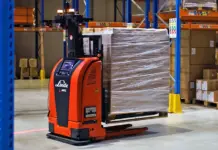
- AGVs and Fulfilment: Automated Guided Vehicles (AGVs) pair with optimised racking layouts to achieve rapid fulfilment rates and maximum uptime, reducing the warehouse’s dependence on manual labour.
5. Professional Engineering: Avoiding Costly Mistakes
Determining the most efficient layout is not a task for the inexperienced. Professional warehouse storage design service providers, such as Fairchild Equipment, play a pivotal role in analysing a facility’s unique spatial constraints and product types. By using expertise in warehouse engineering and a broad selection of industrial equipment, these professionals create systems tailored for rapid, accurate fulfilment.
Hiring a professional service is essential to avoid the costly mistakes of poor layout planning, which can lead to safety hazards, property damage, and significant losses in profitability. A well-engineered design ensures that the warehouse remains a competitive asset for years to come.
Conclusion
To truly optimise warehouse storage design is to engage in a continuous process of refinement and strategic planning. Whether through the adoption of vertical mezzanines, the implementation of an I-shaped flow, or the integration of sophisticated rack-climbing bots, the goal remains the same: maximising profitability and productivity. By prioritizing both space utilization and workflow efficiency, warehouse managers can ensure their facilities are prepared to meet the logistical challenges of the future