

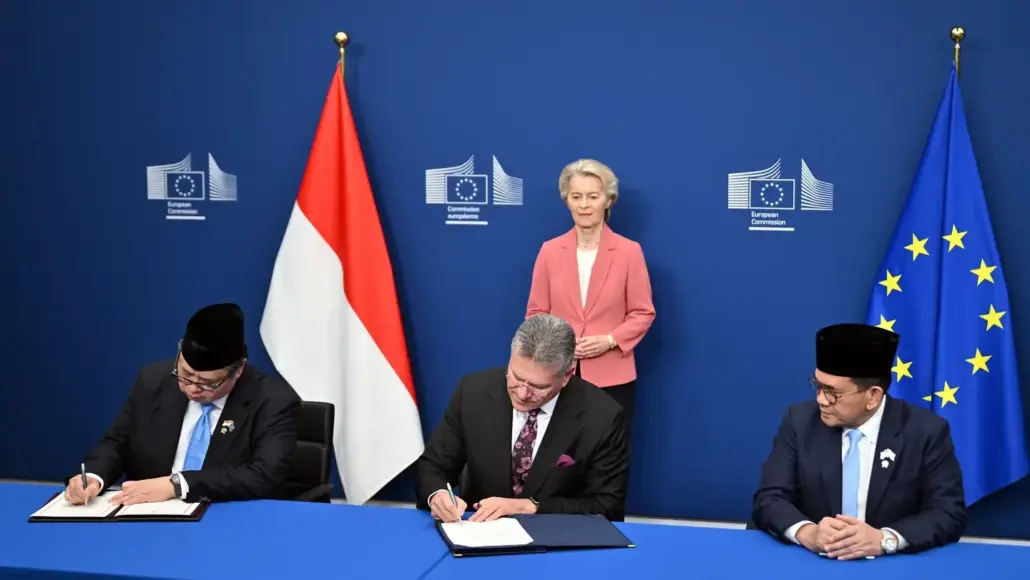
The Council of the EU approved the signature and provisional application of the Comprehensive Economic Partnership Agreement – CEPA as well as the Investment Protection Agreement – IPA between the EU and Indonesia on 18 November 2026. The two deals together deepen economic connections with the largest economy of Southeast Asia while opening up new avenues when it comes to trade and investment deals.
It is well to be noted that the agreements are part of a wider EU strategy to broaden its trade relations, build its system of international ties, and enhance the durability of its economy.
The agreements provide a more consistent and beneficial business environment for companies on both sides. They facilitate accessibility to each other’s markets, attract new investment, and contribute to economic diversification. They also reaffirm the engagement by the EU with an important strategic partner in the Indo-Pacific and its dedication to open, governed, and sustainable commerce.
However, the agreements will need the approval of the European Parliament prior to when they can be finalized by the Council, even though both the CEPA and IPA will be applied temporarily until their entry into force.
The fact is that Indonesia is one of the world’s most important growth markets with an estimated population of over 280 million. The trade and investment deals will enhance European companies and abolish tariffs on almost all goods traded among the EU and Indonesia, saving companies an estimated €600 million a year in customs duties.
The opportunities are enormous – be it agri-food and pharmaceuticals or sophisticated manufacturing and digital trade. The agreements will also help to bolster supply chains and enhance joint efforts on energy as well as critical raw materials.
This is a clear signal, in times of economic uncertainty, that the EU stays devoted to open markets, sustainable growth, and solid global relationships that deliver tangible advantages for businesses and workers as well as consumers.
The Minister for Foreign Affairs and Trade of Ireland, Helen McEntee said, “With a population of more than 280 million people, Indonesia represents one of the world’s most significant growth markets. These agreements will make it easier for European businesses to trade and invest, remove tariffs on almost all goods traded between the EU and Indonesia, and save businesses an estimated €600 million annually in customs duties. From agri-food and pharmaceuticals to advanced manufacturing and digital trade, the opportunities are substantial. The agreements will also help strengthen supply chains and deepen cooperation on energy and critical raw materials. At a time of economic uncertainty, this is a clear signal that the EU remains committed to open markets, sustainable growth, and strong international partnerships that deliver real benefits for businesses, workers, and consumers.”
Comprehensive Economic Partnership Agreement – CEPA
The CEPA will greatly enhance access to markets between the EU and Indonesia through the gradual elimination of tariffs on the majority of goods exchanged between the two parties.
When fully phased-in, as much as 98.5% of tariff lines will be liberalized, and 96% of Indonesian tariffs are expected to be eliminated in five years. It is projected to generate savings of roughly €600 million a year in customs duties.
The agreement will open substantial new possibilities for EU exporters in a broad spectrum of sectors, such as footwear, chemicals, agri-food, automotive, textiles, pharmaceuticals, and machinery, as well as electrical equipment. Indonesia will phase out import duties on European Union automotive exports, which are currently as high as 50%, over the next five years.
The pact will also promote trade in goods and services, enhance accessibility to public procurement possibilities, and reinforce the safeguarding of intellectual property.
The deal will remove tariffs on most EU agricultural exports, such as dairy, meat, processed foods, vegetables, and fruits, as well as for the EU agri-food sector, which presently exports roughly €1 billion annually to Indonesia. It will additionally safeguard 221 EU geographical indications in Indonesia, maintaining the credibility and genuineness of iconic European products.
Sensitive EU agricultural sectors will be safeguarded, while products like rice, ethanol, and sugar will be barred from tariff liberalization, and other sensitive goods will enjoy restricted tariff-rate quotas.
The agreement also sets up a structure for greater cooperation in the areas of energy and raw materials along with digital trade.
It also has a strong section on trade and sustainable growth, which includes pledges on climate and environmental protection as well as labour rights, with the Paris Agreement acknowledged as a key component of the agreement.
Investment Protection Agreement – IPA
Apparently, the IPA adds to the CEPA by establishing a structure that protects investments undertaken by EU investors in Indonesia as well as Indonesian investors in the EU.
The agreement is aimed at fostering a more dependable, open, and foreseeable investment climate, boosting long-term investments, and building trust for businesses on both sides. It provides guarantees to shareholders and the investments they make, which include defense against unauthorized expropriation and assurances of fair and equitable consideration, non-discrimination, and the free transmission of investment-related monetary payments.
The agreement also specifically reiterates the authority of both parties to govern in their territories in the interest of acceptable public policy goals, such as safeguarding the interests of public health, the environment, and action based on climate change as well as sustainable development.
The IPA additionally offers procedures for dispute resolution among the parties regarding the execution of the agreement and an optional mediation mechanism for investor-to-state disagreements. It proposes a work program for additional discussions on a potential investor-to-state dispute resolution mechanism.
The EU and Indonesia will now execute the agreements. They will be delivered, after signature, to the European Parliament for its acceptance prior to the rulings of the Council on their finalization and full implementation into force.
In view of Indonesia’s graduation from the EU’s generalized scheme of preferences – GSP on 1 January 2027, when Indonesian exports will cease to receive preferential tariffs in the scheme, the EU and Indonesia have pledged to make the agreements operational without delay.
Interestingly, both agreements allow for a temporary application pending entry into force. This will take place when the EU and Indonesia have informed each other that the corresponding internal procedures required for the preliminary application have been finalized.