

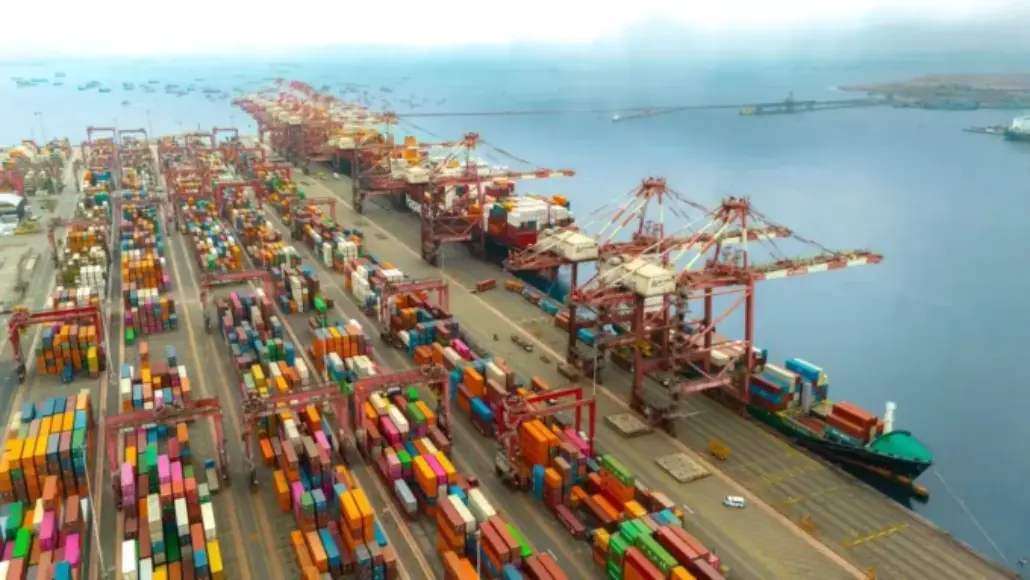
DP World has raised its proposed funding of Port of Maputo container terminal in Mozambique to $200 million from $165 million, as it aims for almost 3 times the present annual handling capacity of the terminal and readies weekly standard shipments connecting China with African ports.
The expanded plan of funding of port of Maputo container terminal aims for a maximum of 650,000 20-foot comparable units a year by the Q2 of 2027, a rise from 225,000 TEUs as of today. It also tops the prior target of 530,000 TEUs. TEU happens to be a standard measure of container capacity.
It is well to be noted that the new China Africa Link is expected to start later in November 2026. Its port rotation comprises Shanghai, Ningbo, Nansha in China, Dar es Salaam in Tanzania, Port Klang in Malaysia, and Maputo as well as Singapore. It is not the direct China-to-Maputo route but a planned multi-port service.
Essa Kazim, the DP World Group Executive Chairman, had a meeting with Daniel Chapo, Mozambique’s President, where the increase in investment was made public. The additional capacity will enable larger vessels to reach out at the terminal and enhance operations, DP World said.
The role of Maputo beyond Mozambique
The container terminal is within a larger port and transport network. The terminal is run by DP World, which is a shareholder in the Maputo Port Development Company, which has the requisite concession to run the port until 2058.
The Maputo Corridor connects the port with the interior provinces of South Africa, which include the likes of Gauteng and Mpumalanga as well as Limpopo.
The Maputo Port Development Company said the port dealt with a record-high 32 million tonnes of cargo in 2025, up 3.4% from 2024.
This figure refers to the total cargo handled by the port, which includes bulk cargo, and should not be misinterpreted with the available space of the container terminal, expressed in TEU.
The new service and bigger terminal could offer importers and exporters another way to travel between Asia and Southern Africa.
But expanded capacity is not equivalent to faster or cheaper deliveries – the outcome will be contingent on the timetables of the vessels, the productivity of the ports, and the road, rail, and border links serving the corridor.